
44 AGs Oppose the House's Industry-Written KIDS Act, Meta's LA Data Center Woes Grow
This week in The Dispatch: 44 AGs reject a Big Tech-backed House bill; Louisiana's data center corruption gets deeper; major bills move forward in California; Zuckerberg's yacht arrives in Seattle the same week Meta cuts 1,400 local jobs.

Welcome back to The Dispatch from The Tech Oversight Project, your weekly updates on all things tech accountability. Follow us on Twitter at @Tech_Oversight and @techoversight.bsky.social on Bluesky.

⚠️ 44 AGs TO CONGRESS: NOT SO FAST: A bipartisan coalition of 44 state attorneys general just sent a remarkably blunt message to House Republicans: your child safety proposal is a bad deal for families. H.R. 7757 has been framed as a protective measure, but buried in it is a federal preemption clause that would limit states' ability to pass and enforce stronger protections of their own — undermining existing state laws and setting an already-lower standard at a moment when those laws are the only thing standing between our kids and dangerous AI products.
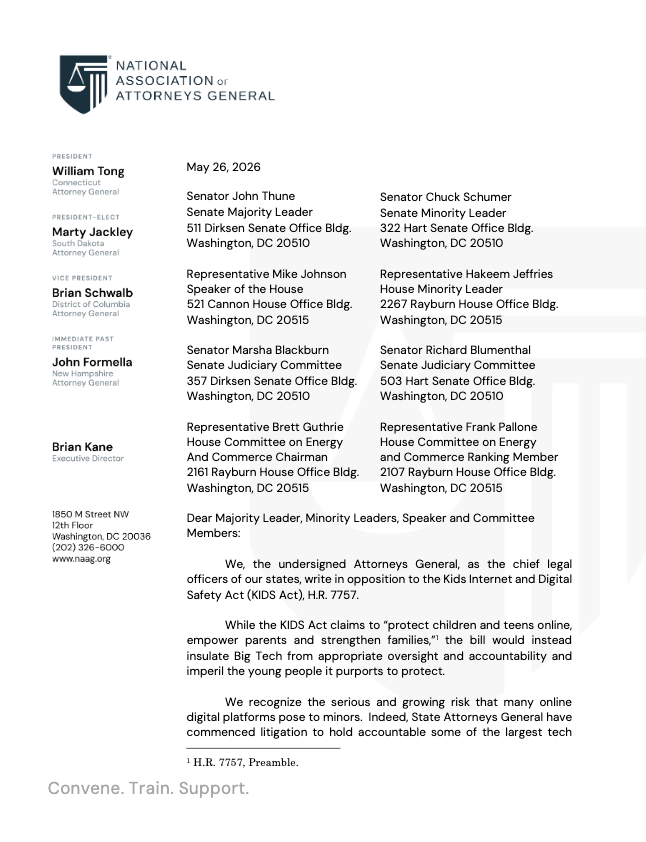
Forty-four attorneys general agree on almost nothing politically. Seeing them standing together against a single bill tells you everything about what's really at stake. AGs from both parties have been at the front lines against unfettered tech companies for years as Congress has dithered. They’ve made real progress in protecting kids, and they see industry-backed preemption efforts for what they are: an attempt to shut down the one place where meaningful accountability is actually happening.
SUNSHINE FROM THE SUNSHINE STATE: One Attorney General who's going an extra mile to show that taking on Big Tech for harming kids is a truly bipartisan issue? Florida's AG James Uthmeier, who yesterday became the first AG in the country to sue OpenAI and CEO Sam Altman for knowingly endangering young people with its products.

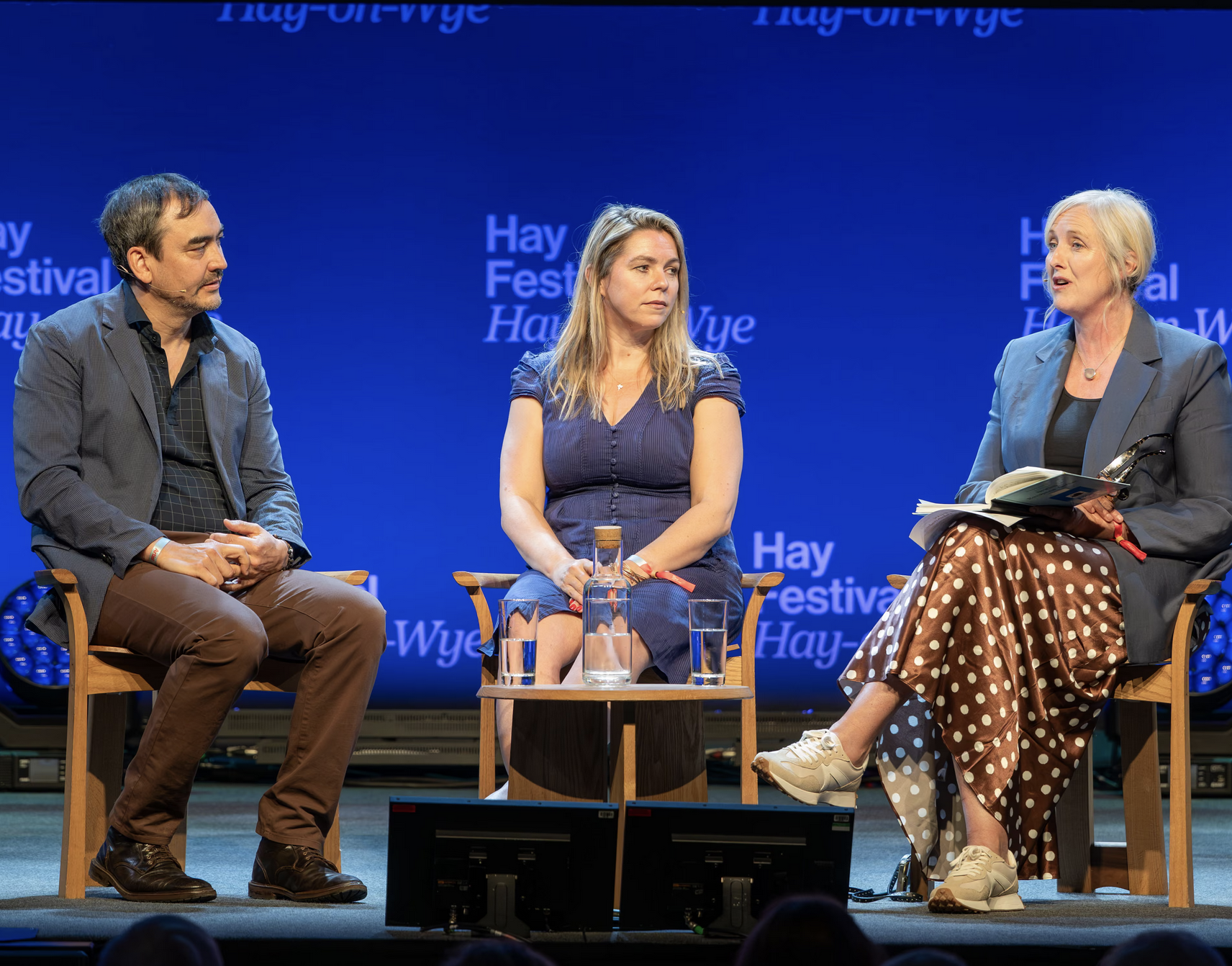
META'S STREISAND EFFECT: Meta's legal team is taking its gag order against whistleblower Sarah Wynn-Williams to the extreme. Prior to Wynn-Williams' public appearance at the Hay Festival this past weekend in Wales, Meta issued legal threats to Wynn-Williams and her attorney that they could not promote the book or speak disparagingly about the company. Ravi Naik, attorney for Wynn-Williams, said, "Never in my life have I faced a circumstance where my client cannot speak about her truth and I, as a lawyer, cannot speak on behalf of my client."
Wynn-Williams took part in the event but sat there on stage in silent protest – joining journalist Carole Cadwalladr and academic Tim Wu. She was also unable to nod or shake her head. Cadwalladr opened the panel by saying, “I think this might be a Hay first, in which we have an author in a hostage situation. Blink once if you can hear us, Sarah, twice if [Mark] Zuckerberg is an asshole.” Read the full piece in The Guardian.
You have to ask yourself: Why is Meta doing this? The Streisand Effect is on full display – catapulting Careless People into best seller territory and elevating Wynn-Williams as a free speech champion. Our guess: Wynn-Williams was the most senior whistleblower ever to come forward, and her account is true.
When Meta was asked why, if the information in her book is false, they didn't sue her for libel or defamation, they didn't respond.

🏗️ FOLLOW THE MONEY: Last week, we covered the Bloomberg investigation linking House Speaker Mike Johnson to Meta's secret Louisiana data center briefings. This week, it gets worse.
A new investigation from The Guardian found that Louisiana State Senator Jay Morris — who cosponsored legislation for Meta's massive Hyperion data center, backed billions in tax breaks, and lobbied regulators on Meta's behalf — also personally profited from landholdings in the data center's own backyard, including selling hundreds of acres to utility giant Entergy for a methane gas plant built to power the project. Experts told The Guardian the arrangement raises serious questions about conflicts of interest and the use of public office for private gain.
This is why people are skeptical when politicians pitch AI infrastructure as economic development. The Hyperion project was already controversial because of its enormous projected energy demands, billions in subsidies, and concerns about who ultimately pays the costs. Now, a powerful local figure has been championing it while standing to benefit financially from its construction – a story that’s playing out across the country, to voters’ ire.

🚨POLITICALLY TARGETING DATA CENTER PROTESTS: A new Wired investigation, based on more than 1,000 pages of government documents obtained through FOIA requests, reveals that the NYPD warning about "anti-tech violent extremist activity" is part of something much broader: a coordinated effort by DHS, the FBI, and fusion centers across the country to surveil people who publicly oppose AI expansion and data center construction.
The targets aren't violent actors. They're ordinary people doing ordinary civic things. Fusion centers have been monitoring budget meetings in Arlington County and school board meetings in Fairfax County -- routine local forums where residents showed up to object to data centers being built in their communities. A video produced by progressive nonprofit More Perfect Union, documenting the impact of a data center on a Georgia community, was flagged by a private intelligence firm and circulated to law enforcement nationwide as a potential threat. The video contained zero calls to violence and dozens of local residents talking about their neighborhood.
This surveillance is happening in the context of Trump's National Security Presidential Memo 7, which directs the DOJ to target people with "anti-American" and "anti-capitalism" beliefs, giving federal agencies broad leeway to treat dissent as a security threat.
Let's be clear about what the opposition actually looks like: it's parents speaking out about chatbot harms. It's communities fighting backroom utility deals and taxpayers asking why they're subsidizing infrastructure for some of the richest companies in the world. Showing up at a city council meeting is not extremism. It's democracy. And that's exactly what has tech executives and their political enablers worried.

🔀 CROSSOVER WEEK: Last Friday was the deadline for California bills to clear their first chamber, and any proposal that didn't make it is tabled until next year. California remains one of the most important battlegrounds in the country — it’s the nation’s laboratory for Big Tech safety regulation, setting the pace on privacy, platform regulation, and AI oversight.
The industry knows it, and that's why lobbying and outside spending around these fights have exploded. Just last year, Big Tech spent $12 million lobbying California lawmakers. TOP’s Sacha Haworth: “Big Tech is working overtime to kill these bills through proxies like CalChamber and TechNet because they would force these companies to put consumers’ interests first, instead of their own profits.”
But it turns out all the Big Tech money in the world can’t kill every good idea. Several of the bills Tech Oversight California has backed are heading into the final stretch:
- PASSED the Assembly: The COMPETE Act, which would stop Big Tech from crushing competitors before they can get off the ground.
- PASSED the Assembly: AB 1542, which would ban the sale of precise location data to brokers.
- PASSED the Assembly: AB 2564, which would end “surveillance pricing” – the use of algorithms to inflate what people pay for groceries and rent. Big Tech lobbyists killed it at the last minute last year, but it passed its first hurdle this time, and moves to the Senate.
"California lawmakers are showing again this session that Sacramento is serious about reining in Big Tech on behalf of small businesses, working people, kids and families. As these bills move to second house hearings, we will keep playing a watchdog role, tracking the big-money lobbying campaigns aimed at watering down or killing these bills, and making sure lawmakers know communities across California are watching.”
– TOP's Sacha Haworth

🛥️ CALLING ALL ORCAS: Last Tuesday, as Meta announced it was cutting 1,400 jobs in Washington State, about 20% of its local workforce, CEO Mark Zuckerberg's $300 million, 387-foot superyacht quietly cruised into Seattle's Lake Union. It was hard to miss — the Ballard Bridge had to be raised to let it through — and even though Zuckerberg was not on board, crowds gathered to stare and seethe. Cyclists zipped past, hurling expletives. Online, people debated schemes to make it leave, including throwing tomatoes and summoning orcas. The yacht crew, meanwhile, polished the deck and sang along to "Don't Stop Believin'."
And that wasn’t even Zuckerberg’s worst day last week. That would have been Wednesday, the day of Meta's annual shareholder meeting, when company leaders faced a chorus of criticism over matters such as the company's mounting legal exposure from the addiction trials and the most recent summons to Capitol Hill.
Those layoffs aren't just a PR problem – they make Meta's platforms directly more dangerous. The cuts hit engineering and product roles, compounding the earlier slashing of Meta's safety and content moderation workforce. Fewer people working on platform integrity means more fraud, more deepfakes, more child sexual abuse material slipping through. As opinion writer Julia Angwin writes in the New York Times this week, in a piece bluntly titled, “Meta Is Dying. It’s About Time,” even after losing the bellwether addiction case, Meta's CFO, Susan Li, recently bragged to Wall Street that the company is using AI to increase the amount of time users spend watching videos.
That’s right, Meta is cutting the people who make its platforms safer while its CFO brags to investors about engagement numbers. Unless lawmakers act, Meta’s products will become more dangerous; its top executives will keep getting paid; and the yacht will just keep on sailing.

 Sen. Elizabeth Warren


 Daniel Arkin
 © UNICEF
 Mariella Moon