AGs Win Means Protections Needed for Every Kid on Every Platform, Data Center Opposition Goes National
This week in The Dispatch: 29 attorneys general force Meta to change its products, but the fight is far from over; the data center backlash defining the midterms; TikTok’s deadly experiment; and a California legislative session wrap-up.

Welcome back to The Dispatch from The Tech Oversight Project, your weekly updates on all things tech accountability. Follow us on Twitter at @Tech_Oversight and @techoversight.bsky.social on Bluesky.

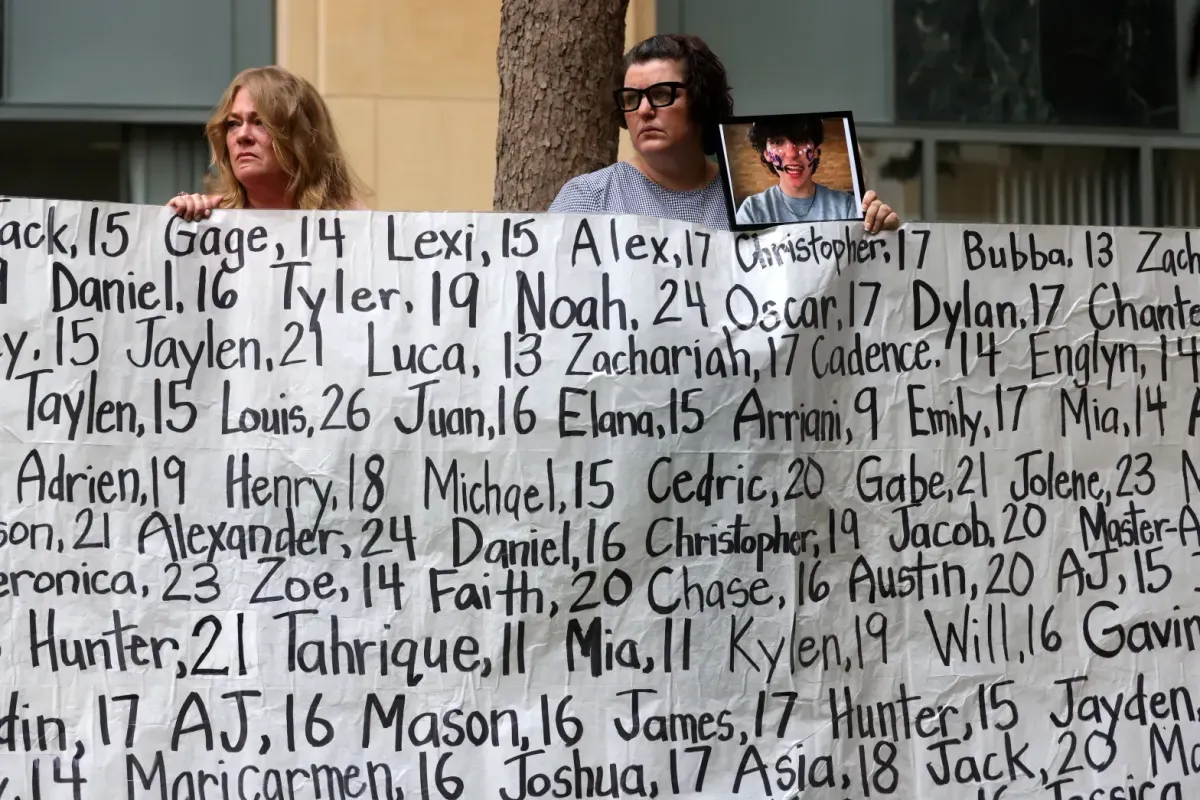
🏆 AGs NOTCH HISTORIC WIN AGAINST META, NOW, IT'S EVERY KID ON EVERY PLATFORM: Big Tech designs addictive products aimed squarely at our kids, trapping them online more than any generation before and steering them toward danger, predatory exploitation, and self-harm. What began as a tool for connection, Big Tech weaponized for profit – at the cost of our kids' lives. We've seen the playbook before, from Big Tobacco: hook them young, deny the damage, and do only what you're forced to do. This week, a bipartisan coalition of 29 attorneys general forced Meta to answer for those products – and to change them – in a settlement worth up to $18 billion.
TOP's Sacha Haworth on the deal: "Twenty-nine attorneys general dragged Meta into court and forced it to protect our kids — overnight shutoffs, daily limits our kids can't loosen without a parent, and an independent monitor watching Meta's books for a decade. This is a historic settlement that will have a lasting impact, but we cannot truly protect all children and teens until these protections are required on every platform and are permanent — that's something only Congress can do."
Under the agreement, Meta will be required to:
- Shut teen accounts down overnight and cap daily use -- a 12 a.m.-6 a.m. lockout and a two-hour daily limit on Instagram and Facebook, plus notification blackouts during school hours and a chronological, non-personalized feed option.
- Hide the "like" counts the company built to keep kids engaged about engagement, ban cosmetic filters, and meet real age-assurance targets with annual third-party testing.
- Open its books to an independent monitor for ten years – an auditor with access to Meta's internal data and communications, paid for by Meta, with public reports and mandatory fixes.
- Stop making deceptive safety claims, and give parents approval over any loosening of a teen's protections, with alerts on first teen-adult contact and on repeated searches for suicide, self-harm, or eating-disorder terms.
Financial penalties paid by Meta under the settlement could be up to $18 billion, including roughly $16.7 billion to the states, with about 70% guaranteed over ten years. The rest is contingent: Meta pays only if YouTube and TikTok adopt the same framework, and each pays a matching $5.3 billion. A separate $459 million resolves privacy claims from the 2018 Cambridge Analytica scandal.
But this is the beginning of the fight for accountability, not the end. Let’s be clear about what this settlement is not. Meta is taking out full-page ads trying to pretend it’s now a safety leader and calling on TikTok and YouTube to follow. But remember:
- As we learned from trial exhibits we’ve collected and analyzed, Meta had internal research on the dangers — and they had Arturo Béjar, a whistleblower who went back to the company with recommendations specifically to fix these problems and was ignored by Mark Zuckerberg and Instagram CEO Adam Mosseri.
- In fact, every safety advocate who raised these concerns over the past decade has been dismissed, attacked, or silenced.
- Meanwhile, Meta has fought against accountability with every tool available to one of the wealthiest company in human history, including lawsuits and legal intimidation, an astonishing sum of lobbying cash, and two years of cozying up to the Trump White House.
And critically, as Béjar explained on CNN, the settlement still doesn't address the core of the addiction. It doesn't even ban personalized feeds. Béjar: "We're telling teens it's okay to smoke cigarettes for two hours a day rather than as much as they could — and that's just not enough." Lori Schott, Annalee's mother: "Meta isn't doing this out of the goodness of their heart. They're doing it because they were dragged into a court of law and forced into this situation."
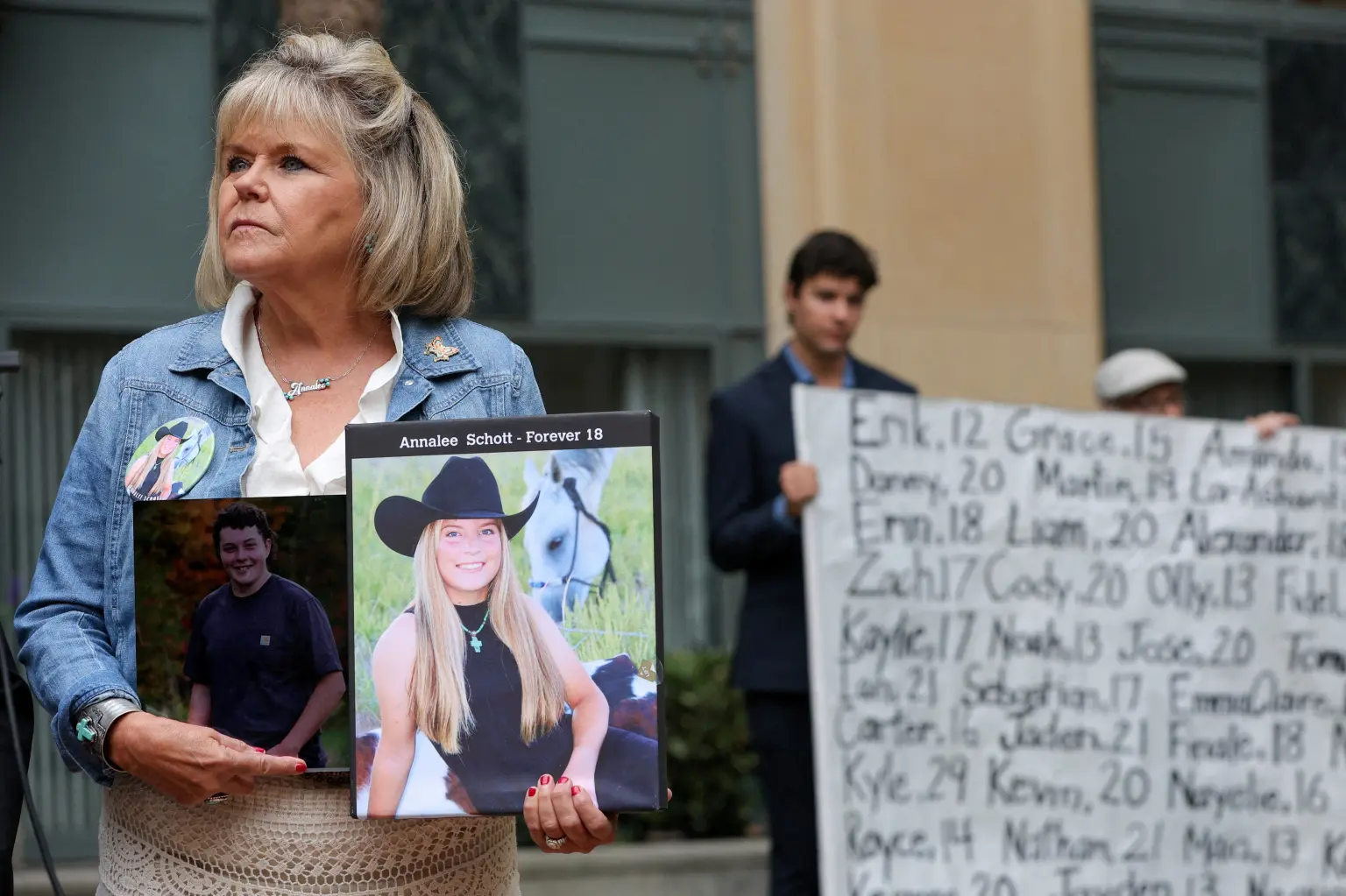
Mark Zuckerberg still has not answered for what his company did. Meta settled the day after Instagram chief Adam Mosseri testified – and just before Zuckerberg was due to take the stand himself. He wrote a check rather than answer, under oath, for what Meta knew about the harm to our kids and hid from parents. He will keep avoiding accountability for as long as he is allowed to. The Senate Judiciary Committee invited him to testify on kids' online harms; if he won't come, Congress should subpoena him and put him under oath.
We need to put the CEOs on the stand. As Sacha Haworth said: “We call upon the Senate Judiciary Committee to make good on Chairman Chuck Grassley’s commitment to parents by subpoenaing Mark Zuckerberg and other Big Tech CEOs to answer for their dangerous products and for lying to the public.”
We need to protect every kid, on every platform. That's why Congress needs to pass the Senate’s Kids Online Safety Act. Kids and families deserve comprehensive safety protections – and every big company marketing online products to kids should be bound by a duty of care.

🗳️ KEEP YOUR EYES ON THE MONEY. We just updated our AI Super PAC ad library and research book. With Election Day just two months away, bookmark these resources and keep checking back as new spending drops.

🚂 A RUNAWAY BIPARTISAN TRAIN: Since long before the political press was paying attention to data centers, we’ve been sounding the call to Make Big Tech Pay and supporting some of the many communities mounting opposition to Big Tech’s AI data centers.
Now, Governors are racing to claw back tax breaks and giveaways – to some of the richest companies in the history of the world – at the same time hundreds of counties and municipalities have now restricted or banned construction of the facilities. From suburban New York City to Michigan's Upper Peninsula to Monterey Park, California, data center opposition is a runaway train, and the tech giants are in a "frantic race" to change the narrative. But when OpenAI tried to hold a “community listening session” in July about a data center project outside Savannah, 1,000 local residents, “most of whom were angry and annoyed,” showed up to berate them.
Writer Jasmine Sun spent ten days driving through the upper Midwest talking to the people at the center of these fights and wrote the definitive account of what's really driving the backlash. Her conclusion: it isn't really water usage, noise levels, or even energy bills, though all of those concerns are real. It's about power and trust. When Big Tech sweeps into small towns with NDAs and billion-dollar promises and backroom deals, people who have watched factories close and corporate promises evaporate for decades don’t believe any of it.

😇 WE WARNED YOU: For more than a year, we've said AI and data centers would be a defining issue of the 2026 midterms – an election cycle already flooded with pro-AI PAC money in state races. Now, politicians are playing catch-up. In both parties, they've concluded that supporting data centers without key concessions on energy costs and land use, more than any other part of the AI boom, is toxic – and they're scrambling to distance themselves.
The politics have moved faster than many onlookers expected. Just last year, Pennsylvania Gov. Josh Shapiro spoke at a Pittsburgh summit featuring President Donald Trump, touting increased data center development in Pennsylvania. Last week, pressured by grassroots activists like Make the Road Pennsylvania, Shapiro signed an executive order accusing data center developers of "predatory" behavior and vowing not to let his commonwealth "be bullied by these developers."
Of course, that’s the same President Trump who called communities that oppose data centers “backwards and poor” yesterday and told Americans to “let Data Reign.”
Funnily enough, Trump’s clangers come days after the NRSC issued a frantic memo signaling alarm at how badly the issue is playing for Republicans. Texas Gov. Greg Abbott — Greg Abbott — has frozen some of the state's data centers pending a mandatory audit. And Ron DeSantis went on the record against expansion. He correctly notes that the real problem is “distrust of these Big Tech titans and their designs on expanding tech power over the citizenry.”

📊 THE BOTTOM FELL OUT: The vibe on data centers has cratered everywhere, with everyone. Per a recent Heatmap Pro poll:
- 75% of Americans now oppose a data center being built near where they live — with more than six in ten saying they'd strongly oppose it.
- That's a swing of 33 points in just twelve months, from roughly even last August to a rout.
- Data centers are 43 points underwater with Republicans, 65 points underwater with independents, and 75 points underwater with Democrats.
- They're 63 points underwater with rural voters — a group that, until recently, Big Tech assumed they could steamroll.
And a new Pew Research Center study finds that young adults — the demographic Big Tech assumed would be its most enthusiastic base — are now among the most skeptical of AI. The numbers have gone south fast, and every politician still cashing Big Tech's checks or staying silent about its Super PACs’ support is now doing some catch-up math.

🚸 EXPERIMENTING ON OUR KIDS, WITH DEADLY EFFECT: In 2021, TikTok's engineers built a safety feature designed to keep users, especially vulnerable kids and teens, from falling into harmful content spirals – the endless loops of suicide, depression, and self-harm material the algorithm can serve. But rather than simply roll it out to everyone, TikTok ran an experiment first to see how much kids' safety would cost in engagement. It created a control group – 10% of U.S. users, roughly 15 million people – who would be denied the safety update, to measure whether protecting them made the app less sticky.
One of the teens in that control group was Chase Nasca, a 16-year-old from New York. According to a confidential internal document, TikTok's algorithm pushed Chase thousands of videos about suicide, sadness, hopelessness, and loneliness. In the last two weeks of his life, he watched 7,563 TikTok videos. Ten percent of them violated TikTok's own terms of service. In February 2022, Chase stepped in front of a train.
The timeline is damning:
- The experiment began in 2022. The internal document describing it — and flagging it as "potentially disturbing" — was completed in early 2023.
- Two weeks later, Chase's parents sat in the audience at a House Energy and Commerce Committee hearing as Rep. Gus Bilirakis told CEO Shou Zi Chew directly: "Your technology is literally leading to death." Chew responded that the company takes these issues "very seriously" and provides mental health resources to users who search for suicide content.
What Chew did not say — what he could not say without exposing the company — was that TikTok’s own safety team had already identified Chase's case as a catastrophic failure of a deliberate experiment the company was running.
Since this story came to light, Senators Marsha Blackburn and Richard Blumenthal have sent a letter to TikTok's leaders calling the experiment "depraved" and demanding information about similar experiments TikTok has run, and whether the company has ever declined to roll out a safety feature because of its potential impact on engagement or ad revenue.
Based on what we already know, the answer is "yes." These companies already know how to protect our kids; again and again, they have made design choices that bypass safety features because safety costs engagement, and engagement is money. The Senate Judiciary Committee's upcoming hearing gives Congress another chance to get TikTok under oath and demand real answers, and CEO Shou Zi Chew needs to be in that room.

📽️ THAT'S A WRAP: The California legislative session ended this morning in the wee hours — and as with every year, the biggest fights came down to the wire, with some critical priorities unresolved until the last moments. Despite the record-breaking sums Big Tech CEOs spent trying to dictate policy in Sacramento this year, it was a good year for accountability. Next week we’ll share a full rundown of wins this legislative session in Sacramento and our top priorities as key bills land on Governor Newsom’s desk.

 Employment Authority
 Kirsten Korosec