AI Driving Up Health Care Costs, Big Tech's Big Night Out at the WH
This week in The Dispatch: AI drives up health care costs; Big Tech's billionaires take their seats at Trump's state dinner; Meta fights to keep its secrets sealed

Welcome back to The Dispatch from The Tech Oversight Project, your weekly updates on all things tech accountability. Follow us on Twitter at @Tech_Oversight and @techoversight.bsky.social on Bluesky.

🏥 AI IS NOW A HEALTH CARE ISSUE: Few things hit American families harder than the cost of health care – and now AI is driving it up even higher. Hospitals and insurance companies are wielding the technology against each other – and patients – to pad their own bottom lines: hospitals using AI to code patients as sicker and bill more, insurers using AI to scrutinize and deny even more claims. As the New York Times reports, families are caught in the middle and stuck with the tab.
Newly-released Blue Cross Blue Shield Association data indicates that hospitals' AI-assisted coding drove nearly $1 billion in extra health care costs over just two years – with no evidence patients got any different – or any better – care.
Experts say families are footing the bill, with AI cited as one reason health costs could climb as much as 11% next year. Let that sink in.
Six weeks before an election in which affordability and accountability are the whole ballgame, AI is driving up one of the biggest expenses for tens of millions of households. Voters are already furious about data centers spiking their power bills; now AI is showing up in yet another envelope on the kitchen table.
Where could this AI-enhanced health care costs gamesmanship be headed? "Bots fighting bots, agents fighting agents," as one AI health company founder put it: "A horrible dystopic future nobody wants to live in."

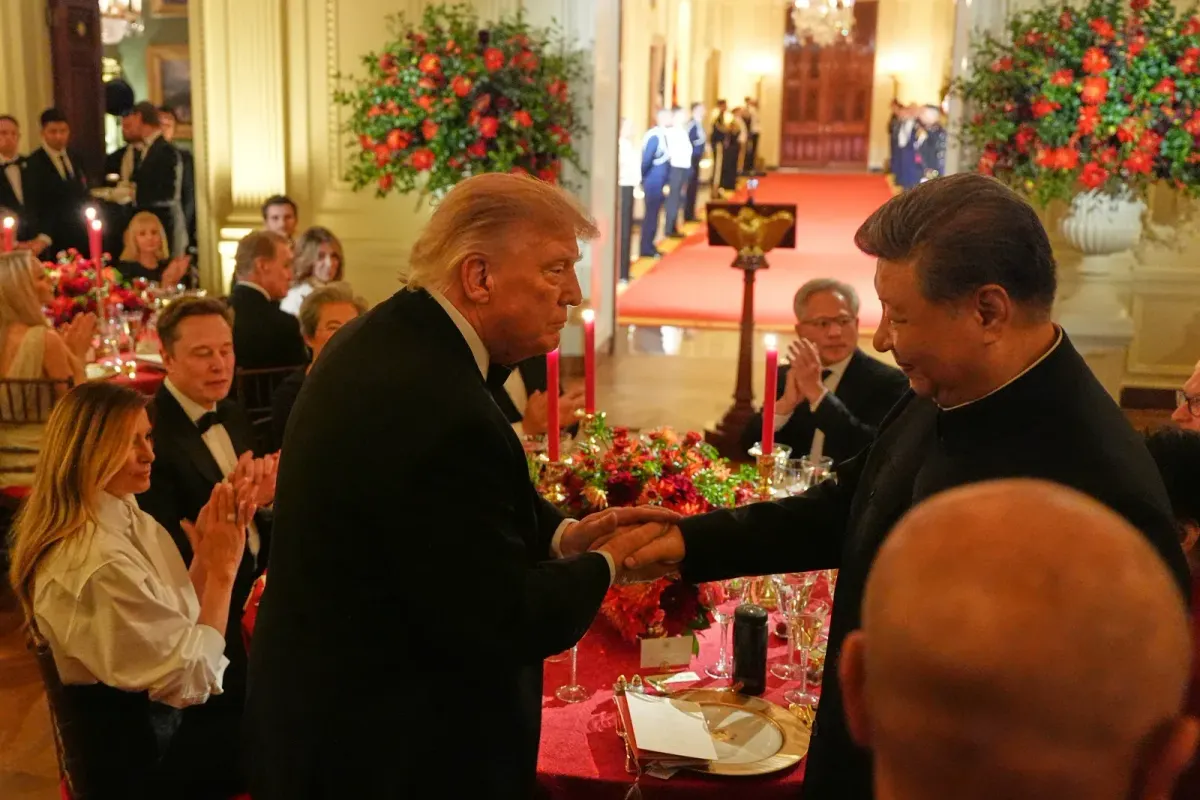
🍽️ PAY TO PLAY, PAY TO PLATE: President Trump hosted Chinese President Xi Jinping at a lavish state dinner Thursday night. With AI safety, trade, and technology at the core of U.S.-China tensions, Big Tech's biggest names made sure to get themselves invited to enjoy yellow squash velouté with mushrooms and sesame-crusted sea bass. These executives and their companies have coincidentally spent two years building unprecedented access to the President through cash contributions to his slush funds and pet projects, including his inaugural fund and the $300 million ballroom he is building after demolishing the White House’s historic East Wing.
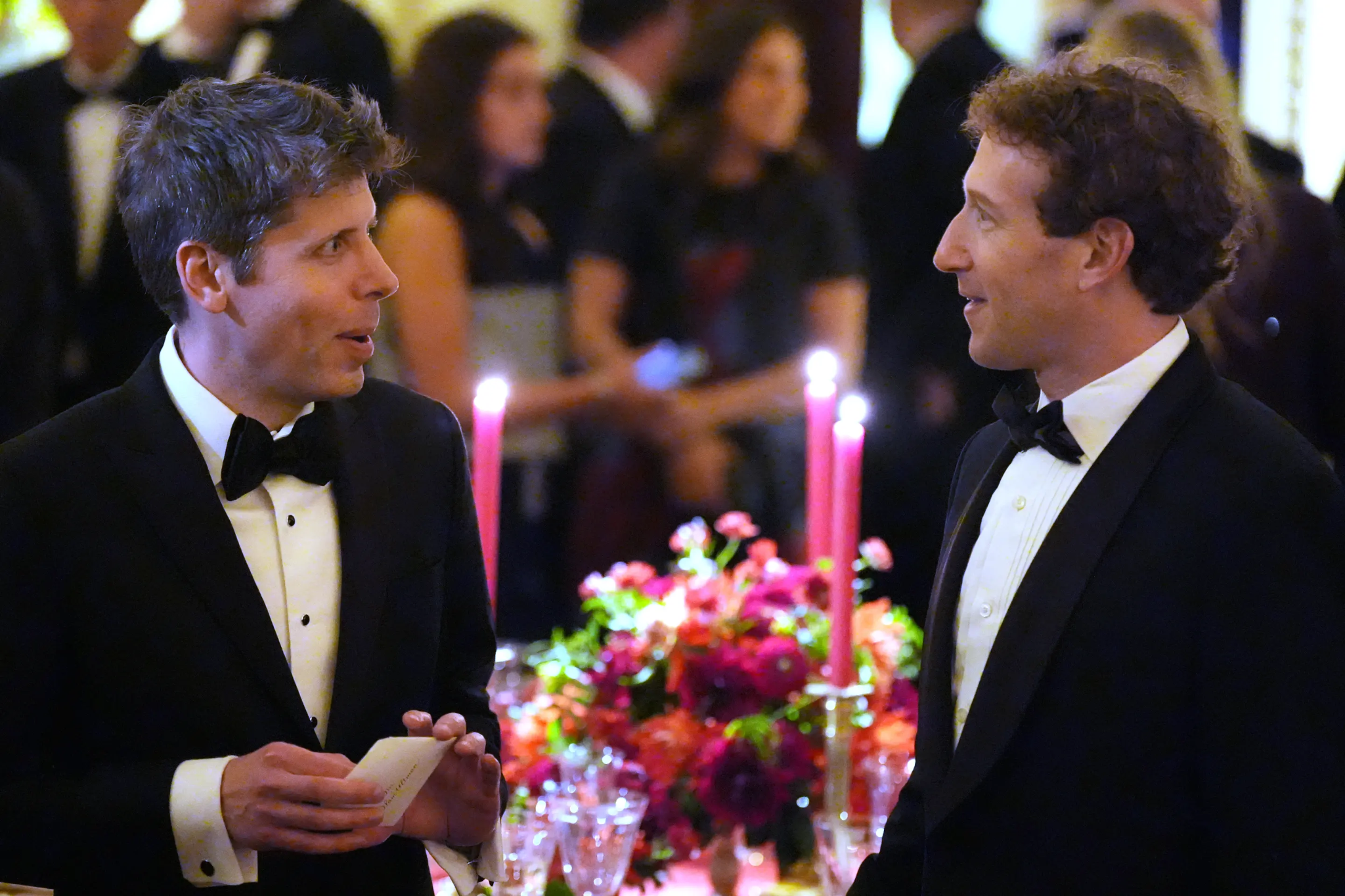
As Rolling Stone put it in a headline, “if you want to know who America’s oligarchs are, read this list:” Here’s who sat down to dinner with Trump and Xi, and what they paid for the “honor”:
- Mark Zuckerberg, Meta: $1 million to the inaugural fund, a ballroom buy-in, and a personal settlement that netted Trump $25 million
- Sam Altman, OpenAI: $1 million to the inaugural fund
- Jeff Bezos, Amazon: $1 million to the inaugural fund, plus a donation to the ballroom
- Sundar Pichai, Google: $22 million for the ballroom extorted by Trump via a court settlement, plus a ballroom contribution
- Jensen Huang, Nvidia: $1 million to the inaugural fund, a ballroom buy-in, and a bonus $1 million for dinner at Mar-a-Lago
- Tim Cook, Apple executive chairman: $1 million to the inaugural fund, plus a ballroom buy-in
- Elon Musk, Tesla/xAI: $1 million to the inaugural fund and $250 million in Trump campaign donations.

📈 THE TRUMP FAMILY BETS ON AI: Days after AI CEOs sounded alarms about safety and tech stocks dropped sharply, Trump was dismissing AI fears as a "hoax." Meanwhile, a Washington Post analysis finds that the Trump family business empire has grown increasingly intertwined with the AI boom. The Post found nearly 30,000 disclosed securities transactions since Trump returned to office, including the chip, server, and energy stocks powering the AI build-out now estimated at $10.3 trillion. Trump sons, Donald Jr. and Eric, are also investing through 1789 Capital and American Ventures in AI firms like xAI, Perplexity, and AI defense tech.
The White House says there are "no conflicts of interest," but former Office of Government Ethics acting director Don Fox isn't buying it: "No president since we've had this regime of conflict-of-interest statutes has ever conducted their finances this way."
Big Tech's executives paid for access to the President, and his family is getting rich from the the industry they run. Might help explain why Trump refuses to support bipartisan AI safety efforts – a position which puts Republicans running for reelection amid nationwide anger over data centers in a tricky spot.

🧢 PRIVILEGED INFORMATION: Last month, Meta agreed to pay $18 billion to settle claims brought by a bipartisan coalition of state attorneys general that it addicted our kids and misled the public. Now, in the consolidated school-district lawsuits, Meta is fighting to keep a mountain of internal records sealed, while plaintiffs push to make them public. Unsurprisingly for a company that relentlessly pursues whistleblowers to silence them, Meta appears to have abused attorney-client privilege so aggressively in the current case that plaintiffs want a judge to order tens of thousands of documents reviewed by a third-party auditor. The plaintiffs pointed to Meta’s underlying corporate culture. Case in point: to mark the 2024 launch of Instagram's Teen Accounts, Meta lawyers ordered swag baseball caps stamped "a/c priv," shorthand for the attorney-client privilege Meta cites as the reason to withhold documents from the courts and the public.
Instagram made 'attorney-client privilege' swag hats for employees who concealed kids safety docs in court battle https://t.co/94yiLA9gmp pic.twitter.com/1nbo38vdUY
— New York Post (@nypost) September 25, 2026
Instagram's legal team, per an unsealed internal chat, "reviewed and are OK with" the swag. One employee asked whether the hat carried "any meta or IG logo on the hat anywhere" – apparently worried about being identified. Last week in court, plaintiffs' lawyers cited exactly this as proof of a "culture of privilege abuse," and the judge found it serious enough to order a re-review of privilege designations on a sample of 300 documents.
TOP's Sacha Haworth: "It speaks volumes that Meta's senior-most executives pay lip service to safety in public, while mocking it in private and abusing attorney-client privilege to conceal documents from Congress. We need to protect every child on every platform, and we need to force Big Tech to clean up its act for good."

🛠️ THE NEW WORKPLACE AI RULEBOOK: AFL-CIO President Liz Shuler calls AI "the single biggest threat to working people of our lifetime" – and unions aren’t waiting around for Congress to do something about it. With federal action stalled, labor is fighting for a say where it has the most leverage: the bargaining table. As CWA's Moira Bulloch puts it, AI policy is getting set “contract by contract, employer by employer.”
At Bath Iron Works in Maine, the machinists' union just negotiated a new five-year contract requiring the company to inform them at the "conceptual stage," not after the fact, of any new AI or robotics deployment. "It was the union trying to force the company's hand about being more transparent when it comes to AI," said Local S6 president Tim Suitter. "The sooner we can be part of that conversation... the better off we are." They aren't trying to ban the technology; they want a voice in how it gets used before it reshapes their jobs. And they're using their wins to fight for transparency: when the yard rolled out a welding robot without the promised heads-up, the union filed a grievance.
They're not alone: NewsGuild-CWA already has 85 to 90 contracts with explicit AI provisions, and SAG-AFTRA has barred AI replicas from replacing actors without consent.
Unfortunately, nearly 90% of U.S. workers have no union at all, leaving 140 million Americans with no seat at the table as companies use AI to rewrite jobs and cut them outright — unless Congress and state legislatures intervene to set guardrails that protect their livelihoods.

 Dara Kerr
 Suzanne Downing
 kmckoy
 Queenie Wong
 Mara Hoplamazian and Emily Kennard