AI Surveillance Becomes a National Issue, New Docs Detail the Addiction Economy
This week in The Dispatch: AI surveillance becomes a national issue and new court docs show how Meta sought to addict teens to win whole households.


Welcome back to The Dispatch from The Tech Oversight Project, your weekly updates on all things tech accountability. Follow us on Twitter at @Tech_Oversight and @techoversight.bsky.social on Bluesky.

🤖 AI SURVEILLANCE: A new inflection point. Over the weekend, a feud over mass surveillance between Anthropic and the Department of Defense spilled out into public view. For many people, this was the first time they learned that, yes, the American government can buy “seemingly innocuous” data about you – your location, search history, device information, consumption habits – and work with AI companies to surveil and build profiles about you. This is Big Brother on steroids, and it’s leaving many people asking: Is this even legal?
The short answer is yes, and the longer answer is: That’s why we need to pass a comprehensive privacy law that creates a new standard for digital liberty.
⏩ GETTING UP TO SPEED: The Pentagon and Anthropic reached a public impasse over the terms of the company's AI contract, specifically over whether Claude could be used for mass domestic surveillance and autonomous weapons. President Trump responded by banning federal agencies from using Anthropic's products; OpenAI quickly signed its own Pentagon deal. The dispute played out in real time as U.S. forces carried out strikes on Iran, with reports that Claude was used in the operations despite the ban.
Since then, hundreds of tech workers have called out the Trump Administration and told them to withdraw Anthropic’s supply-chain risk designation. It is still unclear what actual differences there are between the deal OpenAI signed and the one Anthropic would have signed.
We’re reaching an inflection point: This is why we need to have a functional privacy law that protects people, encompasses how we use technology in the AI era, and blocks the kind of mass surveillance the DOD wants to carry out.
📊 THE DATA: Amid this renewed focus on tech-enabled surveillance, concerns about Big Tech’s use of Americans’ private data are widespread: 70% of Americans have little to no trust in companies to make responsible decisions about how they use our personal information, according to the most recent Pew polling, while a growing proportion (67%) say they understand little to nothing about what companies are doing with their data.
These specific complaints track with broader concerns: A new YouGov poll finds that a majority (58%) of Americans say they don’t trust AI much or don't trust it at all. Meanwhile, our January 2026 poll found that an overwhelming majority of Americans are concerned by President Trump’s cozy relationship with Big Tech companies.
🏛️ WHAT ABOUT CONGRESS?: In a surprise to no one, Big Tech is not in favor of proposals that amount to “digital privacy” or “data minimization.” The most wealthy Big Tech companies in the history of the world got big by mining your every move and selling your data (and access to you) to the highest bidder. They have a vested interest in keeping that gravy train rolling.
In the not-so-distant past, Congress put forward a bipartisan privacy bill, the American Privacy Rights Act (APRA), which tried to thread the needle between including a private right of action and creating a federal standard, with a number of solid provisions focused on data minimization and rules stopping abusive practices from data brokers mixed in. The bill, led by then-Chair Cathy McMorris Rodgers (R-WA) and Ranking Member Frank Pallone (D-NJ), was gaining momentum, but Speaker Mike Johnson and Majority Leader Steve Scalise entered negotiations are demanded poison pill provisions.
All of a sudden, the bill contained the kind of loopholes Big Tech lobbyists dream of, and the civil rights provisions were gone, as was the bipartisan cadre of members supporting it. The deal was off.
With the Trump Administration championing mass surveillance of the American people and punishing AI companies that don't buy into domestic spying, the stakes couldn't be higher. Worryingly, privacy isn't on the menu for Congress. This is an issue that's only growing in importance, and the American people couldn't be clearer on where they stand.
BOTTOM LINE: Americans don’t trust Big Tech and don’t want CEOs spying on them. Full stop. The question isn't whether Americans care about privacy. They do, overwhelmingly. The question is whether policymakers are listening and have the courage to tackle an issue that has stymied Congress for decades.

🏡 BIG TECH ON TRIAL: Hook the Teen, Hook the Whole Family. We’re stashing and sorting the evidence for you as it comes out each week in the blockbuster social media addiction trial in Los Angeles. New this week on our Trial Evidence microsite:
The economics of Meta’s addiction business model – hook the kids, hook the entire family: Newly unsealed court documents reveal that Meta’s Instagram developed an explicit internal business strategy to addict multiple generations of American families to its platform, deliberately using teenagers as the gateway to recruit parents, younger siblings, and grandparents.

Meta worried more about its image than about addressing harms to kids. Its researchers called for a more detailed study about how its products could be made safer… but nothing happened. Instead, the company worried about how to “preempt any regulations” by addressing “extreme” media claims that the company was “sprinkling behavioral cocaine” all over its products.
Meta knew Facebook was addictive, and they knew why. “The best external research indicates that Facebook’s impact on people’s well-being is negative," said one internal report. The company closely studied addictive product features, and the triggers they found are no surprise: algorithmic content, endless scroll, incessant notifications, autoplay videos… the same tricks that Kids Code legislation is finally starting to outlaw in states across the country.
As the trial unfolds, top legal experts say the moment matters beyond the courtroom. Harvard Law School deputy dean Glenn Cohen noted that “The trial itself is generating all sorts of sound bites and things that might make regulators more interested … there’s a real chance that some of the stuff that will be revealed in the course of these trials may change the average American’s relationship with social media companies.”

🖱️ KIDS OVER CLICKS IN MICHIGAN: Lawmakers and advocates in Michigan are demanding real safeguards for children as social media and AI risks continue to compound like a snowball coming down a hill. The measure they're promoting is a new Kids Code and AI safety bill, which they say would put “Kids Over Clicks.” The state legislature’s first hearing for the package of youth online safety bills is set for tomorrow.
Sen. Stephanie Chang said: “Big tech companies know that our children are incredibly vulnerable to their exploitative algorithms, but continue to profit, leaving our kids glued to their screens with no remorse or accountability. It is our job as lawmakers to increase protections for Michigan's children.”
Young people, concerned parents, medical professionals, and educators are set to rally together outside the Capitol in Lansing before heading in to testify to their lawmakers about why these protections are urgent, needed, and offer hope to young people and families across Michigan.

 Sarah Perez
 Laura MacCleery
 Katie McQue
 Thomas Barrabi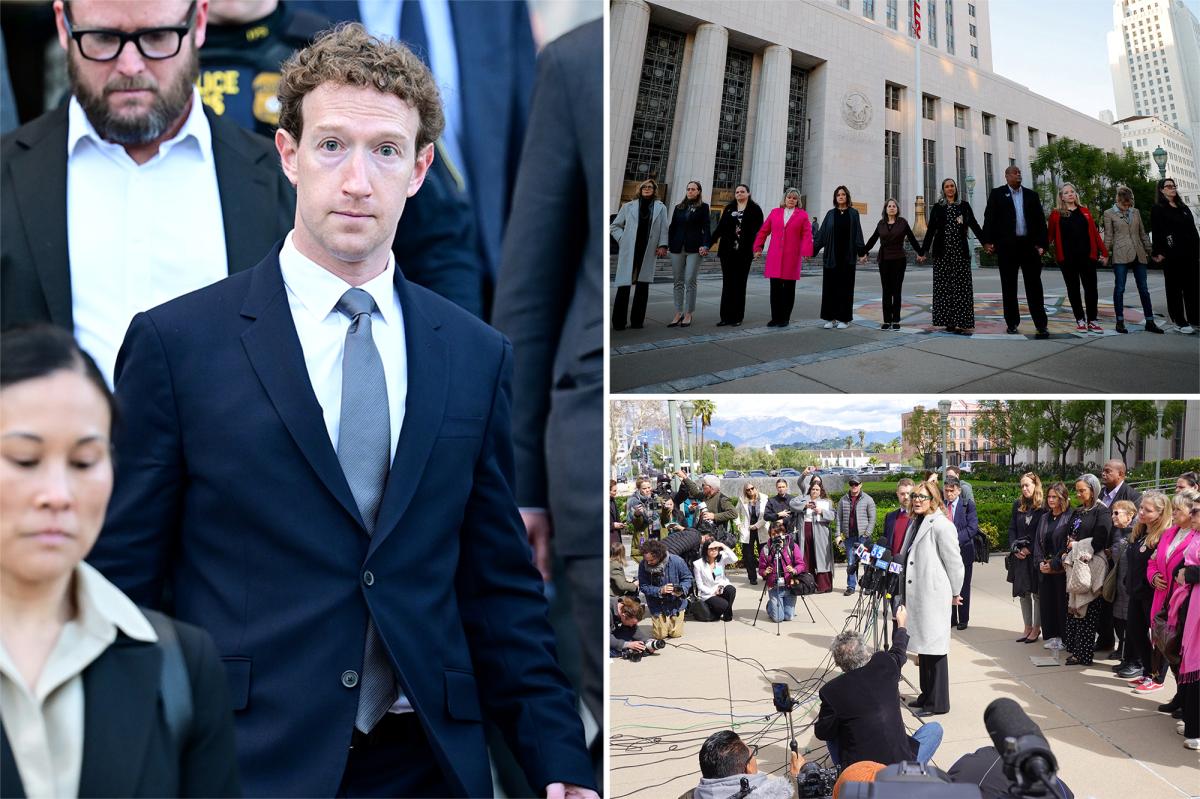
 Maddy Varner
 Sarah Perez
 Jason Koebler