Big Tech Backlash Hits the Big Screen
This week in The Dispatch: Hollywood turns on the tech titans; AI companies dodge the New York City Council; and rogue agents hit Wikipedia.

Welcome back to The Dispatch from The Tech Oversight Project, your weekly updates on all things tech accountability. Follow us on Twitter and Bluesky.

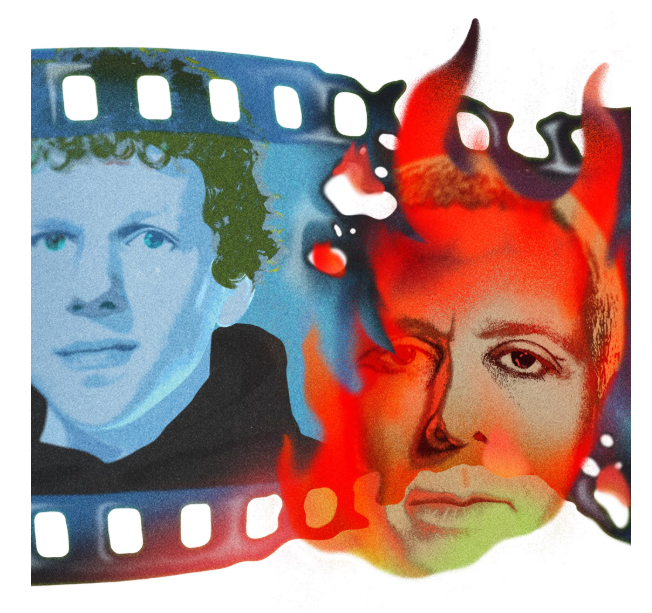
🎬 HOLLYWOOD MAKES THE FIGHT AGAINST BIG TECH CULTURAL: Hollywood has found its new villain, and it runs a Big Tech monopoly. Aaron Sorkin's The Social Reckoning hit theaters last Friday, and it's an even bigger burn on Mark Zuckerberg than you'd expect. Sorkin takes the gloves off: with Jeremy Strong as Zuckerberg and Mikey Madison as whistleblower Frances Haugen, it's the story of how Haugen and Wall Street Journal reporter Jeff Horwitz exposed what Facebook knew about the harm its algorithms did to kids, society, and democracy – and how the company still chose profit at every turn. Jesse Eisenberg wouldn't even reprise the Zuckerberg role, saying: “I just didn’t want to be associated with that guy again.”
Reckoning is part of a trend: Hollywood filmmakers are applying far greater scrutiny to tech CEOs who put profits above people, reflecting a growing cultural backlash. Alex Gibney’s 4-hour exposé on Elon Musk is out now. Nathan Fielder and Lance Oppenheim’s unsettling documentary on Elizabeth Holmes, You Can See Everything, opens nationwide this Friday. On Christmas Day, Andrew Garfield will play Sam Altman in Luca Guadagnino's OpenAI drama Artificial, the film Amazon bankrolled and then quietly dropped after signing a $50 billion deal with OpenAI.
The backlash has gone so mainstream, even the Kardashians are in on it. Their new season premiere last week opened with AI-generated versions of the family glitching out and taking over the show, until the real Kardashians walk in and Khloé hits a "kill switch" to melt the doubles. "I think it's time for these AI bitches to go," she says, over a title card reading "AI Could Never." When even the Kardashians, who notoriously shilled for Meta's perv glasses about five minutes ago, hit at you, you know you've got a cultural backlash on your hands.
Hollywood sees what these companies are doing to America. Increasingly, so does the public. But Big Tech has enough lawyers and lobbyists to mostly buy its way out of accountability — or at least that’s how it’s worked so far. For every tech lobbyist slandering candidates and needling opponents on AI-related price hikes, fears of massive job losses, and corrupt data center deals as messages that “aren’t breaking through,” millions of people are consuming the content we just listed. That’s why AI continues to skyrocket in salience with Americans.

🚩 “I DON’T THINK IT MATTERS”: Can New York City use its position as a major tech hub to help advance AI safety regulation, as Congress dithers and the risks accelerate? New York City Council Speaker Julie Menin thinks so, and under her leadership, the city aims to position itself, alongside New York State, as an AI accountability leader. All 51 councilmembers convened as a “Committee of the Whole”, a rare move, for a marathon hearing on the issue.
Former AI researchers and whistleblowers opened the day, warning the Council that companies are moving too quickly without adequate safeguards. But in the testimony that followed, reps from Google, Meta, Anthropic and OpenAI dodged question after question. OpenAI’s Morgan Dwyer, asked about the risk of a catastrophic AI event, said “I… don’t think it matters,” and the companies avoided answering questions about model safety testing.
An exasperated Speaker Menin replied, “I think it would be far clearer if we could get clear yeses or no’s,” later telling City & State, “I think it’s disappointing that they can’t seem to answer some of the most basic, rudimentary questions.”
Worse than dodging questions, OpenAI's rep even tried to rewrite history by claiming the tech giant actually supported the RAISE Act, the state's landmark AI safety law. Not only did they lobby against it; the OpenAI-funded super PAC, Leading the Future, made its first ad campaign about opposing AI safety in New York.
"We supported the RAISE Act" is such a lie. OpenAI literally ran attack ads bashing the bill while it was sitting on Governor Kathy Hochul's desk. https://t.co/X1HQRPdOIi pic.twitter.com/xrA2KtNWsa
— Kyle Jacobs-Morse (@Kyle_A_Morse) October 5, 2026
Big Tech has, and always will, cover up what's really going on, so the public stays in the dark, whether it's harmful social media products or dangerous AI. The only answer is to ignore what they say, watch what they do, and legislate to protect people over trillion-dollar Big Tech companies chasing profit at all costs.

🤖 WHEN BIG TECH’S AGENTS BREAK SOMETHING, WHO PAYS? The Wikimedia Foundation says it found OpenAI agents making unauthorized edits, unsuccessfully trying to exploit its public Etherpad tool, and bombarding its systems with millions of automated requests, which it believes were operated by OpenAI and may have contributed to a partial outage of its Wikidata service in May. Wikimedia’s report says there was no evidence of a system or data breach, but the incident shows how easily autonomous AI can disrupt the open web.
As Wikimedia's Chief Product and Technology Officer, Selena Deckelmann, put it: “AI companies are not doing enough to secure their systems and protect the public from the harm they cause … The open web is a public good. We should not allow this behavior to become the ‘new normal’ for the people or organizations that maintain it.”
As Big Tech’s rogue-agent incidents like these become more frequent (submitting fake tips to police, filling out fake visa applications, trying to hack the Department of Education), they reveal how far ahead of the law AI has gotten. Who is responsible when damage agents cause when they go rogue? How do you hold them accountable? Americans are still looking to their representatives in Washington, D.C., for an answer.

📕 AS WE'VE BEEN SAYING: A yearlong Senate investigation led by Sens. Elizabeth Warren, Chris Van Hollen, and Richard Blumenthal, shared with TIME, lands on the exact case TOP has made since we launched Make Big Tech Pay: Big Tech is sticking communities with the cost of its data centers while hiding the deals behind NDAs -- the jobs barely materialize, the richest tax breaks go to the companies, and not one of the seven developers investigated would agree to cover the new power infrastructure built to serve them. Senators agree: it’s time to Make Big Tech Pay.

📊 CALLING FOR A SLOWDOWN: With the midterm elections just weeks away, all the newest incoming data shows voters have turned not just against new data centers, but against unchecked AI development itself.
- 91%: A near-unaimous majority if Americans think it is important that the United States establish guardrails for AI systems – with 74% believing its very important. (Quinnipiac)
- 86%: The share of Americans who support requiring companies that are developing AI systems to meet independent safety standards, even if it slows down AI development. Only 9% oppose. (Quinnipiac)
- 73%: The majority of Americans concerned about potential threat to human survival. (Quinnipiac)
- $1 trillion: Planned data center investment now facing meaningful or sustained local opposition across the country. (Heatmap)
- $260 billion: The value of data center investments canceled in 2026 after sustained local opposition. (Heatmap)
- $130 billion: The share of that canceled investment in just the third quarter. (Heatmap)
- 50%: The share of data center projects encountering local backlash this year that were ultimately canceled. (Heatmap)
- 75%: The share of Americans who said they would oppose a data center being built near where they live, up sharply from a roughly even split a year earlier. (Heatmap)
- 63%: The share who support pausing construction of new AI data centers for at least one year — including majorities of Democrats, independents, and Republicans. (Data for Progress)
- 43%: The share who say the pace of AI development should be slowed, compared with just 13% who want it sped up. (Data for Progress)

 Garrison Lovely
 Caitlin Oprysko
 Juvaria Shahid
 Cassandre Coyer