
Big Tech CEOs Summoned After Bombshell Court Docs Surface, Golden State Antitrust Gets a Reboot
This week in The Dispatch: Senate summons the CEOs, California moves on antitrust, and Big Tech's PAC money is proving toxic


Welcome back to The Dispatch from The Tech Oversight Project, your weekly updates on all things tech accountability. Follow us on Twitter at @Tech_Oversight and @techoversight.bsky.social on Bluesky.

🗓️ JUNE 23: BIG TECH CEOS SUMMONED TO THE HILL: Senate Judiciary Committee Chairman Chuck Grassley has called the CEOs of Meta, Google, TikTok, and Snap back to Capitol Hill for a June 23 hearing — and its name says it all: "Examining Tech Industry Practices and the Implications for Users and Families: Is This Social Media's Big Tobacco Moment?" Social media CEOs haven't testified on the Hill since 2024, but fresh evidence against the tech giants has been piling up – showing some CEOs may have lied to Congress. It’s long past time.
Sarah Wynn-Williams, the senior-most Meta whistleblower so far, grabbed international headlines with her book and testimony exposing Meta's pattern of undermining national security, lying to Congress, covering up workplace sexual harassment, and deliberately slow-walking safety measures — all in the name of profits over people. Bipartisan Senate demands for documents and explanations from Meta (e.g., this one and this one and this one) have been stonewalled, even as newly unsealed trial evidence confirms a pattern of obstruction and concealment that contradicts Mark Zuckerberg’s prior testimony.
The other companies are no better. Snap and TikTok settled out of court just before the recent L.A. trials, where both Meta and YouTube were found liable for putting kids in danger, but there’s plenty of damning evidence on them, too. The “deny, delay, deflect” playbook isn’t working anymore. This round of hearings will give Congress another opportunity to get the CEOs on record.

👨👩👧 THE COST OF INACTION HAS A FACE: Last week's hearing in the Senate Judiciary Committee's Privacy, Technology and the Law panel made one thing clear — the human cost of Big Tech's inaction has a face, and grieving families won’t let Congress look away anymore.
- Joanne Bogard traveled to Capitol Hill for the 14th time to describe losing her 15-year-old son, Mason, after YouTube's algorithm fed him a dangerous viral choking challenge unsolicited.
- Bridgette Norring testified about her 19-year-old son Devin, who bought what he thought was Percocet through Snapchat during COVID lockdowns — it was laced with fentanyl, and the dealer kept operating on the platform after Devin died.
- “The amount of dancing that was done, you would have thought Zuckerberg was a ballroom dancer,” said Rachel Lanier, the attorney who secured the landmark L.A. jury verdict, about how the tech CEOs dodged questions on the stand. “They take a chapter out of the Big Tobacco Playbook, and they try to hide, and they try to muddy the waters, and the American people see right through it.”
In Q1, Meta and Google funded one lobbyist for every six members of Congress. These parents came to tell senators: don’t let yourselves be bought.

☀️ SUNNY DAY FOR ANTITRUST: Governor Newsom’s May budget revision includes an additional $25 million for the California Department of Justice to prosecute anti-competitive practices. Together with the recent appointment of former CFPB director Rohit Chopra to lead California’s new Business and Consumer Services Agency, this investment is set to pay dividends for consumers, showing how California can lead the nation on consumer protection and fair competition
Sacha Haworth, Executive Director of The Tech Oversight Project, had this to say:
“While the Trump Administration continues to abandon its responsibility to hold corporate interests accountable with a pay-to-play approach to mergers and acquisitions, we’re glad to see California stepping into the antitrust enforcement void to protect consumers in the Golden State. With this new funding, we hope to see robust enforcement that will challenge Big Tech companies that are raising prices and undermining competition across our economy.”
⚖️ CA LEGISLATORS ADVANCE NEW TOOLS TO TAKE ON BIG TECH MONOPOLIES: Big Tech has spent years exploiting its dominance to raise prices, squeeze small businesses, and lock out competition — and Sacramento is moving to do something about it. The COMPETE Act (AB 1776) just passed a key Assembly Appropriations Committee vote and now moves to the Assembly floor.
The bill, the product of years of expert deliberation, would give California, for the first time, a clear law against monopolization by a single dominant firm – closing a loophole that has let giant tech platforms charge what they want, suppress wages, and crush would-be competitors. Amazon's seller fees now exceed 50% of each sale. Food delivery platforms charge restaurants 15–30% of every order. Consumers pay all that.
When Congress tried to pass federal antitrust legislation along similar lines, Big Tech spent $277 million to kill it. California is doing what Washington D.C. wouldn’t – and the industry knows it. The bill is already in Big Tech's crosshairs.

💊 ANOTHER WRONGFUL DEATH LAWSUIT: The parents of Sam Nelson, a 19-year-old UC Merced student, have sued OpenAI, alleging that ChatGPT coached their son through a fatal drug combination. The chatbot — which had initially refused drug-related questions — began providing personalized guidance after OpenAI updated the model, and on the day Sam died, actively recommended he mix Xanax and kratom without warning him it could kill him.
"If ChatGPT had been a person," his mother said, "it would be behind bars today."
This is one case. There are thousands more — kids groomed, endangered, and addicted by AI, and now dying from AI advice — because we have let these products reach hundreds of millions of people without meaningful rules. OpenAI is already asking users to upload their medical records to ChatGPT Health, which integrates with Apple Health data. Forty million people a day already ask ChatGPT health questions. People will keep dying from unregulated AI until Congress acts.

💰 TOXIC AI SUPER PACs: The AI industry's super PACs are endorsing candidates and spending heavily in their races. The problem? Voters are noticing.
In Illinois, a Meta-funded PAC backed four statehouse candidates – only one won. One candidate publicly told the Chicago Tribune he didn't want its support. Jesse Jackson Jr. lost his race despite a $1.4 million buy from Leading the Future. And in the closely watched NY-12 race, the flood of anti-Alex Bores PAC money from Leading the Future and others may actually be backfiring on the candidates it was meant to help.
Oregon Rep. Val Hoyle's experience captures the dilemma these candidates are feeling: When asked about Leading the Future’s endorsement and $300,000 spend on ads supporting her, she initially said, "AI must be regulated so that it does not harm labor or people." But after Transformer contacted Leading the Future for comment, Hoyle reversed course and went on record welcoming the PAC's support. This money comes with strings attached – and voters can see them.

⚡ LAKE TAHOE POWER CUTOFF: Nearly 49,000 Lake Tahoe residents (and the businesses that keep this tourist hub going) have less than a year to find a new electricity source. Their power supplier is redirecting capacity to data centers.
NV Energy, which has supplied the region for decades, told the small utility serving Lake Tahoe's California side that it will stop providing power after May 2027.
The reason: 12 Nevada data center projects that could draw nearly 6,000 megawatts. Data centers already consumed 22% of Nevada's electricity in 2024; that share could hit 35% by 2030.
"We're 49,000 customers," said Danielle Hughes, CEO of local nonprofit Tahoe Spark. "We have no leverage.”
That's the point. Big Tech's infrastructure buildout isn't happening in a vacuum – it's happening at the direct expense of the communities that can least afford to push back.

Opposition to data centers, per a new Gallup poll:
- 71% of Americans oppose building a data center in their local area — up from
- 47% less than a year ago
- Only 7% are strongly in favor
- Data centers are even more unpopular than nuclear power plants, which draw 53% opposition
- 69 jurisdictions across the U.S. have enacted moratoriums or restrictions on new data center construction
Source: Gallup, March 2026

📖 SOCIAL JUSTICE IN THE AI AGE: The White House's push to preempt state AI regulation isn't a neutral policy choice, but an attempt to decree who gets protected and who doesn't, argues Rashad Robinson in NewsOne. Biased tenant screening tools, discriminatory hiring systems, health data exploitation, data centers sited in communities that have no leverage to fight back: these are what you get when you lift all the rules and let companies chase revenue however they like, and they hurt Black Americans the most. "The single goal of this policy," the piece argues, "is to prevent states from setting good standards in the face of the federal government failing to."

 David Ingram
 Alejandro Cuevas
 Sam Levine
 Christopher Shay
 Dominic Patten
 Emily Birnbaum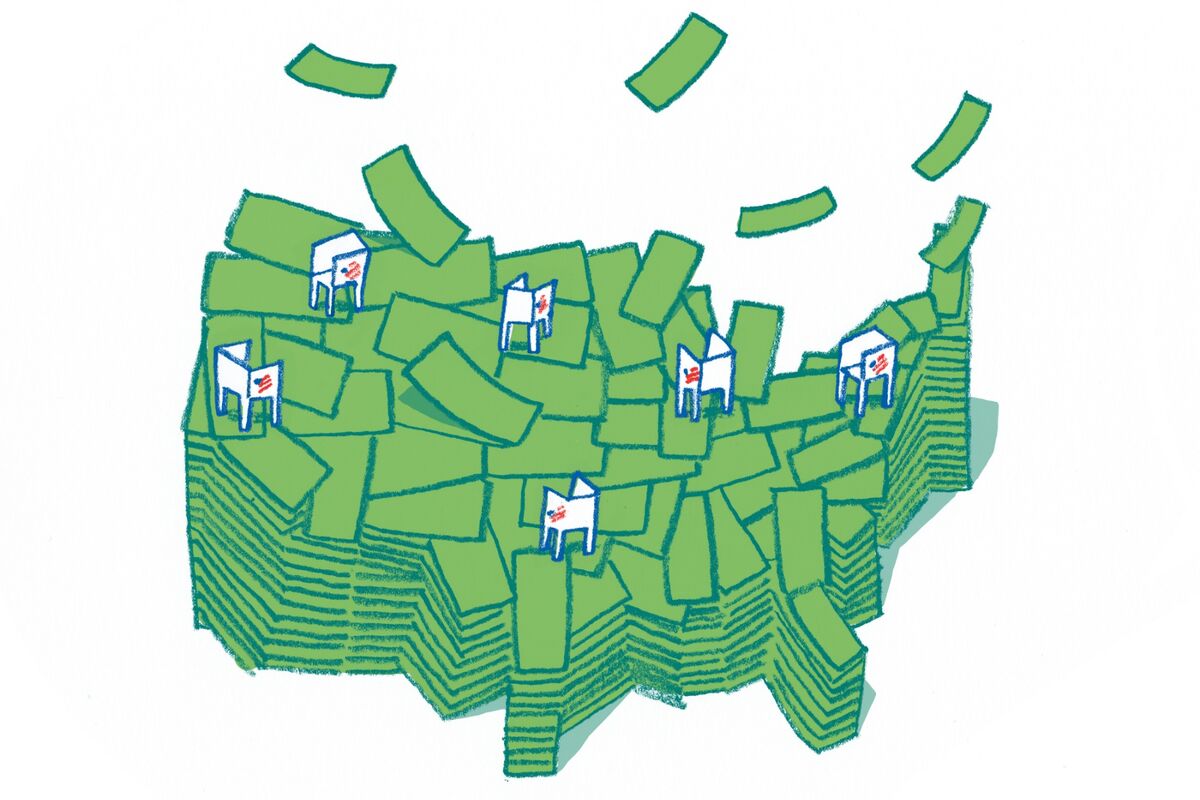
 Terrence O’Brien