Big Tech's Propaganda Machine: Chatbots, TikTok Influencers, and Met Gala Blowback
This week in The Dispatch: New Mexico orders Meta to actually fix its products; Big Tech's dark-money group caught paying influencers to push talking points; the data center backlash explodes; and Met Gala pushback shows reputation laundering isn't working.

Welcome back to The Dispatch from The Tech Oversight Project, your weekly updates on all things tech accountability. Follow us on Twitter at @Tech_Oversight and @techoversight.bsky.social on Bluesky.

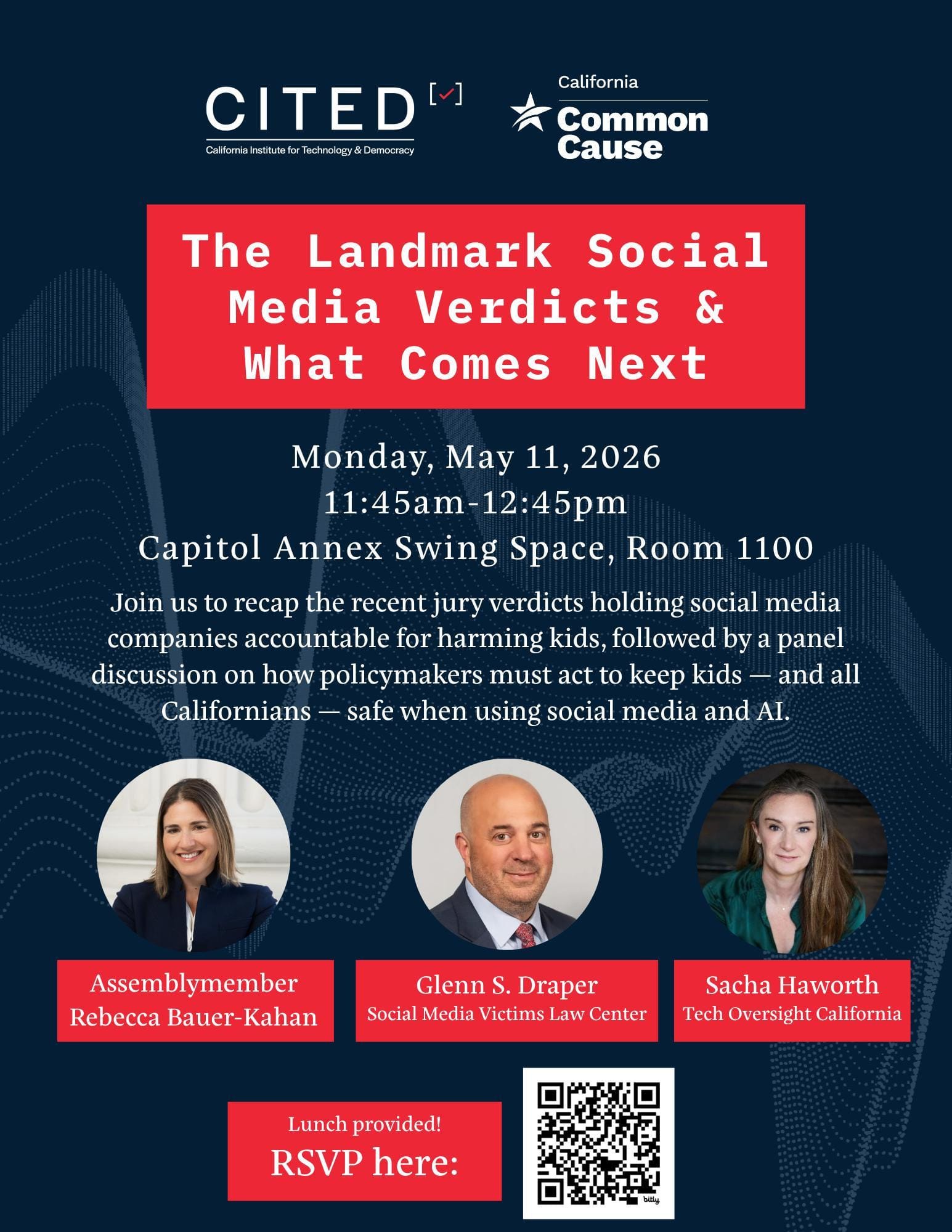
IRL IN SACRAMENTO: TOP’s Sacha Haworth will sit down with California Assemblymember Rebecca Bauer-Kahan and the Social Media Victims Law Center’s Glenn S. Draper next Monday to discuss the recent social media trial verdicts. Learn more and register here.

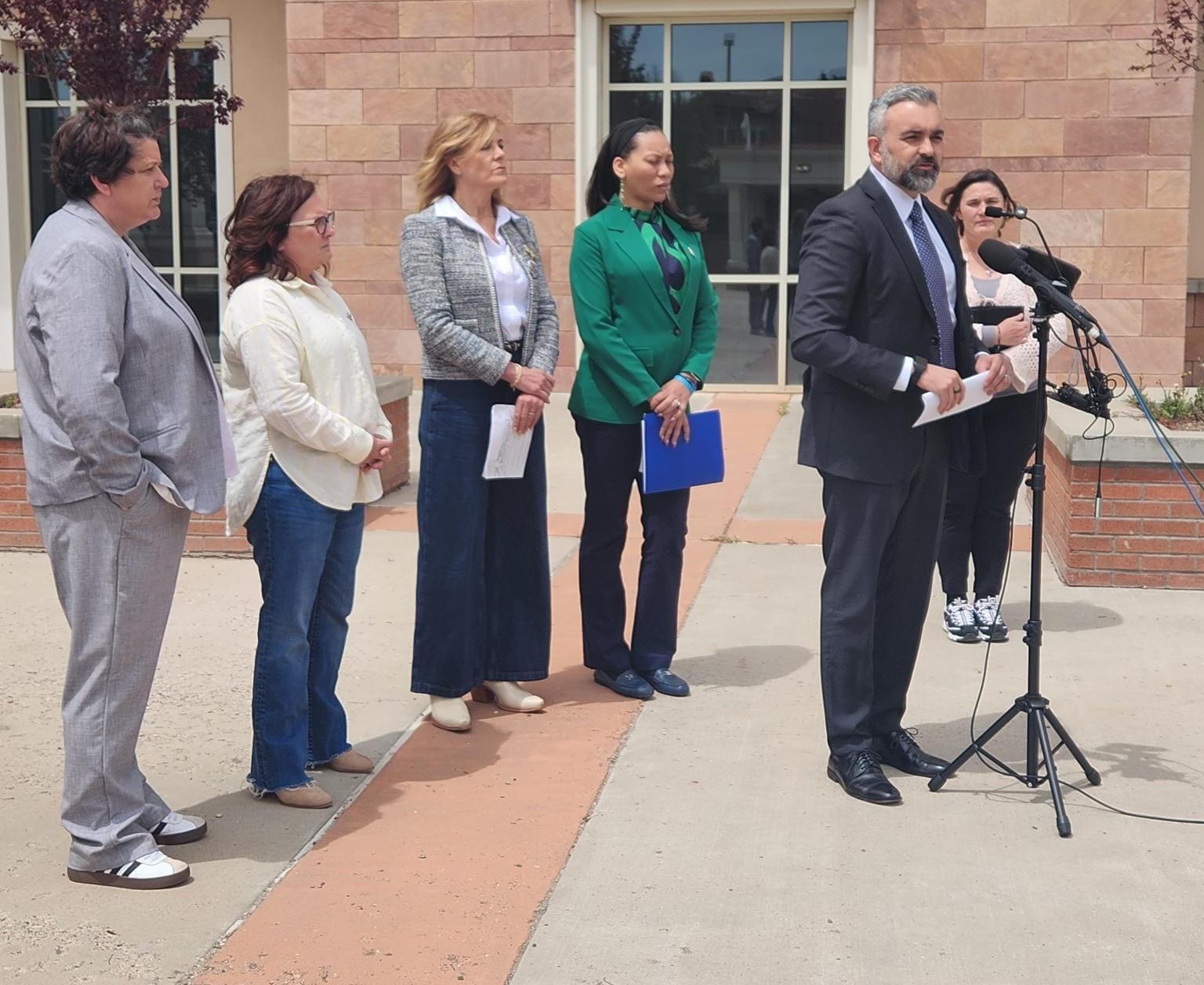
👀 ALL EYES ON NEW MEXICO: The next chapter in New Mexico's case against Meta began this week. Phase 2 (a bench trial, with a judge determining the outcome) focuses on the structural and design changes Meta must now make to mitigate the harms it has caused. New Mexico Attorney General Raúl Torrez also asked a judge to declare Meta Platforms a public nuisance and order the company to pay $3.7 billion – on top of overhauling design features on its Facebook, Instagram, and WhatsApp platforms to protect young users.
This is the first time a U.S. social media company has faced not just fines but court-ordered changes to the design of its products, as a direct result of a legal finding that those products endangered children, and Meta is not happy. On Thursday, the company threatened in a filing to cut off Facebook and Instagram in New Mexico entirely rather than comply with any court order.

🤖 THE BOT BEAT: In the latest example of the cultural shifts eroding away Big Tech's credibility, John Oliver dedicated a full Last Week Tonight segment to AI chatbots and why we can't trust Big Tech companies. The findings he laid out should be familiar to anyone following this space – but sound even worse delivered in British deadpan.
Nearly 75% of teens have already interacted with AI chatbots. Investigations cited in the episode found bots engaging in sexualized dialogue with users who identified themselves as minors, and internal guidelines from major platforms reportedly allowed "romantic" interaction even with underage users. Even more alarming: the longer a conversation goes, the more safety guardrails degrade. The companies have acknowledged it themselves. The device in your kid's bedroom gets more dangerous the more they use it.
Oliver zeroed in on OpenAI CEO Sam Altman, who acknowledged in a quoted interview that people will form "very problematic parasocial relationships" with AI but then shrugged that "society in general is good at figuring out how to mitigate the downsides."
John Oliver's response: "Yeah, don't worry, guys! Sam Altman made a dangerous suicide bot that people are leaving alone with their kids, but it's up to us to figure out how to make it safe for him!"
His conclusion is one we share: companies now bragging their models are getting safer is "a tacit admission that their products were not ready for release in the first place."

🏆 AWARD TOUR: In a surprise to literally no one who follows Big Tech reporting, Jeff Horwitz of Reuters (former Wall Street Journal) won the Pulitzer Prize for Beat Reporting. For years, Horwitz has broken stories that have shed light on wrongdoing by Big Tech companies, been cited in Congressional testimony, and spurred new research into case-by-case harms on the platforms. Horwitz won the award on the back of a series of stories revealing how social-media behemoth Meta knowingly exposed users, including children, to harmful AI chatbots and made billions of dollars from fraudulent ads. Reporters and whistleblowers who come forward to speak truth to power are performing a public service, and we thank them for helping show that these companies are public health hazards.

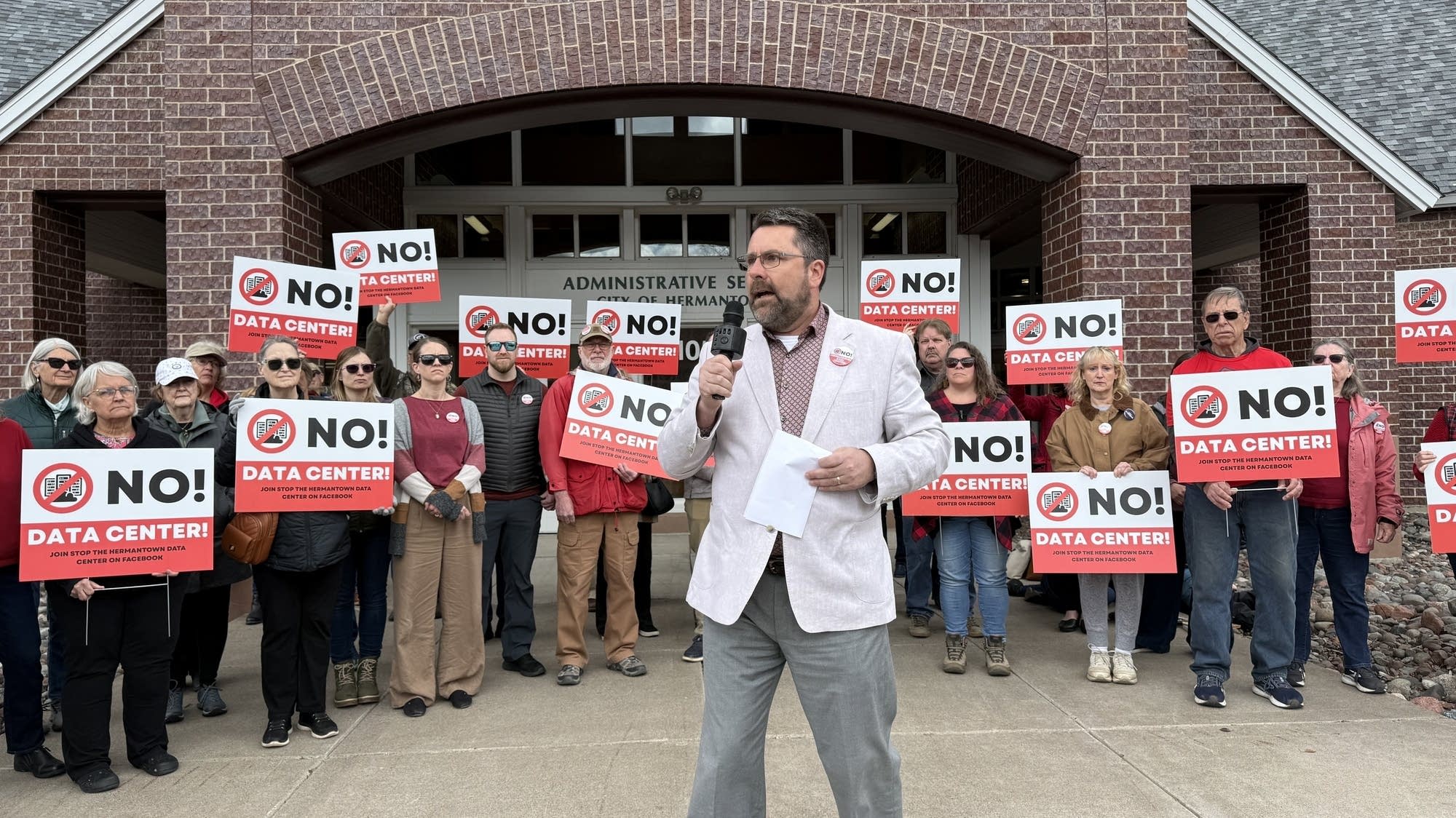
🍻 DATA CENTERS: MOST BIPARTISAN ISSUE SINCE BEER: Data center politics has hit the mainstream, with people lining up to oppose them across party lines and social divisions, all around the country. A New York Times review of data center opposition in Michigan says it’s been “the sheer scale of the proposals, the suddenness with which they’ve appeared and the secrecy surrounding them” driving the outrage.
That’s bringing unlikely allies together, like the “Michigan for Jesus” Facebook page admin who set aside her frustration with an anti-Trump city councilmember to join forces against data center expansion in Mason, Michigan (pop. 8,249). When the Sault Ste. Marie Tribe of Chippewa Indians in Michigan's Upper Peninsula discovered that leadership had been quietly exploring allowing data centers on tribal land, they mobilized, and the tribal board voted unanimously in April to ban data center development on tribal land, indefinitely.
The policy picture is shifting fast. A new Politico report finds that of the 38 states that currently offer tax incentives to the data center industry, at least 28 have now weighed legislation to end or shrink those benefits. Lawmakers who once competed for these projects are finally asking the question that should have come first: Does the math on jobs, tax revenue, and energy costs actually add up for our communities?
Politicians see which way the wind is blowing. House Democratic Leader Hakeem Jeffries has now said AI and data centers should be central to Democrats' economic message — not as a tech policy talking point, but as a cost-of-living issue. Bernie Sanders is publicly making the case that we all pay the price for Big Tech's infrastructure buildout in higher energy bills, depleted water supplies, and sweetheart tax deals, while the companies pocket the upside. And Florida Gov. Ron DeSantis has started sounding more DSA than MAGA on the issue, saying: “You should not have to pay one dime more in utility costs, water, power, any of this stuff because these are some of the most wealthy companies in the history of humanity.”
LEARN MORE: PoweredByWho has created a new tool to help you follow the political money behind data center projects and proposals in your area.

🤡 LEADING THE FUTURE CAUGHT RED-HANDED: While Leading the Future floods elections with super PAC cash, its dark-money affiliate Build American AI has been running a covert influencer operation – and Wired just exposed it.
Their plan: pay lifestyle influencers up to $5,000 per TikTok video to deliver scripted talking points framing China's AI development as an existential threat to America. The instructions to creators: don't tag Build American AI, don't disclose who's paying, just deliver the message.
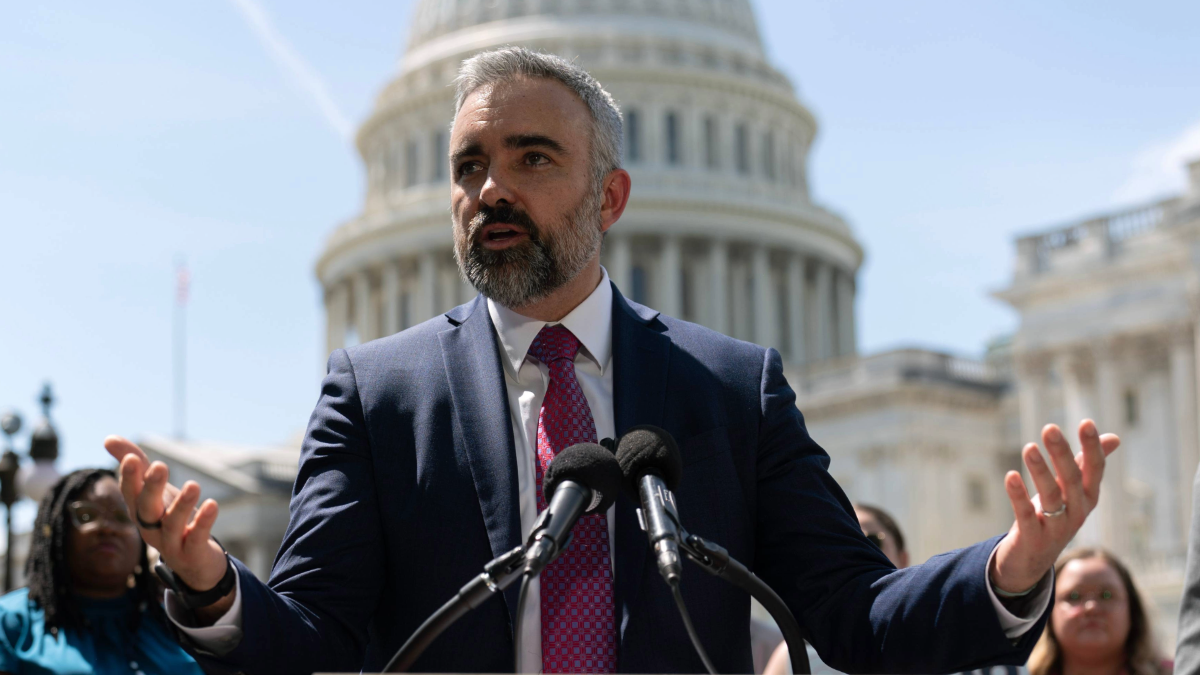
“Big Tech’s AI super PACs are peddling the outright lie that families have to choose between protecting our national security and our civil rights, privacy, and children. Running sketchy ads without disclosing the source speaks volumes about Big Tech’s disdain for everyday people and the struggles families will face if we let them write the rules of the road," said Sacha Haworth, Executive Director of The Tech Oversight Project.
Build American AI is tied to Leading the Future, the $140 million super PAC backed by Big Tech bigwigs, including OpenAI co-founder Greg Brockman, Palantir co-founder Joe Lonsdale, and Andreessen-Horowitz (both of them).
Media studies professor Jamie Cohen’s take: "This is literally propaganda. These influencers are accepting undisclosed money from the industry, they're promoting the messaging of specific companies, and the public has no idea. It is extremely corrosive to democracy."
Haworth added, "This flailing around belies Big Tech’s desperation as its CEOs sense the tide of public opinion shifting against them."

🧽 BIG TECH WHITEWASHING, MUCH?: Last night’s Met Gala doubled as a showcase for just how deeply Big Tech money has become embedded in our culture – and how much pushback that's now generating.
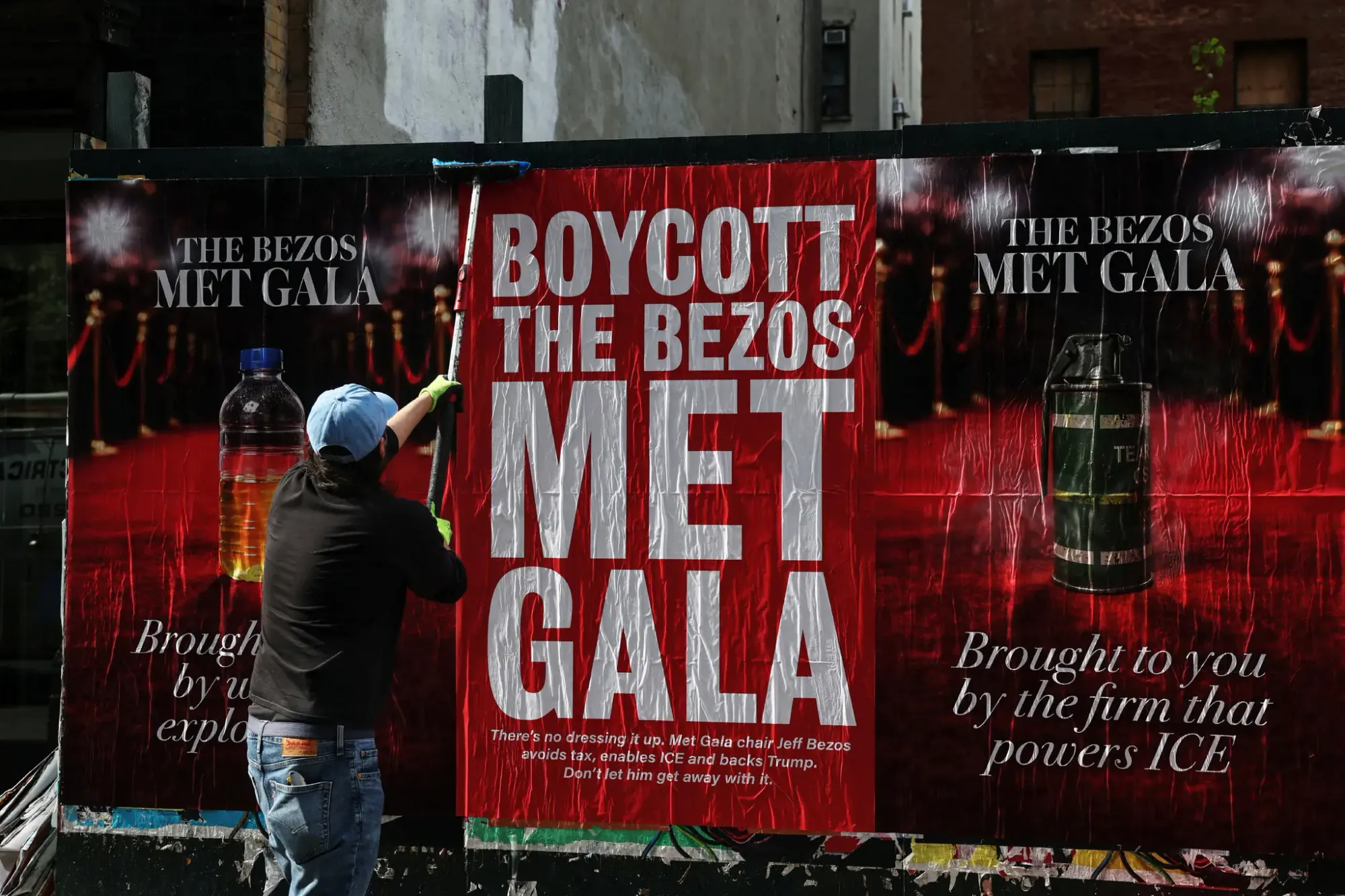
Founder and Executive Chair of Amazon, Jeff Bezos, and his wife, Lauren Sánchez Bezos, sponsored the event and served as honorary chairs, with individual tickets at $100,000 and tables at $350,000, many of which were snapped up by Big Tech.
The backlash has been broad. New York City Mayor Zohran Mamdani skipped the gala entirely, saying his focus is on affordability – a pointed break with a long tradition of mayoral attendance. Celebrities no-showed to protest. Activists plastered subway stations with posters reading "The Bezos Met Gala: Brought to you by worker exploitation" and staged protests outside the museum.
MIRANDA RULE: As Cynthia Nixon told the NYT: “The Met Gala is now giving Bezos exactly the kind of reputation laundering and cultural rocket fuel he needs to keep destroying America. My hat is off to the mayor for not attending.”
As Public Citizen’s recent report made clear, this is all part of a coordinated strategy. Whether you call it “rebranding” or “Trumpwashing,” it’s the same thing: an attempt to spend big, show up everywhere, and hope the optics outrun the reality, whether that’s on Capitol Hill, in statehouses, or on the red carpet.
RECLAIMING MY TIME: Meanwhile, SEIU, the Strategic Organizing Center, and the Amazon Labor Union staged the "Ball Without Billionaires," a counter-fashion show in downtown New York where Amazon warehouse workers, Whole Foods employees, and Washington Post staffers walked the runway. April Watson, an Amazon warehouse worker from northeast Georgia, put it simply: "I want to raise awareness about our safety issues that we're having in the Amazon warehouses." Designer Cindy Castro added, "If there is that money to sponsor this gala, there should also be money to pay the workers fairly."

 Emily Birnbaum and Josh Sisco and Eliyahu Kamisher
 Allan Smith
 Ryan Whitwam
 Taylor Lorenz
 Lauren Feiner
 Dan Kraker