Ending Public Funding for Big Tech AI, GOP Stampede Against Trump's AI EO
This week in The Dispatch, we cover the GOP backlash to the Trump-Sacks AI executive order and a new, forward-looking data center policy proposal

❄️ Welcome back to the last edition of The Dispatch from The Tech Oversight Project in 2025. Please come back in 2026 for more updates on the effort to hold Big Tech accountable in Congress and statehouses across the country.
🎁 THE GIVING SEASON: If you're feeling generous this holiday season and want to help support our work, please consider donating here. As always, follow us on Twitter at @Tech_Oversight and @techoversight.bsky.social on Bluesky.

⚖️ 2026 SOCIAL MEDIA ADDICTION CASES: As we wind down 2025, we at The Tech Oversight Project want to plug the landmark social media addiction cases, which will begin in late January. These cases are already beginning to shed light on internal documents and extensive research about social media addiction that was muzzled by Meta, Google, TikTok, and Snap to conceal their own knowledge about the harms their platforms cause.
So far, we've learned that Meta purposefully endangered minors by using a SEVENTEEN-STRIKE POLICY for removing sexual predators and harrassers and that the company had long lied to the American public about its knowledge of social media addiction and its effect on health and well-being. What's worse? Meta's legal team is attempting to strike key documents from the court case to cover up its lies.
Expect more details on Meta, Google, TikTok, and Snap's internal processes and policies, and stay tuned for courtroom testimony from Big Tech CEOs like Mark Zuckerberg, Adam Mosseri, and Evan Spiegel. This is the Big Tobacco case of our generation. Don't take our word for it. Take Meta's.
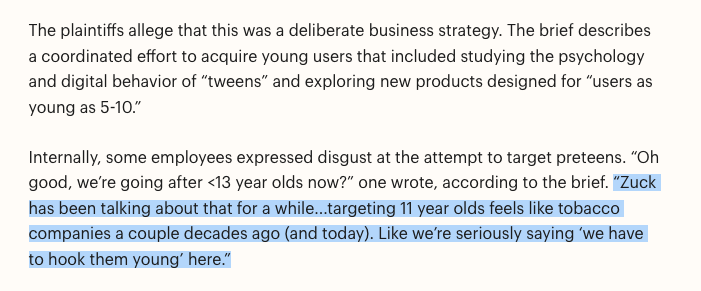

🔌 HOW TO END PUBLIC FUNDING FOR PRIVATE AI GAIN: Big Tech’s AI buildout runs on public power, public water, and public money while the companies vulturing public resources post record profits. AI companies are driving massive new energy demand, and households, competing with OpenAI, Google, Meta, Microsoft, and Amazon for energy, are stuck footing the bill. In some regions, electricity prices have already jumped by more than 250% over the past five years to defray Big Tech’s strain on the grid. If that’s not corporate socialism, we don’t know what it is.
The ripple effect is being felt across the economy and is creating a new political liability for a Big Tech industry that once touted its clean energy projects and zero-emission goals, all of which went out the window when the spectre of AI cropped up on the horizon.
The good news? Public Citizen is out with a new proposal to help generate ideas for federal, state, and local lawmakers to hold Big Tech AI companies accountable for raising costs on everyone. At The Tech Oversight Project, we believe it’s time to Make Big Tech Pay.
Some of Public Citizen's proposals include:
- Requiring transparency standards for data center projects, including online disclosure to the public
- Forcing Big Tech to pay for projects
- Establishing clean energy requirements
- Commissioning independent studies on energy and water use
- Regulating data centers under federal bulk power market reliability standards
If the proposals sound extreme, think again. These numbers from Pew, Harvard, and Georgetown show the scale of the problem and the higher costs households are expected to endure:
- $18–$20 higher monthly bills in affected states
- Up to 25% projected bill increases in Virginia’s data-center corridor by 2030
- Billions in utility costs will continue to be paid for by households through preferential tariffs and confidential contracts
A growing number of Americans, in battleground states no less, want politicians to rein in Big Tech and ensure their energy demand doesn’t mean higher bills for us. Public funding for private AI profit is outright corporate socialism, and politicians defending Big Tech will be on notice because this is an obvious political loser. Proposals like this from Public Citizen are helpful, informative, and, we hope, will kick off more ideas at all levels of government.

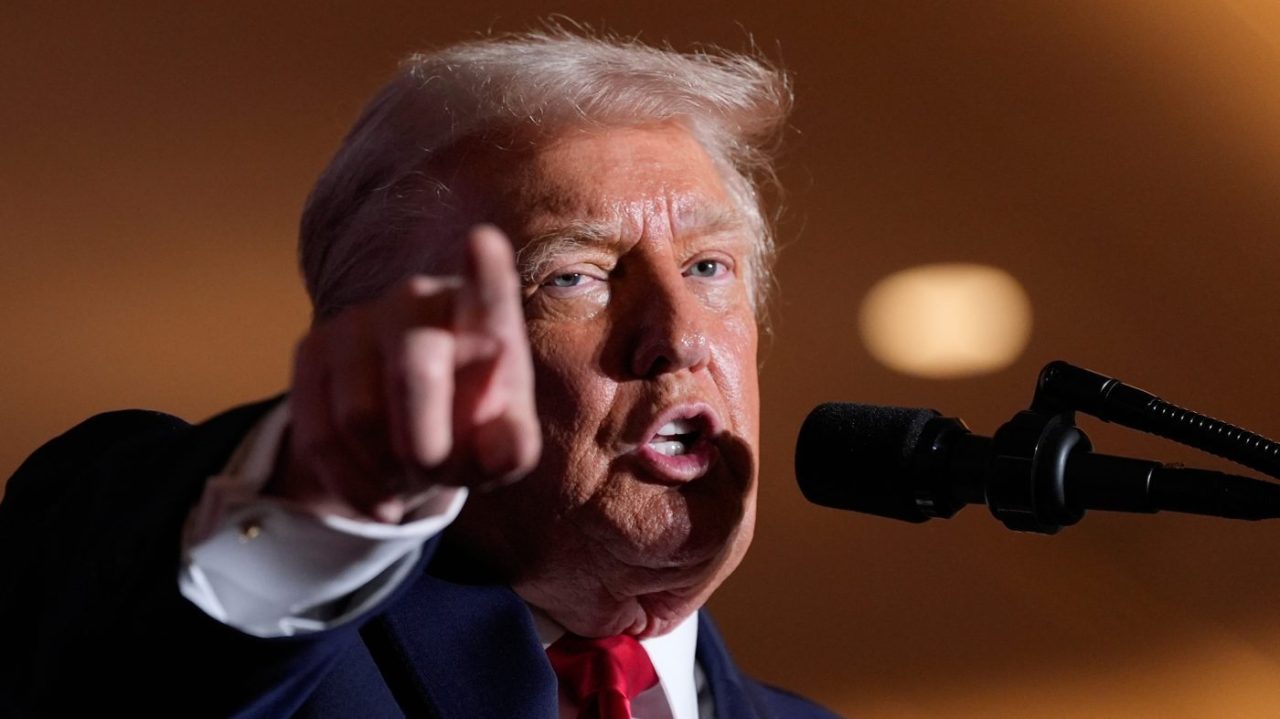
☢️ RADIOACTIVE AI EO DRAWS GOP FIRE: Last Thursday, Trump signed a political loser of an AI executive order – giving the Administration broad latitude to deny states federal BEAD funding for protecting their own people from predatory AI products that are already scamming seniors, driving up prices, and even killing kids.
Here’s what Sacha Haworth, Executive Director of The Tech Oversight Project, had to say:
“This EO will almost certainly backfire because blue states are going to keep leading on AI policy and protecting their own people, while red states, many of which have strong AI laws on the books, fall behind. This is bad policy married with even worse politics, and the AI EO will go down as an unmitigated disaster that puts the Trump Administration at odds with over two-thirds of Americans, and his AI-skeptic MAGA base.”
If you thought the AI EO critics were just the usual watchdog crowd, guess again. Critics came out stampeding – left, right, and center, including some key Trump allies.
Steve Bannon said: “David Sacks has epically failed twice to jam thru AI Amnesty into must-pass legislation — he has made the very concept toxic. The EO will carry that stench.”
An alternative AI executive order focused on human flourishing would strike the balance we need: safeguard our kids, preserve our values, and strengthen American competitiveness.
— Governor Cox (@GovCox) December 11, 2025
States must help protect children and families while America accelerates its leadership in AI. 🇺🇸 https://t.co/O4xlJIogcP
Republican governors said they do not support an EO that interferes with their ability to regulate AI harms. Gov. Ron DeSantis of Florida wrote on X: “An executive order doesn’t/can’t preempt state legislative action.” And Gov. Spencer Cox of Utah posted: “States must help protect children and families while America accelerates its leadership in AI.”
"It doesn't make sense for a populist movement to cut out the people on the most critical issue of our day. But nonetheless, that is what they are vigorously trying to do," said Michael Toscano, director of the Family First Technology Initiative at the conservative think tank Institute for Family Studies.
Democrats and Republicans alike have been warning against Big Tech AI’s deeply unpopular agenda. It seems like the Trump-Sacks White House only listens to powerful Big Tech CEOs who fund ballrooms rather than the everyday people they pretend to serve. We look forward to states across the country challenging this more-than-likely illegal executive order.

ICYMI: PASS THE RAISE ACT...FOR THE KIDS: Late on Friday, a group of over 150+ New York parents, including many survivor parents, wrote to Governor Kathy Hochul urging her to sign the RAISE ACT, as passed by the New York legislature, into law.

According to the parents, the RAISE Act "proposes minimalist guardrails" and enshrines "basic AI safety requirements" that require the world's largest AI companies to test their systems for catastrophic risks and release that information to the public. I don't know about you, but it seems...reasonable!
The parents made it crystal clear what's at stake if the RAISE Act isn't signed into law as passed: "Without this commonsense law, policymakers and the public will again be flying blind. Companies will again be free to push out unsafe systems while keeping critical failures hidden. And once again, young people and their families will be first to bear the consequences."
TOP-ED: Buffalo News: Students face rules. Why Don't AI companies? Check out this opinion piece from Design It For Us member Matthew Stevens and Young People's Alliance member Kate Francke urging Governor Kathy Hochul to sign the RAISE Act as passed to hold bad actors accountable.

🎄 HO-HO-HOLD YOUR WALLET CLOSE: If you ever wanted a lesson in terrible incentive structures, look no further than the Meta ad platform. As anyone who has logged into Facebook or Instagram knows, the Zuckerberg-led platforms have become a teeming cesspool of predatory ads looking to pick your digital pocket when you least expect it.
For Meta, this isn't a flaw. It's how the whole system is designed. They even gutted their trust and safety teams to allow predatory ads and the revenue they generate to run unabated – with 10% of Meta's global revenue coming from scams, according to documents obtained by Reuters. The documents revealed Meta bans accounts only if its systems flag an at least 95% chance that they are committing fraud, which is an absurdly high bar and reveals how little Meta cares about ACTUALLY policing its platforms.
Based on a SafelyHQ survey published by the New York Post, Meta isn't just raking in billions from scams, it's the epicenter for scams online – full stop. Of over 50,000 complaints, when a victim was scammed and could identify the platform, they cited Facebook 85% of the time.
In Meta's attempt to spin these damning results, a spokesperson, Andy Stone, actually touted the company's practice of "charging suspected scammers more in its ad auctions." So let's get this straight:
- Meta grants fraudsters the ability to start running ads.
- Meta fails to review and effectively stop scam ads.
- Meta gets money from the original scam ads.
- Facebook users get fleeced and never get their money back.
- Meta charges the fraudsters more next time, so Meta makes even more money than before.
- Scam artists keep scamming.
Meta's ad platform is the company's profit center, and it's absolutely rotten to the core. The mere fact that 10% of Meta's annual revenue should shake you to your core. Until Congress begins punishing digital advertisers to the tune of 10% of global revenue, Meta will continue to perpetuate one of the worst and most harmful places online.

 Matthew Steves and Kate Francke
 Chuck Hagel
 Luke Goldstein
 Ted Tatos
 Dominick Mastrangelo