
Entering A New Era
This week in The Dispatch: A jury finds Meta and Google liable in a landmark verdict; Meta's insurance dries up; as Big Tech reels in court, it's quietly trying to sneak liability shields through state legislatures; and a new poll shows America is souring on AI.

Welcome back to The Dispatch from The Tech Oversight Project, your weekly updates on all things tech accountability. Follow us on Twitter at @Tech_Oversight and @techoversight.bsky.social on Bluesky.

📣 THE ERA OF BIG TECH INVINCIBILITY IS OVER: Never again will the world’s biggest tech companies operate with such impunity, confident that no government, no legislature, no court will bring them to heel. It’s a new day for the parents, young people, and advocates who have been fighting for justice.
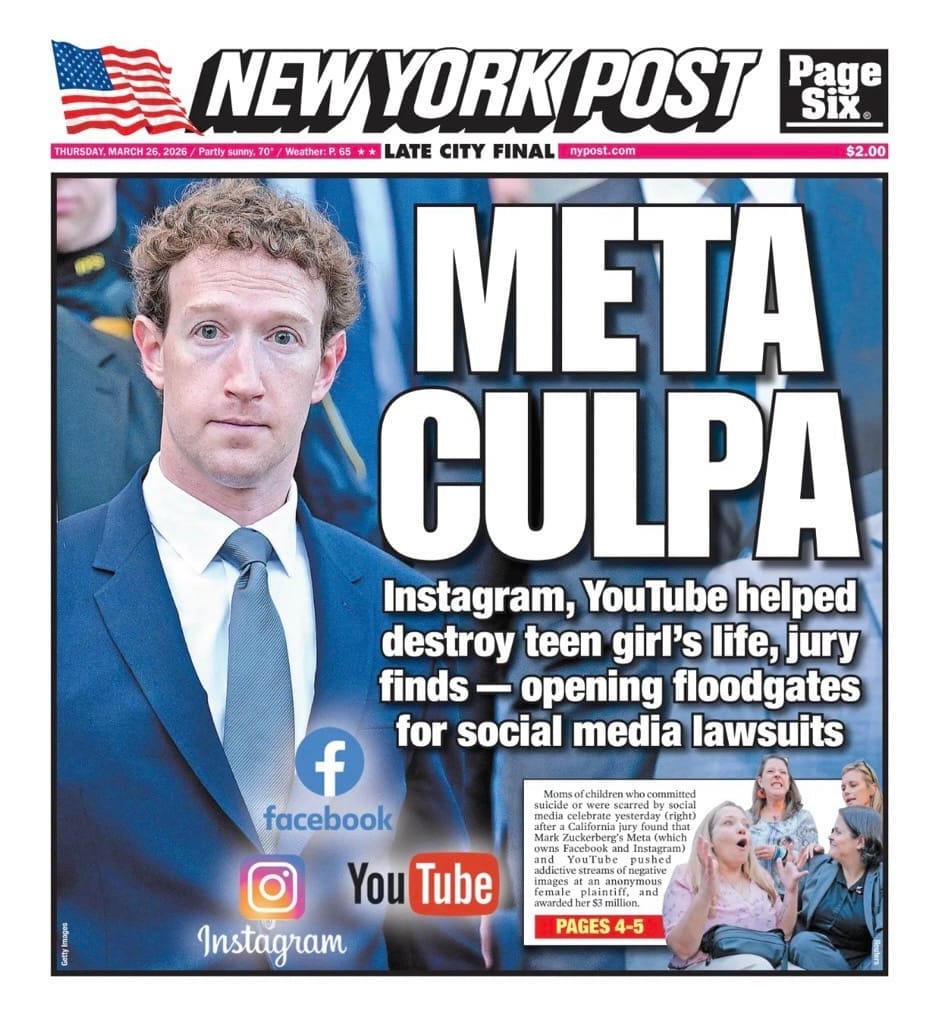
For the first time in history, a jury has found two of the biggest Big Tech companies — Meta and Google — liable for the damage they did to a young woman known by her initials K.G.M. by designing their social media products to be addictive, harmful, and damaging to mental health and well-being. They knew their products were dangerous, but they pushed them to an entire generation of children and teens anyway. This is Big Tech’s Big Tobacco moment.
TOP’s Sacha Haworth: “The era of Big Tech invincibility is over – this ruling is an earthquake that shakes Big Tech’s predatory business model to its core. After years of gaslighting from companies like Google and Meta, new evidence and testimony have pulled back the curtain and validated the harms young people and parents have been telling the world about for years.”
More on the Big Tech reckoning:
- After this unambiguous jury victory, we can expect an avalanche of new lawsuits to come, many of which are already in the pipeline.
- Big Tech has no answers for internal documents. That evidence was overwhelming and damning: the companies knowingly engineered products with dangerous design features like infinite scroll to get our kids hooked and keep them hooked.
- Following the verdict, parents gathered outside the courthouse reminded us that social media is just the start: AI, the next danger, is already here. Survivor Parent Victoria Hinks: “And if you know if social media was the gateway drug, AI is like crack and heroin. And it moves fast, and tech moves very fast, and government does not. The tech companies are knowingly and intentionally preying upon the fragile psyche of teenage girls in particular, and they know this.”

🧑⚖️ PREDATORY PRODUCTS ≠ PRE-EXISTING CONDITIONS: Meta Getting Dropped by Insurers: A Delaware judge has ruled Meta’s insurers don’t have to cover the company in the thousands of pending lawsuits because the company knew its products were dangerous and pushed them on kids anyway — based on evidence that came out in the big California trials. “Deliberate and intentional acts,” the judge ruled, aren’t covered by insurance.
TOP’s Sacha Haworth: “The tide is truly turning against Meta when major insurance companies have determined that Meta is too morally bankrupt to keep insuring – it’s just bad business. Just as Big Tobacco lost its coverage once it became known they were deliberately harming their users, Big Tech’s insurers see the writing on the wall and are jumping ship.”

💻 CTRL+C; CTRL+V: Big Tech's Copy and Paste Bill: After an AI chatbot bill passed in Oregon, nearly identical bills have appeared in at least six states, including Colorado, Hawaii, Arizona, Georgia, Nebraska, and Idaho. Reportedly, Google is involved behind the scenes, and the bills — which are taking advantage of legitimate concern about chatbots’ interactions with kids — include provisions that could shield tech companies from liability, even as evidence mounts about the real-world harms these systems can cause.
Last week, parents had firm words for lawmakers in a Colorado committee hearing, where that state’s problematic bill was ultimately moved forward. Parent Cynthia Montoya, whose daughter Juliana was groomed by an AI chatbot and died by suicide at the age of 13, said that she preferred “no bill” rather than passing the industry-backed bill, which “only protects the status quo that’s currently happening.”

A new Quinnipiac University poll out yesterday captures just how much public opinion on AI has shifted – and not in Big Tech's favor.
- 80% of Americans are concerned about AI -- a number that holds steady across every generation, from Gen Z to Boomers.
- 55% think AI will do more harm than good in their daily lives, up from 44% just last year.
- 70% think AI advancements will lead to fewer job opportunities -- with Gen Z the most pessimistic at 81%.
- 74% say the government is not doing enough to regulate AI. Only 13% think it is.
- Perhaps most damning for the industry's preemption push: only 5% of Americans think AI development is being led by people who represent their interests.
Big Tech lobbyists and Super PACS may want lawmakers to strip states of the power to regulate AI. But the public wants more regulation, not less – and they straight-up don't trust Big Tech to regulate themselves on AI.

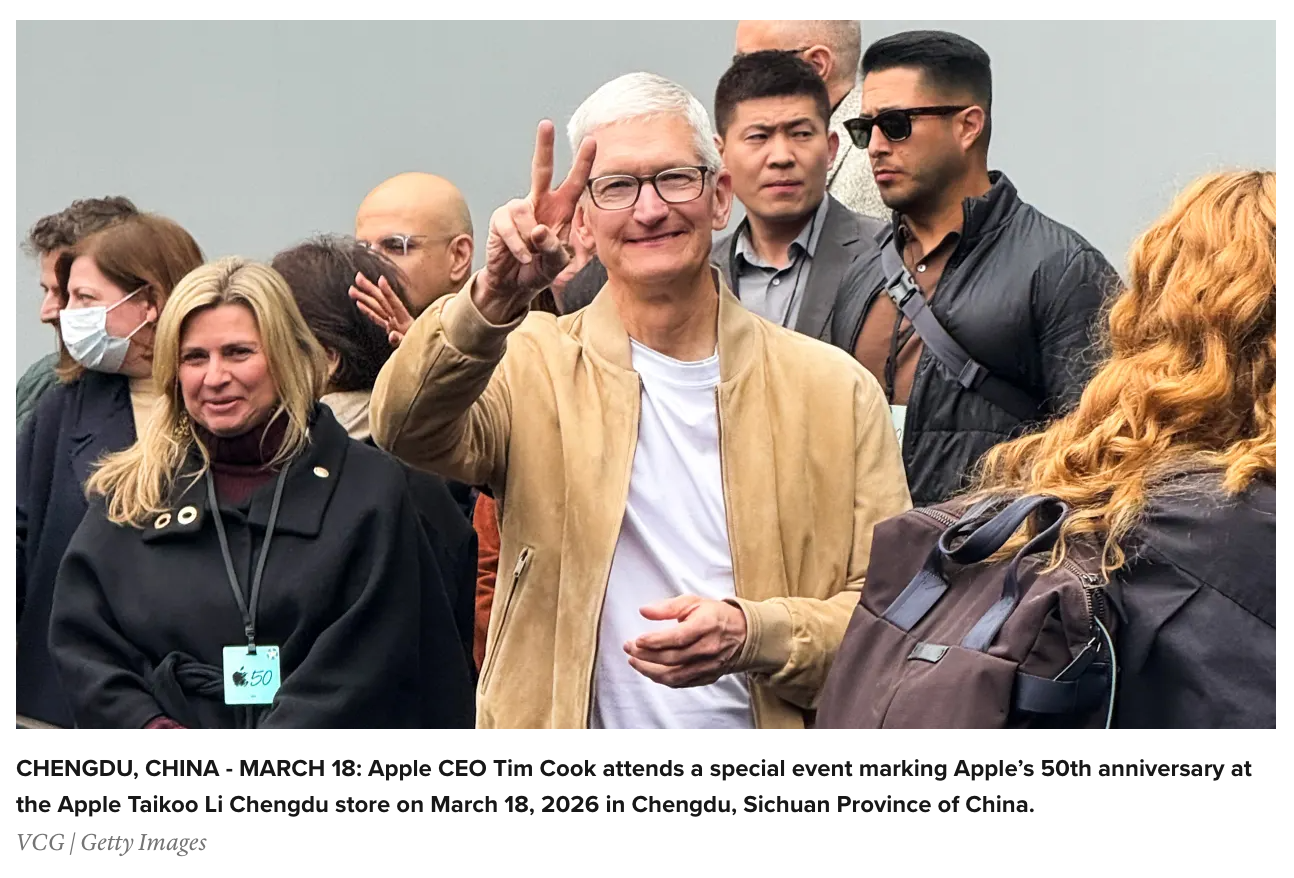
ROTTEN APPLES: Big Tech Turns 50: Think Different… or More of the Same? This week, Apple turns 50. There will be a glossy press event, a lot of nostalgic branding, and no shortage of tributes to the company that dared to "Think Different." We'd like to offer a different kind of tribute: Apple got its start claiming to believe that technology should empower individuals against faceless, controlling institutions. The company’s famous 1984 Super Bowl ad cast IBM as Big Brother and Apple as a rebel throwing a hammer.

It was considered one of the greatest commercials ever made. But soon enough, reality caught up. After 50 years, Apple has become exactly the Big Brother it once claimed to oppose:
Ads are coming to Apple Maps. Apple spent years positioning itself as the privacy-first alternative to IBM, then Google. Now targeted ads are expanding across Apple Maps, the App Store, Apple News, and Apple TV+. Turns out "we're not like the other guys" was just a marketing strategy all along.
Apple built a walled garden – then started price gouging. The App Store was sold as a safety measure. It became a monopoly. Thirty percent of every transaction, no competing payment systems, and a gatekeeper veto over any developer who gets too successful. The company that made tools for rebels now extracts tribute from them.
When authoritarian governments asked Apple to help silence dissidents, Apple was happy to help. VPN apps pulled in Russia. AirDrop neutered in China during protests. Pro-democracy apps removed on request. As blogger Mike Brock puts it: “Cook had built a company so structurally dependent on authoritarian favor — Beijing’s and Washington’s in equal measure — that it had lost the organic capacity to say no.”
And now, Tim Cook is telling you to put down your iPhone. The man who runs a $3 trillion company built entirely around you never putting your iPhone down has started giving interviews about the importance of being present, going outside, and not staring at screens. He says it with a straight face. He’s said it multiple times. At no point has he appeared to notice the irony.
Apple's story isn't unique – it's the story of Big Tech. Every one of these companies started with a vision of democratizing something: information, communication, connection, creativity. Every one of them followed the same arc: first, they came to liberate you. Then they figured out how to monetize you, then they built the infrastructure to make sure you couldn't leave – and finally, they hired lobbyists in the hopes that no one would ever make them stop.

 Thomas Barrabi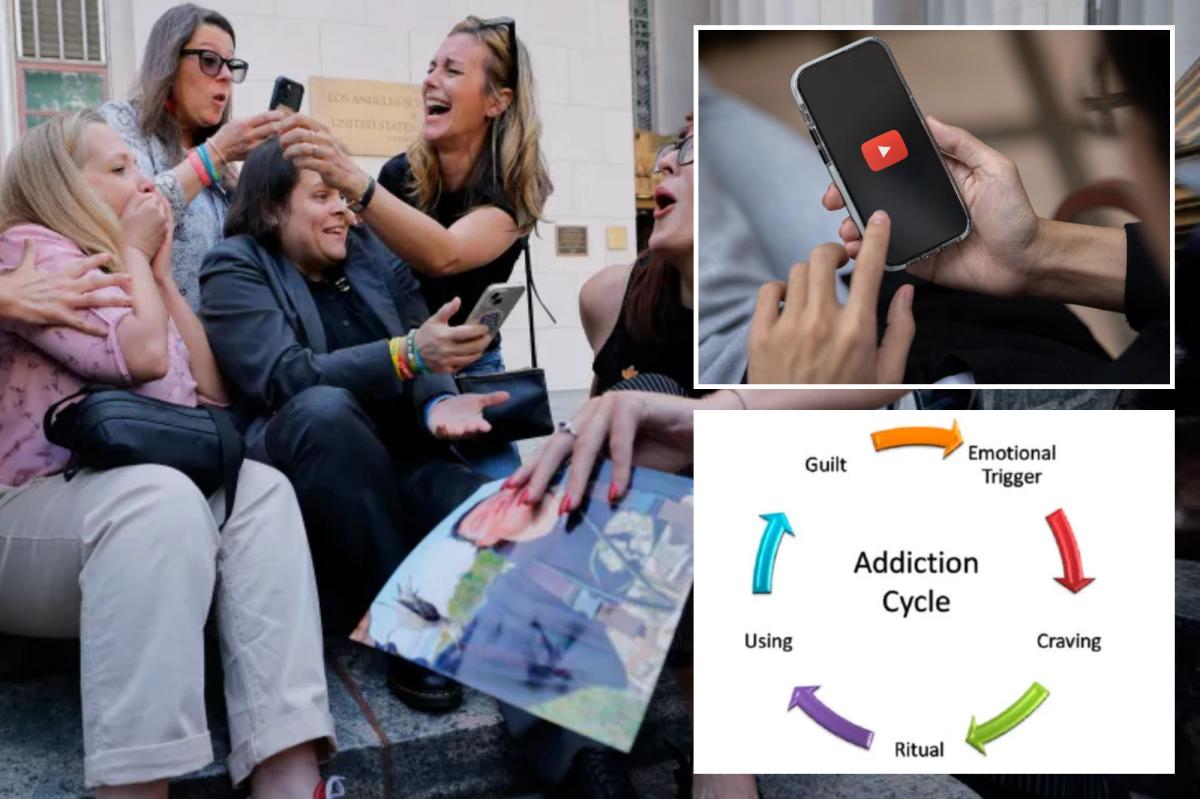
 Mariana Olaizola Rosenblat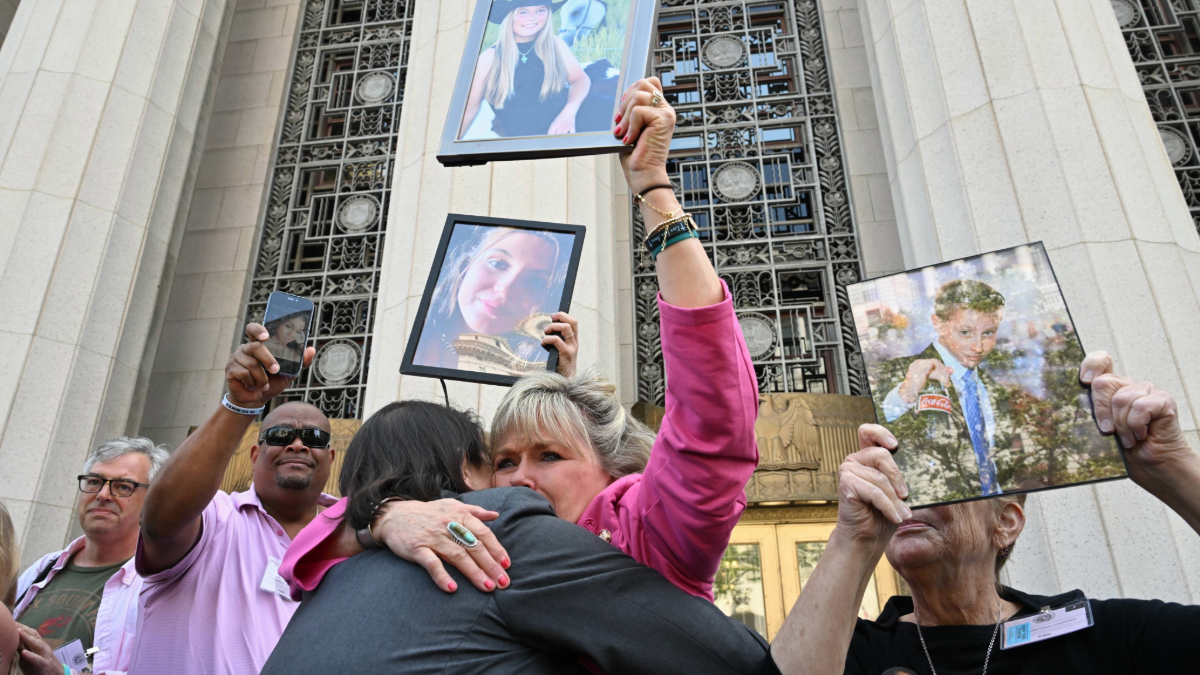
 Benjamin Brown
 Robert Kuttner
 Courtney Subramanian