KOSA Gets Senate Markup, Court Walls Closing in on Big Tech
This week in The Dispatch: The court cases pile up for Big Tech; our red lines for tomorrow's Senate KOSA markup; an Iowa mom asks her senator to subpoena Zuckerberg; state lawmakers aren't waiting on Washington; and Americans keep souring on AI.

Welcome back to The Dispatch from The Tech Oversight Project, your weekly updates on all things tech accountability. Follow us on Twitter at @Tech_Oversight and @techoversight.bsky.social on Bluesky.

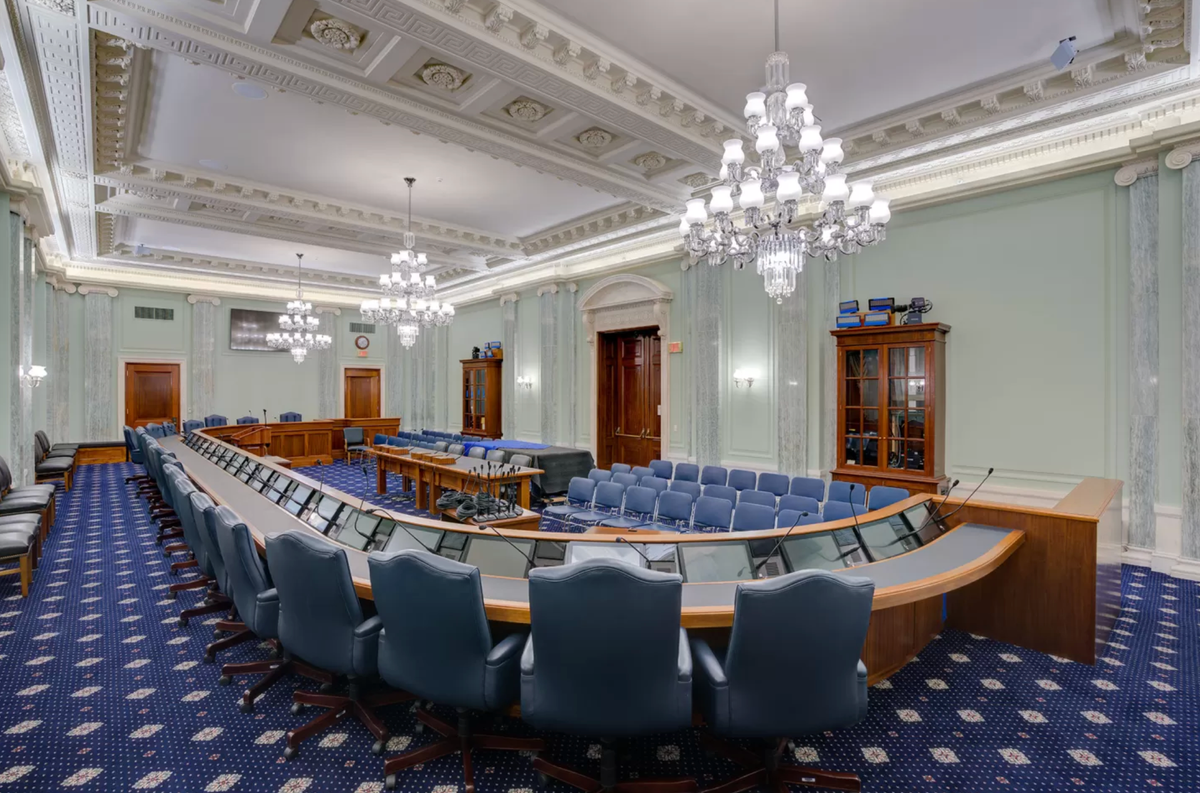
🏛️ KOSA'S BIG DAY IN COMMITTEE: Tomorrow at 10 a.m., the Senate Commerce Committee marks up five bills on kids' online safety and AI, including the Kids Online Safety Act (S.1748), Sen. Ed Markey's Youth AI Privacy Act, the bipartisan CHATBOT Act, the SCREEN Act, and a ban on predatory AI toys. Advocates are watching one question above all: Will the Senate produce a stronger bill than the House's industry-written contribution, the KIDS Act (H.R. 7757).
Remember two summers ago, when the Senate passed a strong KOSA bill 91-3 with overwhelming bipartisan support, and then House Speaker Mike Johnson let it die in the House in the last days of the session? That bill was a serious attempt to hold Big Tech accountable. The KIDS Act, as passed by the House in late June, is not. Among many flaws, it guts the “duty of care,” which a June coalition letter we signed lays out. That provision is core to protecting children and teens (and is a central component of KOSA) because it actually requires Big Tech companies design their products with safety and well-being in mind from the start.
✍️ OUR RED LINES: Last week, TOP joined another sweeping coalition letter to Chairman Ted Cruz and Ranking Member Maria Cantwell that outlined our red lines for this week’s Senate KOSA markup. In it, we spelled out exactly what America’s kids need to see in any bill that moves forward. The letter, signed by TOP, Common Sense Media, ParentsTogether Action, Young People's Alliance, the American Federation of Teachers, the NAACP, and dozens of other survivor-family and advocacy groups, draws several hard lines. Among them:
- A REAL, ENFORCEABLE DUTY OF CARE. The “duty of care” is what requires Big Tech to affirmatively design its platforms for safety. Without it, as KOSA lead sponsors Sens. Marsha Blackburn and Richard Blumenthal put it, the House’s KIDS Act is “a pale imitation of Big Tech accountability,” because anyone suing over harms would have to prove the platform was responsible. With it, a platform that puts dangerous and addictive products in front of our kids is responsible by definition.
- A FLOOR, NOT A CEILING. States have led this fight for years through legislation and AG lawsuits because Congress dithered. Any federal standard on online kids’ safety has to set a minimum requirement, not cap what states can do.
- PROTECTION AGAINST ADDICTIVE ALGORITHMIC DESIGN. The House bill dropped the requirement that platforms give young users access to a chronological feed – a feature that would bypass the widely understood harms of engagement-maximizing algorithmic content.
- NO BACK-DOOR AI IMMUNITY SHIELD. Federal preemption of state regulation on AI would leave kids with far weaker protections against the AI chatbots that are already preying on minors. A kids' safety package should not become the vehicle that puts the next generation of harmful products beyond the reach of courts and regulators.
💔 THE COST OF DELAY: Last Thursday, exactly two years after that 91-3 vote, families of four teenagers who died by suicide filed suit against Meta, TikTok, Snapchat, and YouTube. Livi Castro was 13. Riv Kelleher was 14. Nathaniel Chambers was 17. Dawson Holden was 18. Their families, from Texas, North Carolina, Minnesota, and Tennessee, describe the same pattern: once-vibrant kids who became anxious, withdrawn, and sleep-deprived as the platforms tightened their grip. The complaint alleges the companies knew they were causing harm to young users. Their deaths span the two years since the Senate passed KOSA and told the companies exactly what lawmakers and the public were demanding.
The complaint also leans on testimony from Meta whistleblower Sarah Wynn-Williams, who told the Senate under oath that Meta knew its ad systems could feed emotional vulnerability straight to advertisers. Meta's response to her revelations was a gag order, which she’s now suing over. Families have been telling Congress these stories for years, and every month of delay is marked by immeasurable harm to families like these four. We'll be watching this markup closely to make sure it results in real legal constraints on the platforms, not just another “pale imitation” of accountability.

🌽 AN IOWA MOM, AN IOWA SENATOR, AND AN EMPTY WITNESS CHAIR: Katie Townsend of Cedar Rapids lost her daughter Saniah, nearly three years ago. Saniah took her own life after being targeted by social media algorithms: "My love wasn't as powerful as what was online," mom Katie says.
Now Katie is taking that truth to Iowa's senior senator. The Senate Judiciary Committee's kids' online safety hearing – Chairman Chuck Grassley's hearing – was supposed to happen last Tuesday. It didn't: postponed for the second time this summer, with no new date on the calendar. Katie's ask is specific: reschedule it, and this time put Meta CEO Mark Zuckerberg in the witness chair, under subpoena if that's what it takes.
"They know how to change that. They know how to stop sending those addictive algorithms. They know how to stop that doom scroll. It's so important that he gets his tail back into Congress and sits there and answers to us parents."
– Katie Townsend, parent advocate.
Grassley's earned credit among online safety advocates and other critics of Big Tech’s dangerous conduct: he’s hauled Big Tech execs before the Senate before, he subpoenaed information from Meta about its retaliation against whistleblower Sarah Wynn-Williams, and he’s a lead sponsor of AICOA, the bipartisan bill aimed at reining in unchecked platform market power. This is another avenue for Grassley to show he's in the corner of parents and young people.
Mark Zuckerberg has been running scared from Grassley’s committee for months. He and Google CEO Sundar Pichai lobbied Donald Trump to get out of testifying. In response, more than 150 bereaved parents, including Katie, sent Grassley a strongly worded letter demanding he use his subpoena power to call Zuckerberg – because only the man at the top can answer for what Meta did to their families, or answer questions about what he knew, when.
After months of letters and Capitol marches calling for accountability, parents like Katie are on the verge of being able to confront the man responsible for their pain.

🧑⚖️ THE COURT WALLS ARE CLOSING IN ON META: Last week, Tennessee's social media addiction case against Meta got underway. Led by Attorney General Jonathan Skrmetti, the Volunteer State is alleging that Instagram intentionally designed its products to addict young people even though the company was aware of mounting evidence that its products were causing widespread harm. The suit makes disturbingly familiar claims: Meta covered up the evidence while telling the public not to worry.
⏩ GETTING UP TO SPEED: Tennessee's social media addiction case comes smack dab in the middle of the Big Tech on Trial era – with thousands more cases on the horizon from families, young people, school districts, and state AGs. Here’s a recap and what you need to know:
- March: After a two-month trial, Meta and Google were found liable in the first social media addiction trial, in a California court. The Big Tech giants were ordered to pay $6 million to plaintiff K.G.M, while Snap and TikTok settled with K.G.M. before the trial began.
- March: In another landmark decision, New Mexico successfully argued that Meta was liable for recklessly endangering children and connecting predators with minors on their platform. A jury found them liable and ordered $375 million to be paid out – with a judge still to determine the final public nuisance payout to the state.
- May: The first school district case to appear in federal court, Breathitt County School District, was settled after Meta, Snap, Google, and TikTok forked over a collective $27 million to a rural Kentucky school district.
- June: A federal judge denied Meta's attempts to block the case brought by the California, Colorado, Kentucky, and New Jersey State Attorneys General from advancing – a massive blow given that the AGs are collectively seeking up to $1.4 trillion in penalties against the Zuckerberg-led company. As of today, Meta's market cap is roughly $1.4 trillion.
- July: The next-up social media addiction bellwether case in California was ultimately settled and will avert a trial. Big Tech companies like Snap, TikTok, and Google confidentially settled with plaintiff R.K.C. to avoid a messy airing of their dirty laundry, and the plaintiff dropped its case against Meta.
- July: Tennessee begins its own social media addiction trial against Meta, separate from the larger MDL effort. AG Skrmetti has already placed a major emphasis on damning documents from the company, like internal chats bragging about how Instagram was a drug. The trial could run at least six weeks.
- August: Attorneys General from California, Colorado, Kentucky, and New Jersey will begin opening statements in their social media addiction trial in a Bay Area federal court on August 18 – with the full weight of the MDL's evidence gathered behind them. The cases focus on claims that Meta designed its platforms to be addictive and downplayed the harm to parents, children, and consumers. The trial is expected to continue well into September.
If you're wondering, why do so many Big Tech companies settle these cases at the eleventh hour? Because the evidence of wrongdoing that’s already come to light in previous cases has been incredibly damaging. The moment the courthouse doors opened was a victory for survivor parents, young people, and online safety advocates because it brought to light millions of pages of evidence that Big Tech never thought would see the light of day. The threat of even more documents is enough to keep them running scared.

⌛ STATE LAWMAKERS AREN'T WAITING ON WASHINGTON: State lawmakers just wrapped the annual National Conference of State Legislatures (NCSL) summit, and the message was clear: AI regulation, kids' online safety, and data privacy are main events for legislators now.
Legislators from both parties spent several days in Chicago comparing notes on chatbot legislation and the dangers of AI to make sure parents, kids, and safety advocates don't get drowned out by Big Tech's lobbyists in statehouses this year.
Big Tech keeps saying, “trust us, we’ll regulate ourselves,” but the era of Big Tech grading its own homework needs end. A few years ago, Meta, Amazon, Google, X, and other companies gutted their trust and safety and AI ethics teams, the very people whose job was to prevent dangerous and out-of-control products from hurting people. The result has been exactly what we predicted: Big Tech platforms full of dangerous chatbots, AI slop and spam, black marketeers, and scam artists.
That's why state action is more urgent than ever. Until Congress crosses the finish line, state lawmakers are the ones standing between our kids and unregulated AI – and Big Tech's lobbyists will be waiting for them in every statehouse. The legislators who compared notes in Chicago should expect company.
💥 FLASHBACK: State legislators were key players in the fight to stop federal preemption last year. They saved their power to regulate – now, they’re using it.

☀️ CALIFORNIA DREAMING: As the CA legislature enters its home stretch, we just put outhot–off-the-presses lobbying numbers for the first half of the year – Big Tech has already spent $8 million this year in Sacramento – and outlined our priority bills that legislators still could, and should, pass this August. Read our memo here.

🤨 SOURING ON AI: The more Americans learn about AI, the more worried they become, says a new Gallup survey — and the change is happening fastest among younger people who are growing up with the technology.
- 39% of Americans now say AI does more harm than good, up from just 31% in 2025, nearly back to 2023's high-water mark of skepticism.
- 47% of adults 18-29 believe AI does more harm than good, an 11-point jump in a single year — the largest swing of any age group.
- 79% of Americans expect AI to reduce U.S. jobs over the next decade, up from 73% in 2025 and the highest level recorded.
The people building these products keep telling Americans not to worry. Fewer of us are buying it, and the lawmakers marking up bills this week should take note of whose side the public is on.

 Alexandra Lindsay
 Bryan Metzger and Brent D. Griffiths
 Rachel Metz and Ellen Huet and Jeremy Cf Lin
 smccroskey
 Vani Sanganeria
 Dara Kerr