Leading the Future Funding False-Flag Calls for Violence, Zombie Preemption Reemerges
This week in The Dispatch: the AI super PAC funded by OpenAI and Palantir caught running a smear network; a landmark win for our kids in New York; Big Tech’s secret plan to hook kids in class; and the data center backlash hits the ballot box.

Welcome back to The Dispatch from The Tech Oversight Project, your weekly updates on all things tech accountability. Follow us on Twitter at @Tech_Oversight and @techoversight.bsky.social on Bluesky.

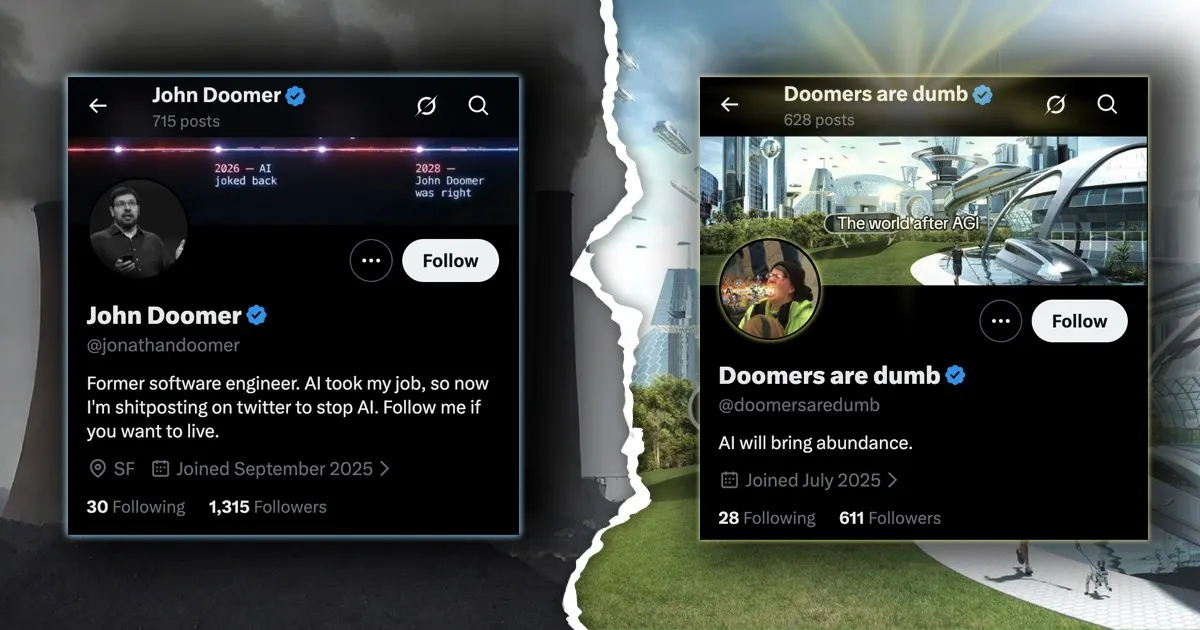
🧦 DIRTY SOCKS: Leading the Future funded sock puppet accounts to push false-flag calls for violence: Reporting by Taylor Lorenz and the Midas Project team has uncovered a network of anonymous accounts trafficking in offensive content and personal attacks, tied to people connected to big-spender AI super PAC Leading the Future, which is funded by executives from OpenAI and Palantir.
The content is being amplified almost exclusively by Leading the Future affiliates, including its leader, Josh Vlasto, and OpenAI COO Jason Kwon. Content has included memes using images of people with Down syndrome as punchlines to mock critics of the AI industry, and personal attacks on lawmakers and advocates who have pushed for stronger AI oversight.
this is depraved and the Dems who refuse to renounce @LeadingFutureAI's support and money need to answer for this. https://t.co/KL4sBUjN7B
— Sacha Haworth (@sachalouise) June 3, 2026
CAN’T HAVE IT BOTH WAYS: Weeks ago, OpenAI's chief political strategist Chris Lehane told reporters, "That's not OpenAI." But Leading the Future is Lehane's own creation, and Vlasto helped Lehane run Fairshake, the pro-crypto super PAC that spent heavily to defeat Democrats in 2024.
TOP’s Sacha Haworth: “OpenAI’s political team surely cannot expect us to buy the idea that the super PAC conceived by its political strategist and then funded and launched by its president is somehow not doing the bidding of the company itself.”
The AI industry has spent two years trying to buy credibility, but the more voters learn about the tactics, spending, and personalities behind these influence campaigns, the more of a liability that money is becoming. Candidates who accept it should be prepared to answer a simple question: Why are you comfortable taking endorsements from a Big-Tech-billionaire-funded group that uses pictures of people with Down syndrome to mock your colleagues?

🚸 NEW YORK LEADING BY EXAMPLE: The youth chatbot safety bill we’ve supported this session in New York (S.9051/A.10379), sponsored by Sen. Kristen Gonzalez and Assemblymember Alex Bores, unanimously passed both houses last week, just hours before legislators adjourned for the year, marking a high point for state advocates working for chatbot protections and accountability this year. The bill will prohibit AI chatbots from promoting self-harm, suicide, disordered eating, or substance abuse to minors; from simulating human relationships with kids; and from encouraging them to keep interactions secret or avoid turning to trusted adults for help. It will also empower the Attorney General to enforce the law with penalties of up to $25,000 per violation.
TOP’s Sacha Haworth called on Governor Hochul to sign the bill’s youth AI protections, which would become America’s strongest, into law: “This bill was written by lawmakers, the Attorney General, and advocates who put kids first — not by the industry it regulates. Governor Hochul should sign it, and she should sign it as passed, continuing New York’s leadership in taking on Big Tech to keep our kids safe.”

🔥📄 HOT DOC ALERT: Big Tech's School District Reckoning Has Begun: A bombshell NYT investigation based on internal documents from school district lawsuits reveals that social media companies actively targeted kids during the school day:
- Snapchat sent alerts to students during class, urging them to post what was happening in their classrooms. A Snap strategy document referred to classroom phone use as "under the desk" time.
- Meta paid teen ambassadors with $45 gift cards to recruit their classmates to Instagram.
- TikTok considered turning off notifications during school hours — then scrapped the plan because it would reduce daily active users.
- A TikTok employee warned internally that a new feature would make teachers furious; a manager replied that if teens were going to be distracted anyway, "we'd rather them be here on TikTok."
- And TikTok paid the National PTA millions of dollars to host "online safety" events in schools — strategically placed in "sensitive political districts" to improve the company's image with skeptical lawmakers.
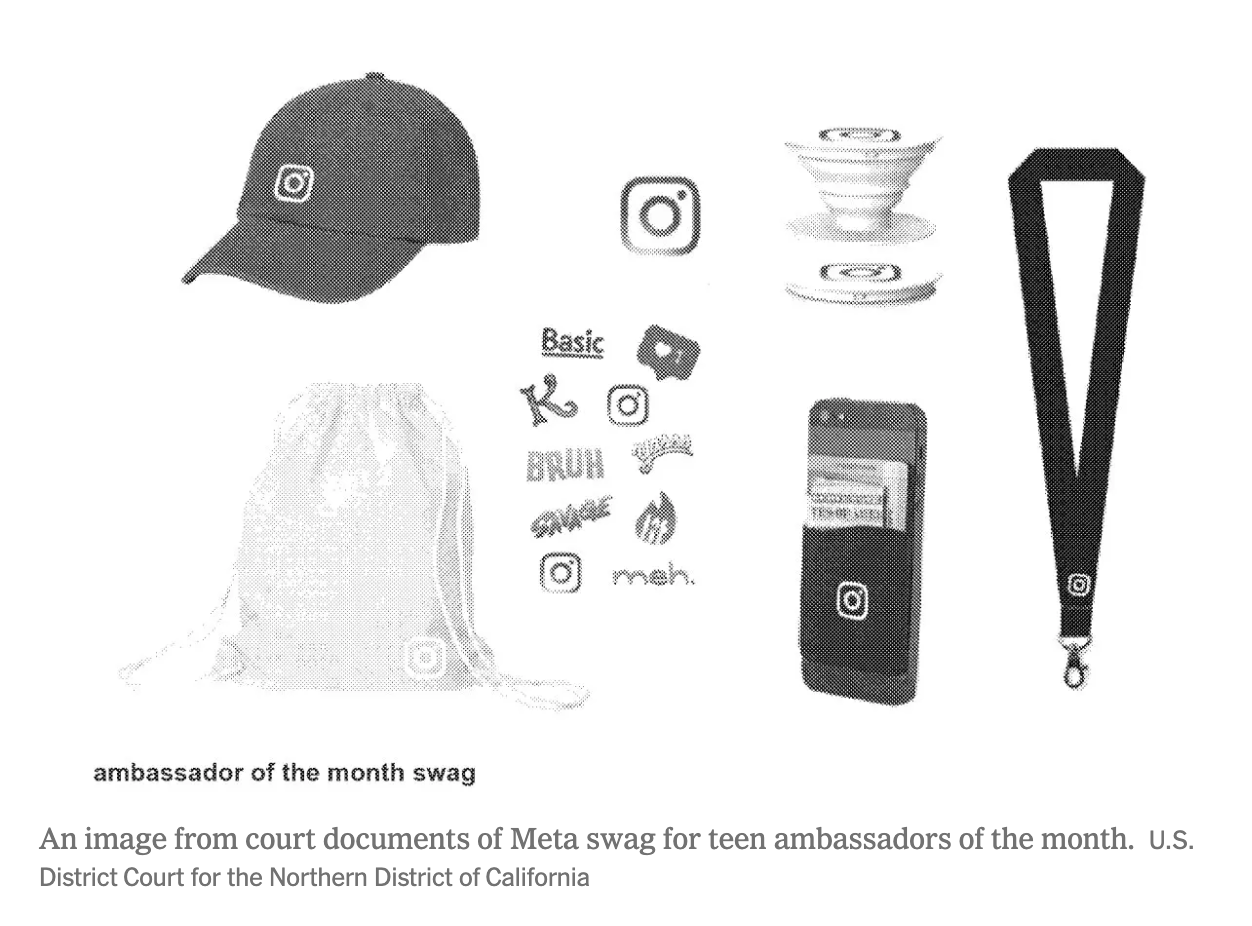
More than 1,400 school districts have now sued. Meta, Snap, TikTok, and Google recently settled with one Kentucky test-case district for $27 million. The next plaintiff is seeking over $1 billion.
Read More: New York Times: ‘Teachers Are Going to Hate It’: How Social Media Apps Hooked Teens at School

🧟 ZOMBIE PREEMPTION REARS ITS UGLY HEAD: OpenAI CEO Sam Altman was on the Hill last week, meeting with House Speaker Mike Johnson about a new bill discussion draft released by Reps. Lori Trahan (D-MA) and Jay Obernolte (R-CA), which would preempt existing and future state AI safety laws (yes, Big Tech is trying this again). It purports to be more measured than the AI preemption that was walloped 99-1 in the Senate last year, but don’t be fooled: it still leaves a legal loophole a mile wide for Big Tech companies to exploit.
TOP-PPP POLLING: Voters in @JayObernolte's (CA-23) and @RepLoriTrahan's (MA-3) districts oppose their push to weaken and preempt AI safety laws.
— The Tech Oversight Project (@Tech_Oversight) June 4, 2026
Their bill would let Big Tech wipe out state child safety, civil rights & consumer protections. 🧵 pic.twitter.com/DjiathYVap
On the same day, we released a new poll of voters in those lawmakers’ own districts showing widespread opposition to their collaboration with Big Tech to advance its agenda. In both districts, voter majorities opposed weakening state AI chatbot safety and catastrophic risk laws and opposed fast-tracking data centers, and majorities said they would be less willing to support a candidate that endorsed proposals like these. In Trahan’s district, two-thirds of voters said that a candidate’s support for stripping state chatbot protections would make them think twice about voting for her. And more than half said that endorsing policies supported by the Big Tech billionaires in bed with Donald Trump was a red flag.
“The Obernolte-Trahan bill replaces a state floor with a federal ceiling and trades away existing and future child safety, civil rights, and consumer protection laws for nothing in return. This gives Big Tech companies like OpenAI, Meta, Google, and Anthropic more power, not less, by granting them maximalist preemption and the power to shape enforcement through the courts. This is a bad deal, and Obernolte and Trahan’s constituents know it,” said TOP’s Sacha Haworth.

🗳️ DATA CENTER BACKLASH HITS THE BALLOT BOX: Public opinion across the country has turned sharply against data centers over just the past few months. New polling from Heatmap shows that support for data centers has cratered over the past year across the board and among voters of all political persuasions.
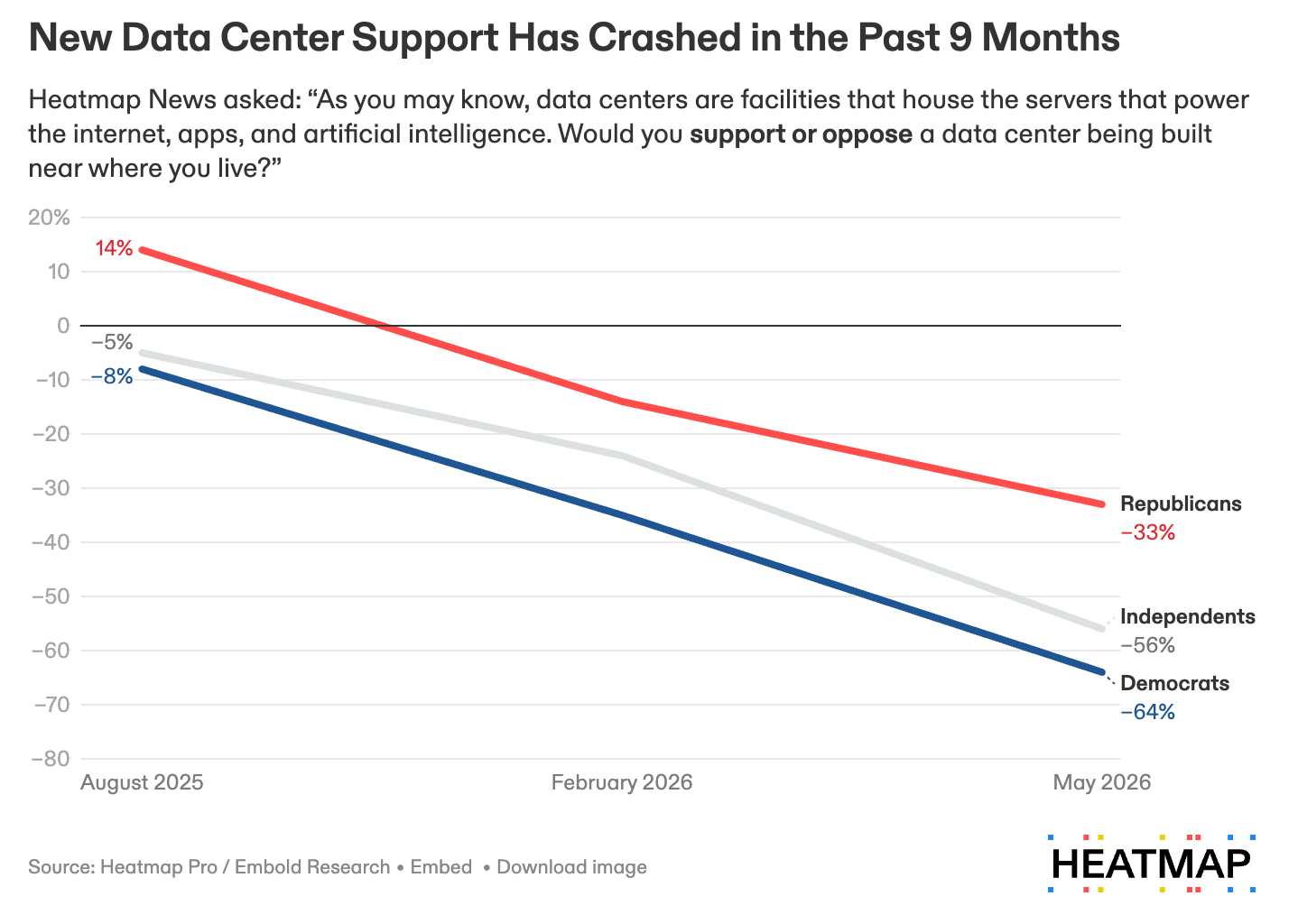
Increasingly, the public isn’t just holding signs and showing up at public hearings – they’re voting on the issue, and seeing their lawmakers and governors take more decisive action.
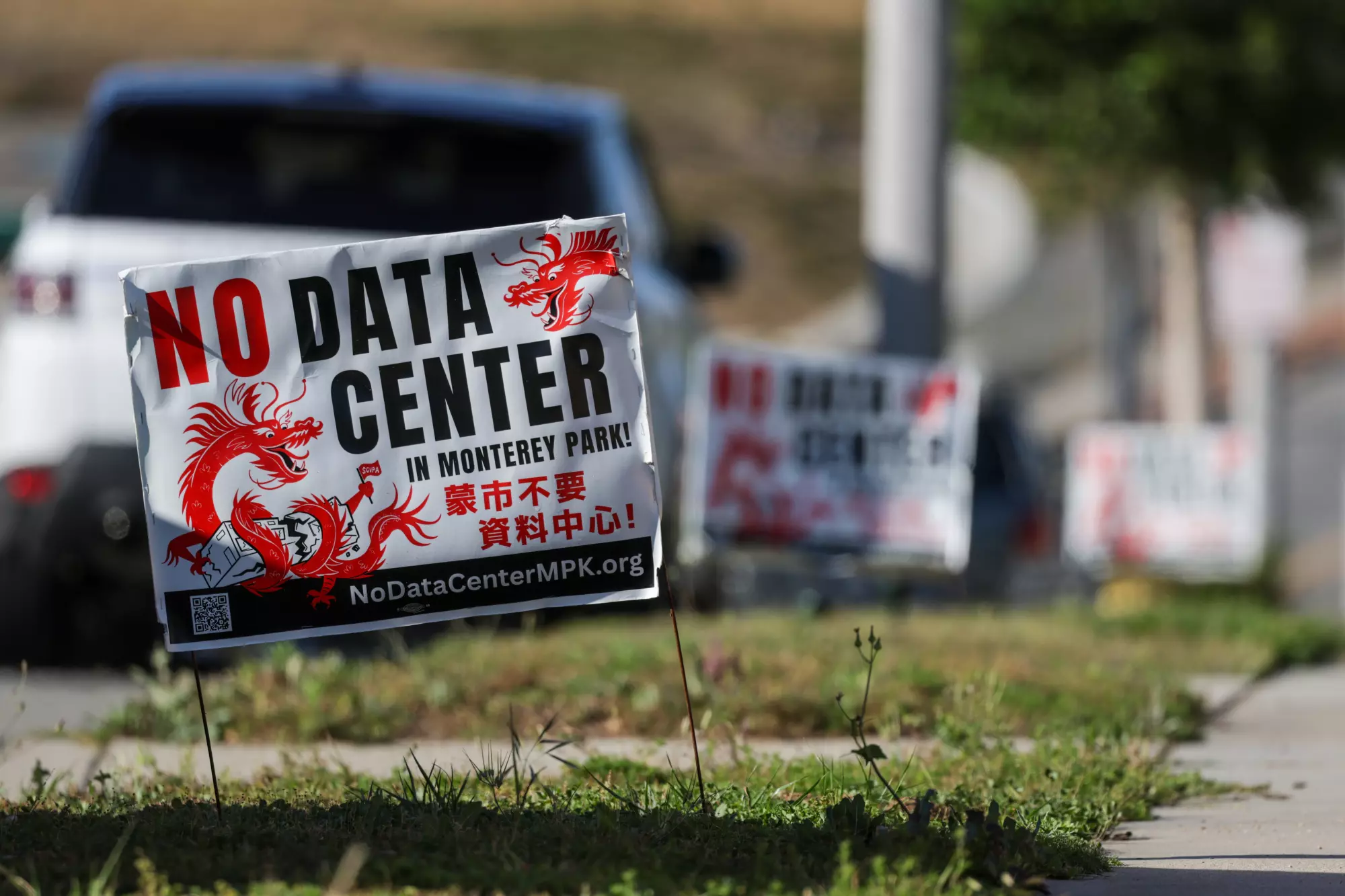
Last Tuesday, voters in Monterey Park, California, a predominantly Asian and Latino working-class city of 62,000 in the San Gabriel Valley just outside L.A., resoundingly approved the nation’s first permanent ban on data centers within city limits. 86% voted in favor — and Mayor Elizabeth Yang called it a template for the growing resistance movement: “We hope others use our city as an example.”
Last Friday, Illinois Governor JB Pritzker announced he's taking executive action to suspend the processing of new data center tax incentive applications starting July 1, after state lawmakers failed to act on his earlier calls for a two-year pause. Pritzker is calling for data centers to “pay their fair share” for the energy and water they consume, and for communities to get advance notice of what's coming.
The message from voters, governors, and city leaders has a common theme: make Big Tech pay – for the energy, the water, the disruption, and the publicly-funded giveaways that went unscrutinized for far too long.

 Samantha Elkins
 Jeff Stein
 Jason Koebler
 Peter Blumberg and Kurt Wagner
 Jake Sherman
 Dhruv Mehrotra and Dell Cameron
 Oliver Milman and Andrew Witherspoon