Newsom Gets Golden Opportunity to Make Strides on Safety, Competition, and Privacy, Meta Collects Money From CSAM Ads After AG Settlement
This week in The Dispatch: Lawmakers start the clock for Newsom; Meta caught running AI child-abuse ads; the Meta settlement is no substitute for KOSA; NJ notches a big win

Welcome back to The Dispatch from The Tech Oversight Project, your weekly updates on all things tech accountability. Follow us on Twitter at @Tech_Oversight and @techoversight.bsky.social on Bluesky.

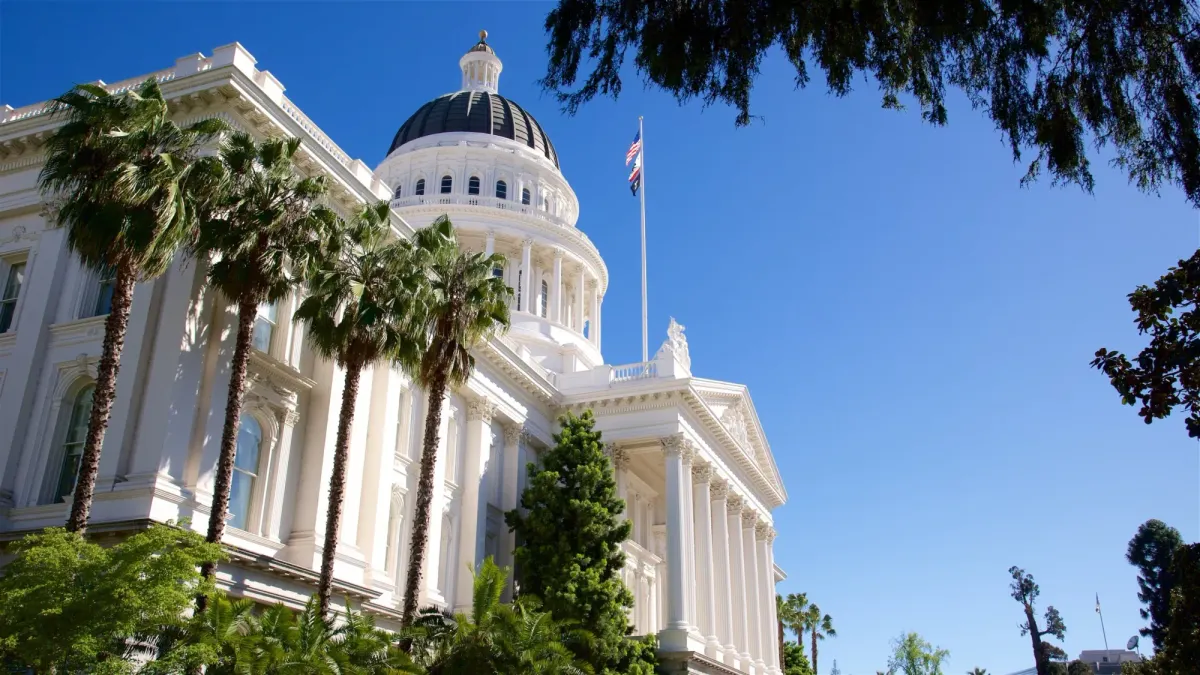
☀️ GOLDEN STATE RECAP: California's legislative session just wrapped, and Big Tech is licking its wounds after throwing everything it had at bill after bill and losing over and over. We didn’t win everything, but a big stack of tech accountability bills survived the Sacramento meat grinder — thanks in large part to determined lawmakers like Assemblymembers Buffy Wicks, Josh Lowenthal, and Rebecca Bauer-Kahan and Senator Steve Padilla — and now they’re all sitting on Gov. Gavin Newsom’s desk.
He has until the end of September to decide: will he listen to survivor parents, workers worn down by surveillance, and voters across the state? Or will he bow to the Big Tech lobbyists who have been swarming California’s State Capitol all year?
YOUTH DIGITAL SAFETY: Big Tech has spent years fighting exactly this kind of legislation, but evidence against the industry kept piling up this year — including the March jury trial that found Meta and Google liable for dangerous and addictive platform design, a New Mexico jury verdict that found Meta liable for misleading parents, and last month’s enormous Meta settlement — giving accountability champions new resolve.
This session, lawmakers acted on that evidence: they held the platforms accountable for the harm they do to kids, strengthening California's Kids Code with a package of big wins that work together to put our kids' wellbeing ahead of engagement metrics and Big Tech profits. We were proud to cosponsor AB 2246, California's Kids Code 2.0, which passed unanimously. Other key youth safety bills we supported that have landed on Newsom’s desk include AB 2 (setting civil penalties for injuries to children), AB 1709 (banning addictive design features), and SB 1119 (“Adam's Law,” extending design-based kids’ protections to chatbots).
COMPETITION, AFFORDABILITY & JOBS: The COMPETE Act (AB 1776) passed, and although the Chamber of Commerce secured last-minute amendments that weakened key enforcement mechanisms, it’s still an improvement on the status quo. The bill adapts an outdated antitrust law to close loopholes Big Tech exploits to entrench dominance, raise prices, and squeeze workers.
Another of Tech Oversight priority that made it through: SB 947, the No Robo Bosses Act, which bans automated employment decisions.
PRIVACY & SURVEILLANCE: Four strong bills we supported to check Big Tech’s surveillance economy: AB 1883 reins in workplace surveillance, AB 1159 protects student personal information, AB 1542 bars the sale of sensitive personal data, and SB 923 strengthens Californians' right to delete the data companies hold about them.
TOP California’s billboard campaign over the summer recess attacking the explosion of AI-powered workplace surveillance helped get AB 1883 passed despite huge financial pressure from the industry that profits off scraping and monetizing data. TOP also worked with a coalition to keep a harmful liability loophole for Big Tech out of SB 690, a bill meant to reduce surveillance protections.
DATA CENTER ACCOUNTABILITY: If Newsom signs the three bills sent to his desk, AB 1577 on data center energy reporting, AB 2619 on water resources, and SB 886, the California Technology Innovation and Ratepayer Protection Act, transparency could finally be coming for an industry that's rushing to build data centers across the state and sticking ratepayers and communities with the water and power bill. Industry groups including TechNet, the Chamber, the Bay Area Council, and the Silicon Valley Leadership Group are lined up against even basic disclosure requirements. But Gov. Newsom has suggested he’s in support, telling Politico: “You’re seeing states all across this country leaning in. We’ll be leaning in.”
NEWSOM'S CALL: If Newsom signs this whole slate, he carves out real space for himself as a governor who chose kids, workers, and communities over Big Tech's lobbying machine. California has been ahead of Congress on kids' safety all along, and it's leading again now. Newsom’s buy-in will ensure all this progress sticks.

🔴 META CAUGHT RED-HANDED ENDANGERING MINORS: Yesterday, WIRED reported on the Tech Transparency Project’s bombshell research finding that Meta ran more than 350 video ads containing AI-generated child sexual abuse material across Facebook, Instagram, and Threads since late last year. The latest wave -- more than 250 ads since the start of August -- used images of real children, including a member of a European royal family and several American minors, some of them teens with public accounts on Meta's own platforms. Researchers found the ads, reported them to Meta and to child-safety authorities, and watched some run for a week before removal, piling up views the whole time. The ads funneled users toward "nudification" apps, most tied to Chinese developers, in Apple's and Google's app stores.
Meta claims it reviews every ad before it runs. It didn't catch these, and it collected the ad revenue, even after WIRED flagged a similar batch of ads just weeks ago. A company that just agreed to pay up to $18 billion to settle claims it harmed children couldn't keep child-abuse ads off its own platforms, and shrugged when an outside watchdog caught what its systems missed. Sen. Mark Warner, the Michigan and Florida attorneys general, and Australia's online-safety regulator all say they're now looking into it.
If Meta refuses to police the ads it profits from, it cannot and will never police itself. That's the case for binding legislation like KOSA – and for putting Zuckerberg under oath.

🛑 STOPPING META'S SAVIOR COMPLEX: In the wake of Meta's $18 billion settlement, you can already hear the industry's message taking shape: problem solved, forget about KOSA, no need for Congress to do anything more. It's wrong – and it would be dangerous to take the pressure off. From our detailed breakdown on why we still need KOSA, here are a few of the highlights:
- WHO'S COVERED: The settlement binds Meta and Meta alone; Snap, TikTok, and YouTube face zero obligations under it. KOSA reaches every platform a minor is likely to use.
- NO DUTY OF CARE: The settlement sets no legal standard; it just ties Meta's obligations to Meta's own existing Community Standards, which the company still gets to write. KOSA imposes an actual statutory duty of care, requiring platforms to design responsibly against enumerated harms including sexual exploitation, compulsive use, severe harassment, and drug, alcohol, and gambling marketing.
- NOTHING ABOUT ADDICTIVE FEATURES: The settlement applies only to a short list of platform features, and doesn’t include a general requirement to block features that cause addiction.
BOTTOM LINE: a private settlement with one company, that doesn’t require the company to do anything not explicitly listed, and doesn’t even address the most dangerous issue, is no substitute for a federal law that covers every platform, every design choice, and every kid. Congress still needs to pass KOSA.

💪 BIG TECH ACCOUNTABILITY WINS BIG IN NJ: In an op-ed last week, Governor Mikie Sherrill made clear that Big Tech might have stopped Washington from holding it accountable, but that's not going to fly in the Garden State. She has the record to back it up: last month she signed a three-bill package that codifies America’s strongest Kids Code yet, stands up a first-of-its-kind Social Media Research Center, and directs it to research the potential efficacy of warning labels and mandatory disclaimers to reduce addictive social media behaviors among children – one of the strongest state safety-by-design packages yet. Gov. Sherrill campaigned on accountability — and she’s following through.

🤖 BOTS CAN'T REPLACE LABOR: Polling from Groundwork Collaborative and Ipsos shows the American workforce is clear-eyed about who AI is actually built for:
- 51% of workers say the benefits of AI at work will only or mostly go to business owners and executives. Just 6% think workers will see most of the gains.
- Two-thirds of workers expect AI to make their jobs worse rather than easing their workload.
- 46% of college-educated workers think AI will improve their own jobs, compared to just 19% of workers with only a high school education.
- 12% of Black workers believe AI will replace their jobs outright, compared to 4% of white workers.
- 41% of unemployed jobseekers say AI is already hurting their line of work, and they're more than twice as likely as currently employed people to call that impact "very negative."
Groundwork’s Vice President of Policy, Advocacy, and Research, Elizabeth Pancotti: “Workers know bosses who say AI will make their jobs easier and allow them to be more productive are pulling a fast one. Across the board, workers report AI putting more pressure on productivity rather than supporting workers as many AI proponents claim. The benefits of AI in the workplace are not being split evenly. The workers who expect to reap the rewards of adoption are already high earners in white-collar jobs.”

 Julie Bort
 Leah Nylen and Davey Alba
 Lauren Feiner
 Vivian Tran
 Jim Vorel