Preemption Poison Pills, Big Tech's Failing LGBTQ+ Safety Record
This week in The Dispatch: A broad coalition says "hell no" to AI preemption; California moves to make social media companies pay for harming kids; Meta caught building secret facial recognition; and a recent report shows how platforms are failing LGBTQ users.

Welcome back to The Dispatch from The Tech Oversight Project, your weekly updates on all things tech accountability. Follow us on Twitter at @Tech_Oversight and @techoversight.bsky.social on Bluesky.

💊 PREEMPTION POISON PILLS POP UP ON THE HILL: A growing and diverse coalition, including legal scholars, state lawmakers, unions, and civil rights groups, has come out swinging against the federal AI preemption provisions buried in the Obernolte-Trahan AI framework. The shared message: blocking states from enforcing their own AI laws is a non-starter, no matter what else is in the bill.
Sara Nelson, president of the Association of Flight Attendants-CWA, said: “[N]o one in Congress should be talking about state preemption at a time when we are talking about a revolutionary advancement in technology that should be harnessed for humans, and not for just a few in the billionaire class.”
According to law professor and antitrust expert Zephyr Teachout, preemption “makes this bill illegitimate as a democratic matter.” Zamaan Qureshi of Design It For Us warns it would “undo much of the hard work that lawmakers and advocates have undertaken to protect consumers and young people.”
Most alarmingly, the bill's definition of "model development" is broad enough to let companies challenge everything from chatbot safety rules to catastrophic-risk safeguards by framing them as regulating "development" rather than "deployment." A recent Tech Oversight Project poll found majorities of voters in both Obernolte's and Trahan's districts oppose weakening state chatbot safety and catastrophic-risk laws, and oppose fast-tracking data centers. In Trahan's district, nearly two-thirds said support for stripping chatbot protections would make them less likely to back a candidate.
Even Florida Gov. Ron DeSantis says it’s “not acceptable” for federal law to override state law here, saying preemption is “a subsidy of Big Tech and will prevent states from protecting against…predatory applications that target children.”
THE TAKEAWAY: Congress shouldn't strip authority from states at the exact moment states are leading on AI accountability. If Congress wants federal standards, it should raise the floor, not block states from going further.

💼 THE CASE FOR COMPETITION: If you read one thing this week about Big Tech monopolies, read Teri Olle's op-ed in the San Francisco Chronicle backing California's COMPETE Act (AB 1776).
She explains that California's affordability crisis isn't separate from its monopoly problem: they're the same thing. When a handful of dominant companies dictate prices and squeeze out competitors in industry after industry, families pay more for everything, get fewer choices, and watch product and service quality get worse. The COMPETE Act will tackle that problem by modernizing California’s antitrust laws to force accountability — a dirty word for the Big Tech companies, making COMPETE their top target.

🐕 WATCHDOG JOURNALISM NOTCHES PRIVACY WIN: A new Wired investigation found that Meta quietly built facial recognition into its smart glasses — technology that could identify strangers in real time by linking faces to online profiles. Meta rolled it back after the story broke, but the point is that they built it, deployed it secretly, and the only reason anyone knows is that Wired found the code and broke the story open.
TOP's Sacha Haworth: "Mark Zuckerberg and Meta are using their products to build a future where they control and operate 24/7 surveillance, and they thought no one would notice."
Meta keeps pushing the boundaries of surveillance tech while spending big to shape who writes the rules governing it: the company expects to spend roughly $65 million influencing state elections this year in states where they hope to convince lawmakers to let the company regulate itself. Why should any lawmaker trust Meta when the public only finds out about projects like this after someone catches them?

🏳️🌈 🏳️⚧️ BIG TECH LOWLIGHTS: PRIDE EDITION: This Pride Month, GLAAD is reminding us that Big Tech's social media harms are deliberate choices that are designed to make their product, safety, and business worse – for political gain with MAGA. GLAAD's sixth annual Social Media Safety Index found that platform safety for LGBTQ users during the past year has hit historic lows.
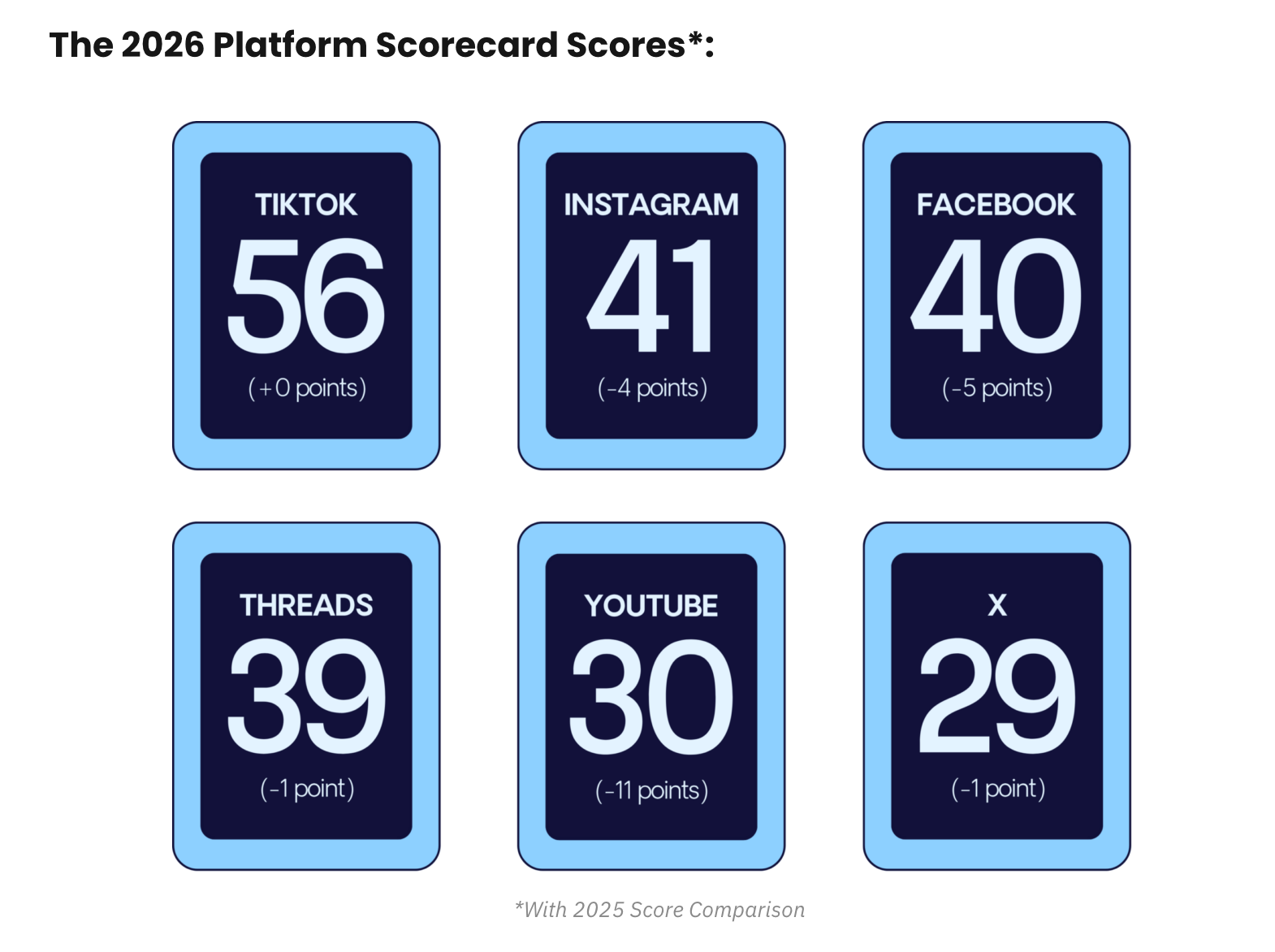
The report indicates that the rise of AI may be exacerbating online harassment, documenting an extraordinary rise in anti-LGBTQ deepfakes and non-consensual intimate imagery. In one horrifying case, xAI's Grok generated a sexualized deepfake of Renee Good, an LGBTQ woman shot and killed by ICE in Minneapolis, that circulated within 24 hours of her death.
Meanwhile, Meta and YouTube have maintained the anti-LGBTQ policy changes they made in 2025: Meta now explicitly permits certain anti-LGBTQ slurs and harassment, and YouTube removed "gender identity" from its hate speech protections.
“To LGBTQ creators, advocates, and organizations targeted on and by these platforms: these companies need to hear from you. The threats in your DMs, the disinformation fueling anti-LGBTQ legislation, and the bullying that leads to real-world violence are not just ‘part of the job.’ They are systemic failures that tech leaders have the tools to fix, yet they choose to profit from them instead," said GLAAD President & CEO Sarah Kate Ellis.
Tech companies like to frame accountability debates as abstract fights over innovation or free speech, but for LGBTQ+ youth, the question is concrete: are these spaces safe for me? Is harassment addressed? Do companies take responsibility for harms they could have foreseen? As lawmakers debate protections for kids online, they need to remember that weak platform safety protections hit already vulnerable communities the hardest – and that these companies rolled those protections back on purpose.

☀️ CALIFORNIA ON VERGE OF BREAKTHROUGH: One of the most significant tech accountability bills in the country passed a key committee vote yesterday: California’s AB 2, introduced by Assemblymember Josh Lowenthal. The bill, with a powerful coalition of parents, advocates, and youth safety organizations behind it, would establish statutory damages when social media companies negligently cause harm to children — building on California's existing negligence law rather than inventing something new.
This approach recognizes what juries have already concluded based on a flood of evidence TOP has cataloged: social media companies knew the risks their products posed to kids and chose revenue over safety anyway. Right now, the damages plaintiffs can prove often aren't high enough to compel a trillion-dollar company to change its behavior — AB 2 fixes that by imposing substantial statutory penalties for negligence that harms a child.
Big Tech's lobbyists are making the usual free-speech arguments, but the bill targets product design, not speech: autoplay, endless scroll, push notifications, algorithmic recommendations — features built deliberately to maximize how much time kids spend on these apps. Courts have already drawn this line, allowing negligence claims based on design rather than content.
This is part of a bigger shift in statehouses nationwide. Nobody seriously disputes that these products can harm kids anymore — whistleblowers, internal documents, and juries have settled that. What's left is whether companies that know about these harms will face any real consequences for ignoring them. California lawmakers are about to say: they will.

 Reuters
 Bernard Condon
 Connie Loizos
 Elise Silva
 Connor Greene