
The AI Midterms, The OpenAI Serial Liar Problem
This week in The Dispatch: AI Super PACs have different rules for D's and R's; OpenAI's serial liar; and states start making Big Tech pay.

Welcome back to The Dispatch from The Tech Oversight Project, your weekly updates on all things tech accountability. Follow us on Twitter at @Tech_Oversight and @techoversight.bsky.social on Bluesky.

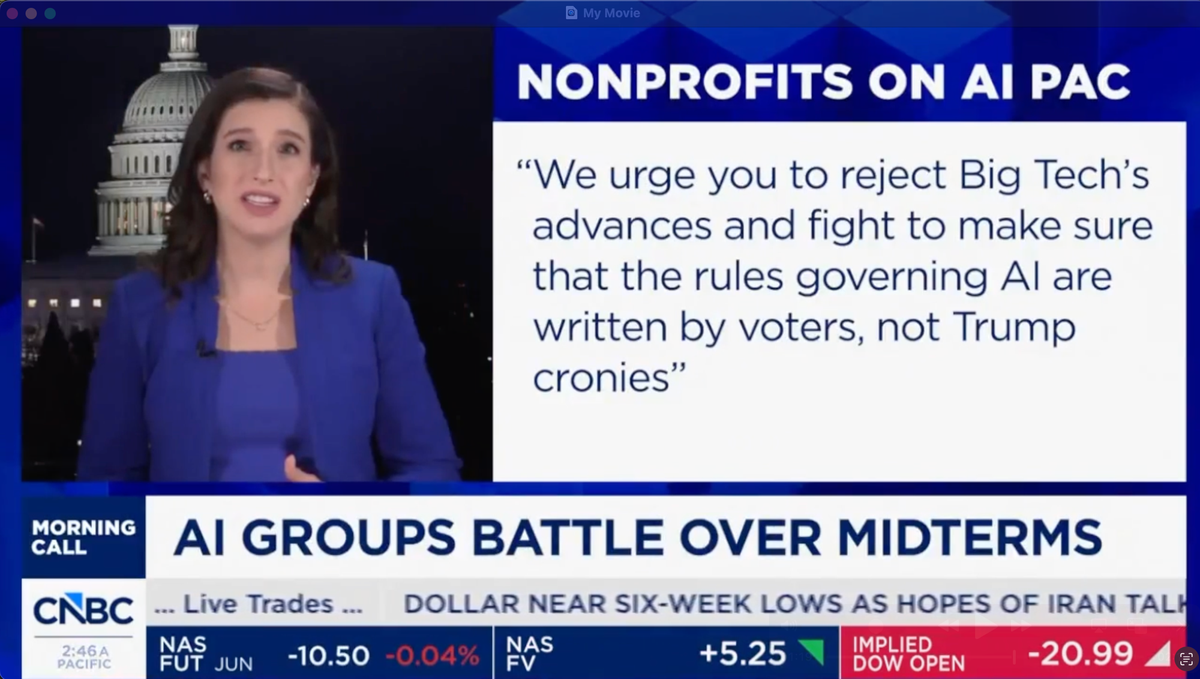
☢️ BIG TECH'S AI MONEY IS TOXIC: Alongside 13 children's safety, disability rights, tech watchdog, and AI safety organizations, The Tech Oversight Project is urging Democratic Members of Congress, including Rep. Clarke, Gottheimer, Gomez, Liccardo, and Subramanyam, to disavow the recent endorsement by AI super PAC Leading the Future. We make the case that, "Instead of addressing growing public concern about AI’s risks to children, workers, and communities, LTF is undermining Democrats and promoting an agenda that passes off AI’s rising costs to the American people, giving the wealthiest companies in the world a free handout." To learn more, read the full letter and CNBC coverage.

🍑 THE AI MIDTERMS: PEACH PREVIEW: Last week, the special election to fill former Rep. and MAGA darling Marjorie Taylor Greene's seat in Congress reached the run-off. While national political observers noted that even in defeat, Democrats swung the usually ruby red district by 25 points, our team took note that Leading the Future (LTF), a super PAC funded by executives at OpenAI, Palantir, and a16z, parachuted in and spent more than $686,000 in the final days of the race. Here's why the notable trend:
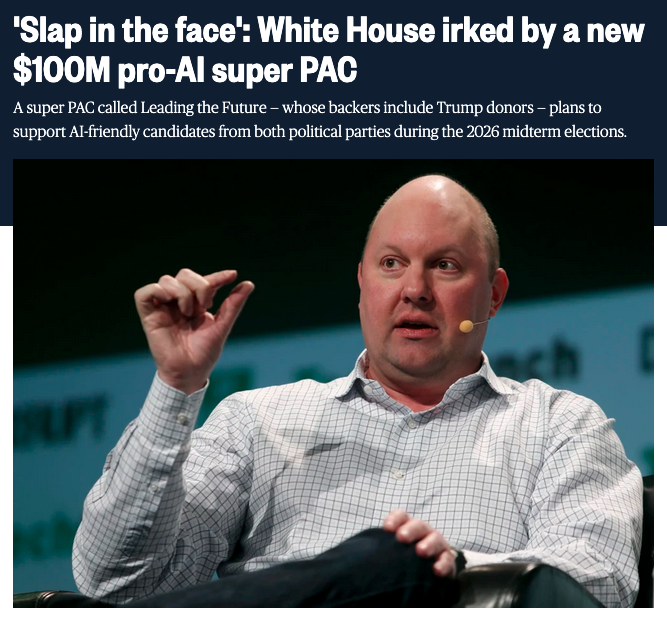
Following last summer's 99-1 defeat of the AI moratorium, LTF and its Big Tech backers announced the formation of the super PAC and branded it as a "bipartisan" outfit – wielding dark money as a cudgel to push their anti-civil rights, anti-public health, and anti-safety agenda. The problem? Donald Trump and the White House were pissed. The mere specter of LTF spending against Republicans gave senior White House officials license to read LTF the riot act. Senior aides said, "It’s a slap in the face, and the White House has definitely taken notice." Another White House staffer anonymously said, "Any donors or supporters of this group should think twice about getting on the wrong side of Trump world."
What have we seen since then? Attacks on Democrats and tail-between-their-legs subservience when it comes to spending for Republicans. Why? The White House has leverage on Leading the Future's backers because, without Trump defying the overwhelming majority of his own base, Big Tech's noxious agenda is dead in the water.
The Georgia run-off was another opportunity for LTF to prove its loyalty to Trump, but also another example of how Leading the Future operates with different rules for Democrats, which should give Democrats pause before accepting LTF's support. Sacha Haworth, Executive Director of The Tech Oversight Project, had this to say: "AI super PAC money is becoming toxic, and if Fuller wins, Georgia voters are going to wonder why he has Silicon Valley’s back and not theirs.”

Gen Z’s attitude toward AI is growing increasingly negative, says a new survey. The share of 14-to-29-year-olds who agree AI makes them feel:
- Anxious: 42% (up from 41% in 2025)
- Angry: 31% (up from 22%)
- Excited: 22% (down from 36%)
- Hopeful: 18% (down from 27%)
The generation Big Tech is counting on to embrace AI is turning against it – which could prove a long-term political problem for Big Tech.

🔊MAKE BIG TECH PAY: MORE THAN A SLOGAN: For years, states handed out massive tax incentives to lure data center projects – no questions asked. That era is ending. Increasingly, new data centers are facing real scrutiny, and states are rethinking the massive tax incentives they’ve handed out to data center projects.
In just the past few weeks:
- Washington State lawmakers moved to roll back tax breaks for data centers, including ending incentives for companies replacing servers — a direct challenge to years of subsidies that benefited major tech players.
- Pennsylvania’s House passed legislation aimed at strengthening oversight and accountability around data-center-related costs.
- In Minnesota, a bipartisan bill to prevent local government officials from entering into non-disclosure agreements with Big Tech corporations looking for sweetheart deals sailed through committee.
The pressure from advocates and local communities is working. More states will follow. The question that should have been asked years ago is finally getting asked: why are taxpayers subsidizing billionaires?

OPENAI's SERIAL LIAR PROBLEM: Last week, a profile from Ronan Farrow and Andrew Marantz in The New Yorker shed new light on the real motivations of OpenAI founder Sam Altman, who has shifted his positions on the existential dangers of AI, attempted to walk back talk of mass job losses, and betrayed OpenAI's original nonprofit mission. Frankly, the piece paints Altman as a serial liar, out for his own personal profit – AI safety, children's safety, or competition be damned – and that's dangerous for all of us. More on that below.
Here are the lowlights from the piece:
- The investigation with no paper trail. After Altman was fired in 2023 and reinstated following a pressure campaign, the board members who quit did so on the condition that there be an independent investigation into Altman. OpenAI hired WilmerHale — the firm that investigated Enron — which declined to interview key company leaders and delivered its findings orally, with nothing in writing. Some board members didn’t even get the oral briefing.
- The safety team that wasn’t. Altman publicly pledged that OpenAI's “superalignment” team — tasked with tackling the risk that as AI got smarter, it might work against humanity — would get 20% of the company's computing resources. But researchers say it got less than 2%, on the oldest hardware with the worst chips — the best chips were reserved for revenue-generating projects. The team was dissolved within a year.
- The Pentagon play. When the Trump administration threatened to blacklist Anthropic for refusing to remove limits on autonomous weapons, Altman was already in negotiations with the Pentagon before Anthropic's deadline even passed — and announced a deal the same morning Anthropic got blacklisted.
- Lobbying against the rules he publicly championed. Altman testified before Congress in 2023, calling for AI regulation and proposing a new federal oversight agency. Simultaneously, OpenAI was quietly lobbying to weaken the EU's AI oversight rules, and privately threatening California legislators working on a state safety bill — including subpoenaing a 29-year-old lawyer who helped draft it, demanding all his private communications.
Having a serial liar at the helm of OpenAI as the company hurdles toward an IPO is not only dangerous, but it's an omen of worse things to come. Right now, OpenAI is using astroturfed groups to peddle a chatbot bill in states across the country that doesn't even protect kids. The company's president is pouring tens of millions into super PACs to attack candidates who support AI safety. OpenAI is fighting for legislation that would limit their responsibility if AI leads to mass deaths and harm. The company is funding educators and briefing Members of Congress. Having a known liar pushing a dangerous agenda with lives, the future of our education system, and human progress on the line is a recipe for disaster.
Based on his track record, it's dangerous to put unchecked power in his hands. Congress needs to step up and pass comprehensive AI safety measures, guardrails, and privacy protections because Altman is proving to be just like every other Big Tech CEO. They will never put safety before growth.

 Thomas Barrabi
 Jeannie Suk Gersen
 Jonathan Vanian
 JESSICA HILL