The New Political Costs of AI and Data Centers Emerge
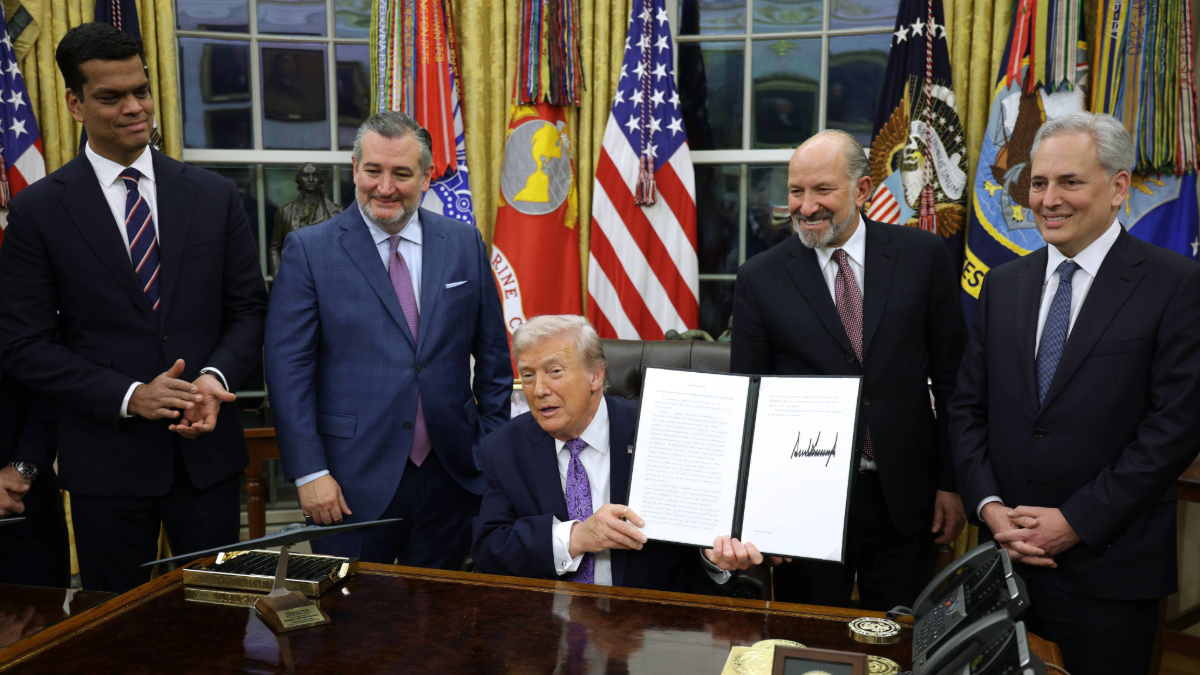
This week in The Dispatch, we cover the GOP backlash to the Trump-Sacks AI executive order and a new, forward-looking data center policy proposal

💥 Welcome back to the first edition of 2026 for The Dispatch from The Tech Oversight Project, your weekly updates on all things tech accountability. Follow us on Twitter at @Tech_Oversight and @techoversight.bsky.social on Bluesky.

🌊 GROUND SWELL FORMING: The Politics of AI poised to punish industry patsies. For most Americans, it happened slowly and then all at once. In 2025, "AI" ceased being an abstract term thrown around by Silicon Valley's CEO class and started becoming the reason why your utility bill is skyrocketing, the recent graduate in your life is struggling to find a job, your child is struggling to learn, and your long-term job security, all of a sudden, is less secure. It's not hard to see why the politics of AI has become deeply personal, increasingly political, and realigns voters across the political spectrum.
Yesterday, we released a poll that took a closer look at how people view AI and the tech industry's all-too-cozy relationship with President Trump. The results were stark.
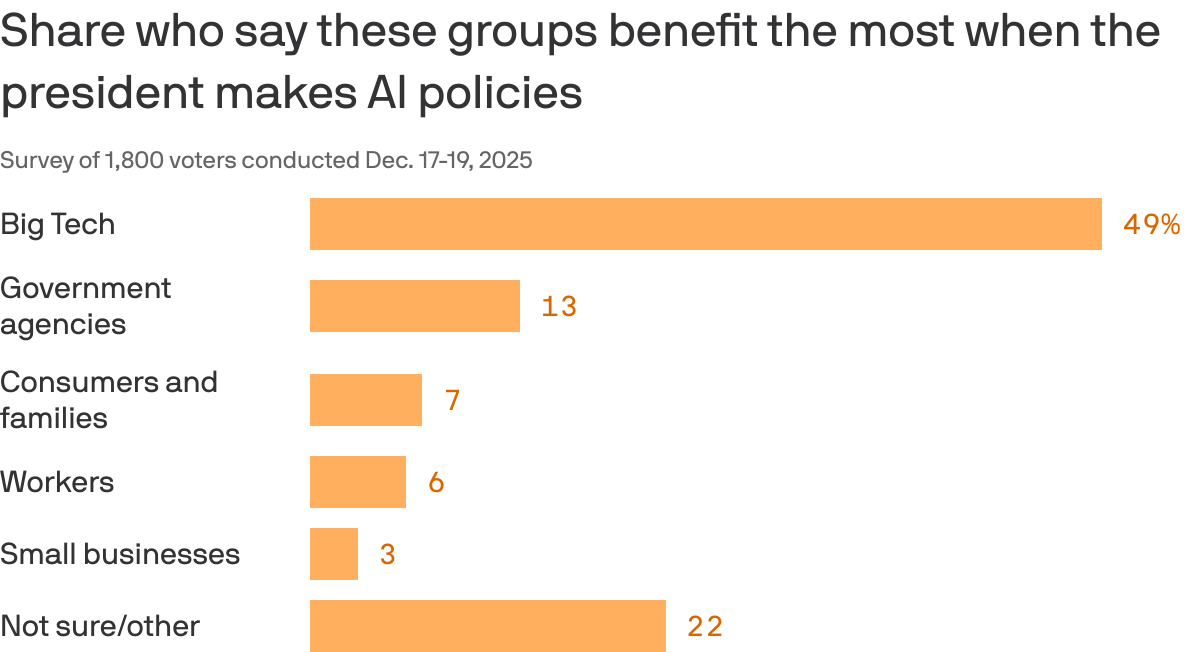
The nationwide survey, conducted by Morning Consult, shows that an overwhelming majority of Americans are concerned about President Trump’s cozy relationship with Big Tech companies like Google, Apple, Amazon, Meta, and OpenAI. These results underscore the growing divide between Big Tech and the DC swamp they love to fund and the political reality on the ground.
🥊 IN ONE CORNER: The Big Tech CEOs have seemingly convinced President Donald Trump and the GOP's other billionaire-serving Congressional leaders to tie their political fortunes to an AI industry that isn't just trying to block commonsense safety frameworks. They want to repeal federal, state, and even international laws already on the books. On the chopping block? Civil rights, health care privacy, and environmental laws.
After watching Congressional Republicans try and fail twice to grant AI Amnesty to dangerous Big Tech companies and the Trump Administration issue executive order after executive order on AI – all of which fail to address the immediate and long-term affordability concerns they have – it should come as no surprise that nearly 50% of American believe that Trump and his allies are looking out for Big Tech and not them.
The Trump Admin is even drawing friendly fire from Republican Governors in states like Texas, Florida, and Arkansas, whose laws they're trying to block.
🥊 IN THE OTHER CORNER: Well, just about everyone else is opposing Big Tech and Trump on AI, including an increasing number of lawmakers on both sides of the aisle and pundits of all stripes. Notably, Democrats are picking up the mantle and embracing AI safety and Big Tech accountability as a potent political issue heading into the 2026 midterms.
Sen. Chris Murphy (D-CT) has been outspoken about irresponsible AI deployment’s potential consequences for consumers, workers, and our culture at large, saying, “Every single executive I met with admitted that they had built a machine that they could not understand or control.”
Political commentators are also getting in on the action. Columnist Michelle Goldberg wrote in the New York Times that the speed of development and the companies’ lack of concern for consequences threaten “our remaining sense of collective reality.”
Even right-wing pundit Matt Walsh said in November that we’re “sleepwalking into a dystopia.”
📣 RHETORIC MEETS POLITICAL REALITY: If we learned anything from last November’s elections, it's that pushing back against Big Tech CEOs and lobbyists and calling for AI guardrails that protect kids and other vulnerable people is an election-day winner. Mikie Sherrill’s campaign published an 18-point policy agenda to rein in Big Tech AI — and she cruised to the New Jersey governorship. In Virginia, Abigail Spanberger framed tech power as a corporate accountability and national security issue — and she won handily, too. Given that poll after poll shows Big Tech AI is deeply unpopular, this isn’t a surprise.
At a time when affordability is at the top of voters’ minds, Big Tech’s reckless, self-serving deployment of AI is accelerating trends people already hate: dangers to our kids, higher energy prices, “enshittification” of tech products with AI “features” nobody asked for, risks to our jobs, and powerful corporations that don’t seem to answer to anyone.
Voters see action from the Trump Administration, but they don't like what they're seeing. For them, this isn't about ensuring that Elon Musk, Mark Zuckerberg, and Jeff Bezos can add zeroes to their net worth. It's about making sure they have a job and can afford to pay their bills. AI politics aren’t abstract: everyone is living with the problem, and the public's growing consensus says to Washington, "Back Big Tech over us at your own electoral peril."

- By a two-to-one margin, voters believe the Trump Administration is too close to Big Tech. (54% too close, 26% not too close)
- Nearly half of people (49%) believe Big Tech benefits most when the Trump Administration makes AI policy decisions, and only 13% believe the Trump Administration’s decisions benefit families or workers.
- By a two-to-one margin, voters believe states should be able to pass their own AI regulations and oppose preemption. (57% support states’ ability to craft AI laws, 24% oppose)
- 61% of people believe that Big Tech has too much influence in Washington.
- Over two-thirds (69%) of Americans believe AI will eliminate or reduce job opportunities.
- 63% of people believe AI will expose young people to harmful content online.
- Only 38% of Americans believe AI will improve the economy, while 45% believe that AI will make the economy worse.
- A majority of Americans (51%) believe that AI will undermine civil discourse in our democracy.
TOP-Morning Consult, December 2025.

🪫 AI DATA CENTERS: The costs are getting real, and the energy demand shows no end in sight. Massive data centers are the physical backbone of AI and the physical manifestation of a public fed up with being forced to use AI products they don't want, watching children and young people struggle to learn and adapt in the real world, and footing Big Tech's energy bill every month.
They’re spreading fast, often in rural areas that are hungry for jobs and growth. But communities in almost every state are discovering they end up meaning greater demand on our aging power grid, unforeseen health and environmental impacts, backroom deals that overwhelmingly favor the tech giants, and spiking energy costs for everyone.
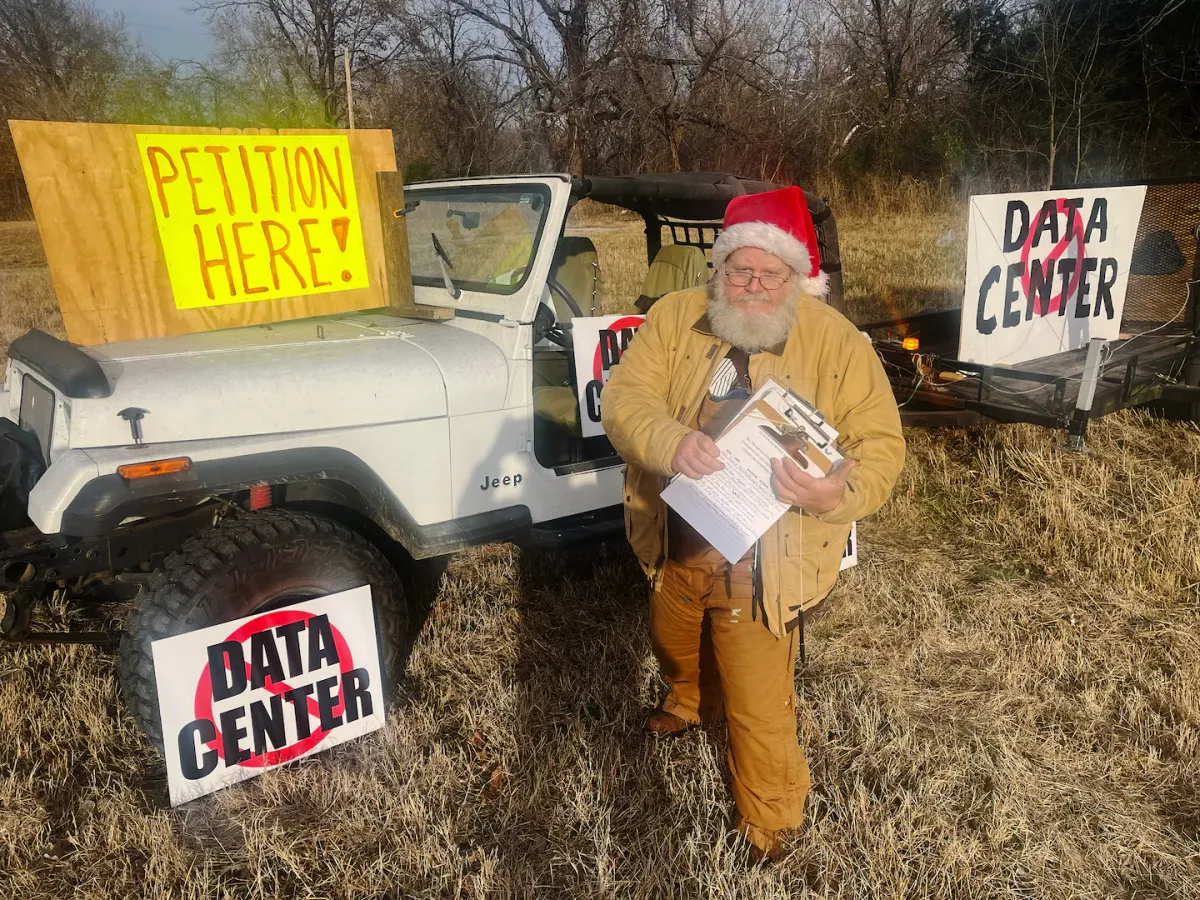
Big Tech is shifting the energy burden of AI onto the backs of everyday people, often in economically vulnerable communities, while locking in generous taxpayer-funded incentives at the same time. That raw deal is sparking a grassroots backlash of its own. In just three months, 20 proposals in 11 states were blocked or delayed due to community opposition, according to a recent Data Center Watch report – a 125% surge in data center opposition.
An Indiana organizer said: “This by far is the biggest kind of local pushback I’ve ever seen here.”
In Oklahoma, data center opponents are lining highways with signs that call out Big Tech’s underhanded tactics with messages like “NDAs Betray.”
The deals among utilities, utility regulators, and Big Tech are particularly galling — and expensive. Virginia, for instance, is projected to lose $1.6 billion in sales and use tax revenue in a single year to data center tax exemptions. That’s money not going to schools, infrastructure, or tax relief for residents.
Last November in Georgia, Democrats flipped two seats on the Public Service Commission for the first time in decades as local residents contended with spiking utility bills tied to AI data centers.
All these deals are happening largely out of public view: The American Economic Liberties Project documents how these deals are negotiated behind closed doors, limiting transparency and locking states into long-term losses.
This is Big Tech’s AI economy in practice: private profits, socialized costs. Communities pay more. Governments collect less. Big Tech calls it progress. But increasingly, voters are saying they’ve had enough.

 Miles Bryan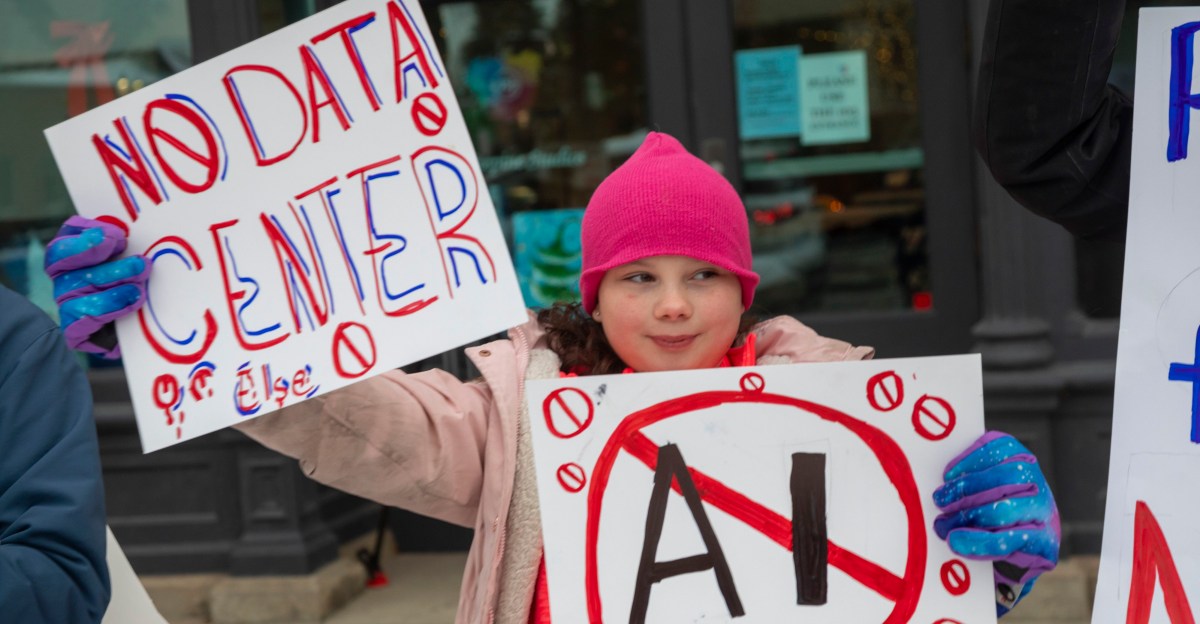
 Sarah N. Lynch
 Eliyahu Kamisher
 Hannah Beckler
 J.B. Branch, Ilana Beller