
Social Media Addiction Bellwether in Jury's Hands, Senate Judiciary Calls out Meta
This week in The Dispatch: The K.G.M. trial awaits a verdict, and Senate Judiciary puts Meta on blast for failing to comply with investigations.


Welcome back to The Dispatch from The Tech Oversight Project, your weekly updates on all things tech accountability. Follow us on Twitter at @Tech_Oversight and @techoversight.bsky.social on Bluesky.

🧟 ZOMBIE PREEMPTION RE-EMERGES: Back from the dead, the Washington Post is reporting that Congressional Republicans are again pushing for AI preemption, which wouldn't just ban new state AI laws, it would repeal some of the strongest AI bills currently on the books.
What's worse? Republican leaders want to hold kids online safety hostage by using it as a bargaining chip to pass what is surely to be a sweeping state AI ban. What's doubly worse? The online safety bill Republicans want to tie to this supposed "grand bargain" is the KIDS Act, which The Tech Oversight Project and 100+ other organizations oppose because its riddled with handouts to Big Tech, rips out the duty of care, and carves out loopholes for industry that would meddle with existing lawsuits and state laws. TL;DR: IT'S SHAPING UP TO BE A BAD DEAL AND NEEDS TO BE STOPPED. Stay tuned for updated, and watch this space!

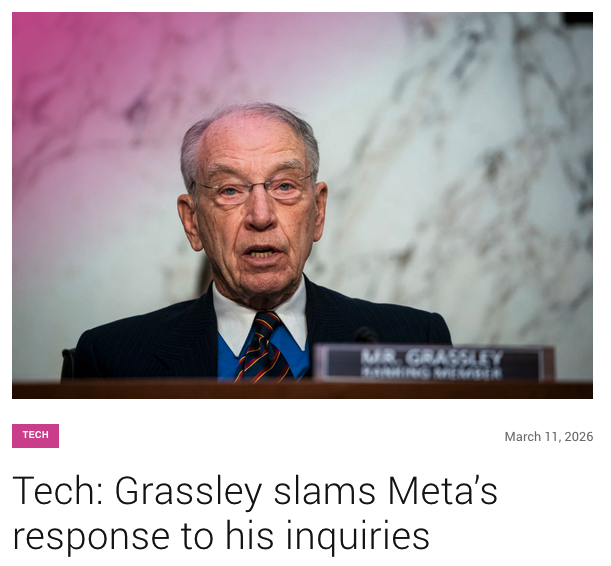
🤥 META ARE LYING LIARS CAUGHT LYING: Late last week, Senate Judiciary Chairman Chuck Grassley, along with Senators Blackburn and Hawley, went public with a stinging letter to Meta CEO Mark Zuckerberg about the company's failure to comply with investigations related to allegations from whistleblower Sarah Wynn-Williams. The Senators say that Meta's answers were incomplete to past oversight letters and document requests on topics including teen protection.
“Despite Meta failing to provide the requested information, our offices have obtained, through legally protected whistleblower disclosures, a list of document titles and descriptions that we believe would provide records responsive to our oversight requests."
- Senators Grassley, Blackburn, and Hawley
REMINDER: Sarah Wynn-Williams, the most senior whistleblower to exit the company, revealed how Meta undermined U.S. national security and economic interests by helping China compete with the United States, as early as 2015, by sharing data on U.S. users and cutting-edge technology, such as artificial intelligence and internet infrastructure, with the Chinese Communist Party (CCP). The company also helped the CCP build censorship tools that would allow it to control the flow of information online for American and Chinese citizens. For a quick refresh, read our statement on Wynn-Williams testimony and thread spotlighting key moments.
DOUBLE-REMINDER: This isn't the first time Meta has been caught red-handed lying to Congress. Turns out, they've done it quite a lot. Throughout the social media addiction trials, newly unsealed evidence has come to light directly refuting Meta CEO Mark Zuckerberg's testimony before the Senate Judiciary Committee. For a full recap, read our report.
⏳ META IS ON THE CLOCK: The Senate Judiciary Committee leaders gave Meta two weeks to respond fully. Read the full piece and get the letter here.

⚖️ DELIBERATIONS ON-GOING: The first social media addiction bellwether trial moved into its final phase last week, with the jury now in deliberation after lawyers made their closing arguments following weeks of testimony, expert analysis, and the steady release of damning evidence from internal company documents.
DECISION TIME: The jury has headed into deliberations in the landmark bellwether KGM social media addiction trial in Los Angeles. Parents and young people are gathered outside the courthouse and tuning in across the country and around the world as we await an historic verdict.… pic.twitter.com/axcMGbjyek
— The Tech Oversight Project (@Tech_Oversight) March 13, 2026
Before arguments began, Judge Kuhl gave the jury a crucial instruction: Meta and YouTube do not need to be the sole cause of harm to plaintiff K.G.M. to be held accountable. The companies cannot escape liability simply because other factors may also have played a role.
The defendants stuck to their scripts. Meta continued to lean on its “bad kid, not bad platform” defense to deflect from the addictive design of its products. YouTube argued, with a straight face, that its platform isn’t social media, even though features like infinite scroll, autoplay, and the “like” button serve the exact same function as other social platforms.
Meanwhile, the plaintiff’s attorney let the evidence speak: extensive internal documents from the companies, along with scientific testimony, and expert analysis from brain and addiction specialists – including those hired by the platforms themselves.
With new AI harms emerging every day, parents are uniting to push even harder for justice for our kids and safe digital products by design. More cases are scheduled to begin in May and July, and each one will bring more scrutiny to the safety tradeoffs these companies have made that prove they designed their products for addiction — and pursued kids to get them hooked early and keep them hooked for life.

🦹♂️ BIG TECH SCAMS ON THE LOOSE: New data and new action: A new report from the Consumer Federation of America (CFA) estimates that Americans are losing $119 billion every year to online scams, more than seven times higher than what’s been reported to authorities. Scam investment advice, fake products, romance scams, credit card fraud — they’re all happening more often than ever. The hardest-hit states: California, Texas, Florida, and New York.
The report doesn’t just tally the losses, it traces where they’re happening. According to Better Business Bureau data, more than 80 percent of scams take place on Meta’s properties, with Facebook alone accounting for 57 percent.
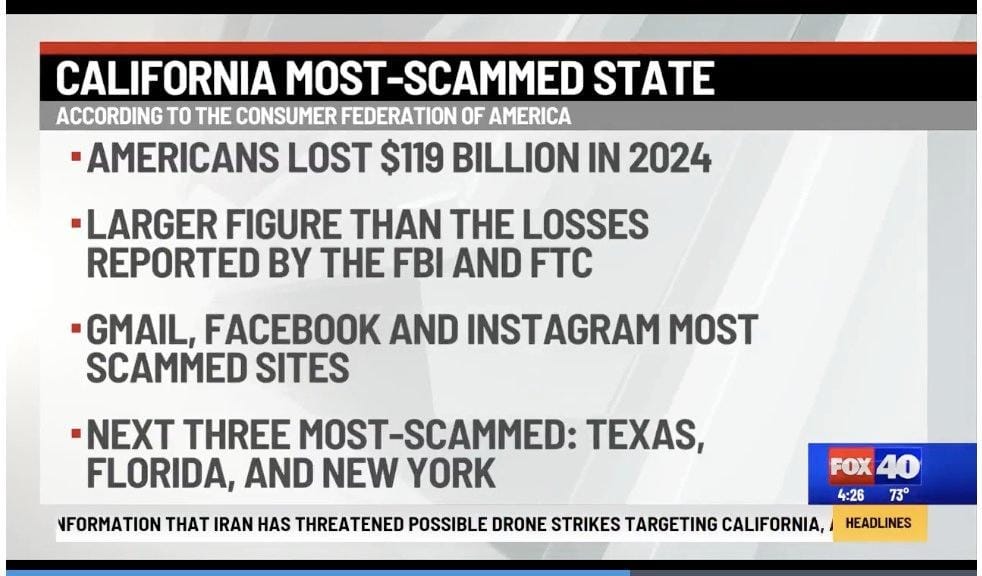
With losses mounting and the role of social media platforms as scam facilitators becoming crystal clear, a pair of New York lawmakers are taking steps to address the problem at its source. Sen. Andrew Gounardes and Assemblyman Alex Bores just introduced the SAFE Platforms Act, a bill to require social media companies to take meaningful action against scams and fraud spreading across their platforms. It's the latest example of states stepping up where federal action has stalled – holding Big Tech accountable for harms that reach into every corner of American life.

 Jonathan Stempel
 Reece Rogers
 Alex Weprin
 Lauren Feiner
 Shanshan Dong